
Why 1.0972 flat bar is not easy to rust
Discover the technical reasons why 1.0972 (S315MC) flat bars exhibit superior durability and oxidation resistance. Learn about its chemical composition, fine-grain structure, and industrial advantages.
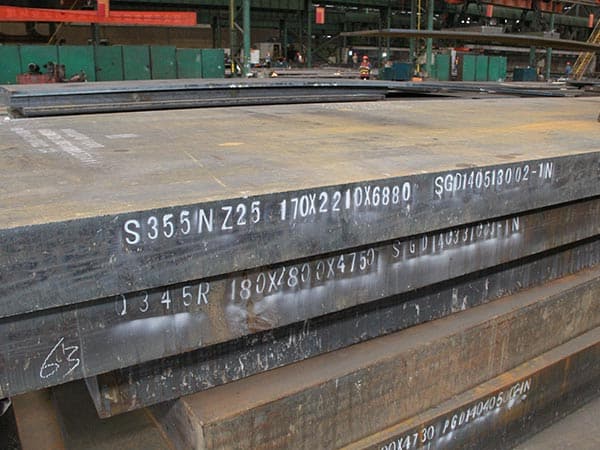
Understanding the Technical Identity of 1.0972 Flat Bar
The 1.0972 steel grade, commercially known as S315MC according to the EN 10149-2 standard, represents a high-yield strength steel specifically designed for cold forming. While it is classified as a low-alloy structural steel rather than a stainless steel, many industry professionals observe that 1.0972 flat bars demonstrate a significantly higher resistance to surface degradation and 'rusting' compared to standard carbon steels like S235JR or S355J2. This phenomenon is not accidental; it is the result of precise metallurgical engineering and controlled manufacturing processes.
Flat bars made from 1.0972 are frequently utilized in environments where structural integrity and weight reduction are paramount. The 'MC' suffix indicates that the material is thermomechanically rolled (M) and possesses a chemistry suitable for cold forming (C). This specific production route is the primary factor that influences how the steel interacts with its environment, particularly concerning oxidation and atmospheric corrosion.
The Chemistry of Resilience: Why It Resists Oxidation
To understand why 1.0972 is not easy to rust, one must examine its chemical composition. Unlike conventional hot-rolled steels, 1.0972 is characterized by its extreme purity and the strategic use of micro-alloying elements. The low carbon content (typically below 0.12%) is supplemented by elements such as Niobium (Nb), Vanadium (V), and Titanium (Ti).
| Element | Typical Percentage (%) | Function in Corrosion/Durability |
|---|---|---|
| Carbon (C) | ≤ 0.12 | Reduces the formation of coarse carbides that can trigger local corrosion. |
| Manganese (Mn) | ≤ 1.30 | Enhances strength without compromising the steel's surface integrity. |
| Silicon (Si) | ≤ 0.50 | Acts as a deoxidizer, ensuring a cleaner internal structure. |
| Niobium (Nb) / Titanium (Ti) | ≤ 0.22 (Total) | Refines grain size, creating a more uniform surface oxide layer. |
| Phosphorus (P) / Sulfur (S) | ≤ 0.025 / 0.020 | Ultra-low levels minimize 'anodic sites' where rust typically begins. |
The reduction of impurities like sulfur and phosphorus is critical. In standard steels, manganese sulfides often act as initiation points for pitting corrosion. Because 1.0972 is a 'clean steel,' these initiation sites are drastically reduced, slowing down the rate at which visible rust develops when exposed to moisture.
Thermomechanical Rolling and Surface Integrity
The Thermomechanical Control Process (TMCP) used to manufacture 1.0972 flat bars plays a decisive role in its environmental adaptability. During this process, the rolling temperature and cooling rates are strictly controlled to refine the grain structure. This produces a very fine-grained ferrite-pearlite microstructure, often reaching ASTM grain size 10 or finer.
A finer grain structure means a higher density of grain boundaries, which sounds counterintuitive for corrosion resistance. However, in atmospheric conditions, this fine structure allows for the formation of a more continuous, dense, and adherent oxide scale (often called 'mill scale'). Unlike the thick, brittle, and porous scale found on traditional hot-rolled bars, the TMCP scale on 1.0972 is thinner and more protective, acting as a temporary barrier against oxygen and water penetration.
Mechanical Superiority: Strength Meets Ductility
The reason 1.0972 is preferred for flat bars is not just its surface longevity but its exceptional mechanical properties. It offers a minimum yield strength of 315 MPa, which is significantly higher than basic structural steels, allowing for thinner sections to carry the same load. This 'lightweighting' capability reduces the overall surface area exposed to potential corrosive environments.
- Yield Strength (ReH): ≥ 315 MPa
- Tensile Strength (Rm): 390 – 510 MPa
- Elongation (A80mm): ≥ 20%
- Impact Toughness: Excellent performance even at low temperatures, ensuring the flat bar doesn't become brittle.
This balance of strength and elongation is vital for the 1.0972 flat bar's performance in the workshop. It can be bent, flanged, and cold-formed into complex shapes without developing micro-cracks. Micro-cracks in lower-quality steel often become traps for moisture and salts, leading to accelerated internal corrosion; the high ductility of 1.0972 prevents this risk.
Environmental Adaptability and Coating Compatibility
While 1.0972 is 'not easy to rust' in its bare state compared to S235, it is rarely used without some form of protection in harsh environments. Here, the material shines due to its surface chemistry. The low silicon content is often optimized for galvanizing (following the Selmép curve), ensuring a uniform and high-quality zinc coating.
In the automotive and heavy machinery sectors, 1.0972 flat bars are frequently subjected to KTL (Cathodic Dip Painting) or powder coating. The chemical purity of the steel ensures excellent adhesion for these coatings. When a coating adheres better, the underlying steel is shielded more effectively, extending the service life of the component by decades. The absence of surface defects, common in TMCP steels, ensures there are no 'weak spots' where the coating might peel or fail.
Strategic Industry Applications
The unique combination of high strength, low weight, and relative corrosion resistance makes 1.0972 flat bars indispensable in several high-performance sectors. Throughout the heavy transport industry, this grade is used for chassis components and cross-members where exposure to road salt and moisture is constant.
In the agricultural sector, machinery frames utilize 1.0972 because it can withstand the corrosive nature of fertilizers and soil moisture better than generic carbon steels. The flat bar format is particularly useful for brackets, supports, and structural frames that require precise dimensions and high load-bearing capacity. Furthermore, the crane and lifting equipment industry relies on 1.0972 for its high fatigue resistance and the ability to maintain structural integrity in outdoor, fluctuating climates.
Processing Excellence: Welding and Forming
A significant factor in the 'durability' of a steel structure is how it behaves after welding. Standard steels often suffer from a 'Heat Affected Zone' (HAZ) that is more susceptible to corrosion due to grain coarsening. 1.0972, thanks to its micro-alloyed design, maintains a relatively fine grain even after welding. The Carbon Equivalent (CEV) is kept very low, which translates to excellent weldability without the need for pre-heating.
Because the welds are more homogenous with the base metal, the risk of 'galvanic' action between the weld bead and the flat bar is minimized. This ensures that the joint remains as resistant to rust as the rest of the bar. For engineers, this means fewer maintenance cycles and a more predictable lifecycle for the entire assembly.
Why Purity Defines Longevity
Ultimately, the reason 1.0972 flat bar is not easy to rust comes down to metallurgical discipline. By controlling the cooling process and limiting impurities, manufacturers create a material that is electrochemically more stable. While it will eventually oxidize if left unprotected in salt spray, its natural progression toward corrosion is much slower and more uniform than that of 'dirty' steels.
Choosing 1.0972 is a strategic decision. It offers the strength of a high-alloy steel with the processing ease of a mild steel, all while providing a surface that is better prepared to fight off the elements. For any application where the flat bar will be visible or exposed to the atmosphere, the 1.0972 grade provides a superior foundation for both aesthetic and structural longevity.
Leave a message