
Is 1.0972 sheet and tool steel the same?
Understand the critical differences between 1.0972 (S315MC) sheet steel and tool steels. This expert guide covers chemical composition, mechanical properties, and industrial applications of 1.0972.
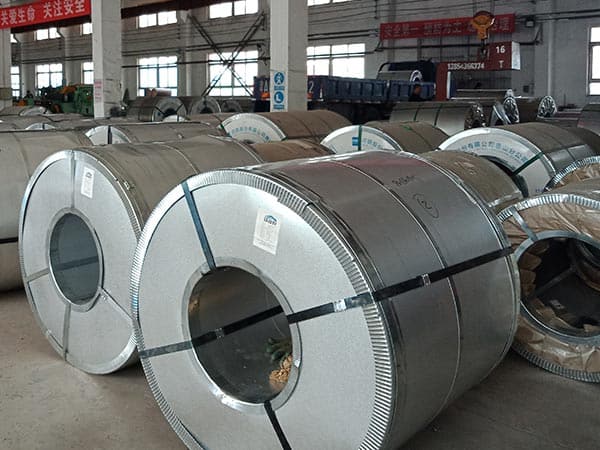
The Fundamental Distinction: Why 1.0972 is Not Tool Steel
In the complex world of metallurgy, numerical designations like 1.0972 often lead to confusion among procurement specialists and engineers. To answer the core question: No, 1.0972 sheet and tool steel are not the same. 1.0972 is the numerical Werkstoffnummer for S315MC, a high-strength, hot-rolled steel designed specifically for cold forming. It belongs to the EN 10149-2 standard family. Tool steels, conversely, are high-carbon, high-alloy materials designed for hardness, abrasion resistance, and the ability to hold a cutting edge at elevated temperatures.
1.0972 is classified as a High Strength Low Alloy (HSLA) steel. While tool steels are defined by their carbon content (often exceeding 0.5% to 2.0%) and heavy alloying with elements like Tungsten, Chromium, and Vanadium, 1.0972 maintains a very low carbon footprint to ensure exceptional weldability and ductility. This material is engineered for structural integrity and weight reduction in mobile machinery, rather than for the manufacturing of molds, dies, or cutting tools.
Chemical Composition and the Role of Micro-Alloying
The performance of 1.0972 is rooted in its precise chemical balance. Unlike tool steels that rely on massive carbide formation, 1.0972 utilizes thermomechanical rolling and micro-alloying to achieve its strength. The addition of Niobium (Nb), Vanadium (V), and Titanium (Ti) in minute quantities allows for grain refinement, which is the only mechanism that simultaneously increases both strength and toughness.
| Element | Max Content (%) | Impact on Performance |
|---|---|---|
| Carbon (C) | 0.12 | Ensures excellent weldability and prevents brittleness. |
| Manganese (Mn) | 1.30 | Increases strength and improves hardenability during rolling. |
| Silicon (Si) | 0.50 | Acts as a deoxidizer and provides solid solution strengthening. |
| Niobium (Nb) / Titanium (Ti) | 0.15 (combined) | Refines grain structure, enhancing yield strength and impact resistance. |
| Phosphorus (P) / Sulfur (S) | 0.025 / 0.020 | Kept low to minimize impurities and prevent cracking during forming. |
The low carbon equivalent (CEV) of 1.0972 is its most significant advantage over tool steels. While tool steels require complex pre-heating and post-heating cycles during welding to avoid martensitic cracking, 1.0972 can be welded using standard industrial methods without compromising the integrity of the heat-affected zone (HAZ).
Mechanical Properties: Yield Strength vs. Hardness
The primary design goal for 1.0972 is Yield Strength. In structural applications, the material must resist permanent deformation under load. Tool steels prioritize Rockwell Hardness (HRC), which is often irrelevant for the applications where S315MC excels. 1.0972 provides a guaranteed minimum yield strength of 315 MPa, which is significantly higher than standard S235JR mild steel but lower than the ultra-high-strength grades like S700MC.
| Property | Value (Thickness < 3mm) | Value (Thickness > 3mm) |
|---|---|---|
| Yield Strength (ReH MPa) | min. 315 | min. 315 |
| Tensile Strength (Rm MPa) | 390 - 510 | 390 - 510 |
| Elongation (A80 % / A5 %) | min. 20 | min. 24 |
The high elongation values (20-24%) demonstrate that 1.0972 is built for cold forming. It can be bent, crimped, and pressed into complex shapes without surface tearing. Tool steels, by contrast, have very low elongation (often < 5% before heat treatment), making them unsuitable for the high-speed stamping and folding processes used in modern manufacturing lines.
Process Performance: Welding and Cold Forming
The industrial utility of 1.0972 is defined by its ease of processing. For manufacturers, the "MC" suffix (Thermomechanically Rolled, Cold Forming) indicates that the steel has undergone a controlled cooling process that optimizes its microstructure for downstream fabrication.
- Superior Cold Formability: 1.0972 allows for tight bending radii. For a sheet thickness (t), the recommended minimum bending radius is typically 0.25t to 0.5t, depending on the orientation relative to the rolling direction.
- Welding Compatibility: Due to its low alloy content, it is compatible with MIG/MAG welding, TIG welding, and laser welding. The fine-grained structure remains stable, ensuring that the joints are as strong as the base metal.
- Surface Quality: As a hot-rolled product intended for cold forming, it usually features a clean, pickled, and oiled surface (P&O), which is ideal for subsequent coating or painting.
Tool steels require specialized machining, often involving EDM (Electrical Discharge Machining) or precision grinding after hardening. 1.0972 is designed for high-volume production where speed and repeatability are paramount. It does not require heat treatment after forming, which significantly reduces the total cost of ownership for the end component.
Environmental Adaptability and Durability
While 1.0972 is not a stainless steel, its fine-grained structure provides slightly better atmospheric corrosion resistance than traditional carbon steels. However, in aggressive environments, it requires surface protection. Its performance in low-temperature environments is a key selling point; the micro-alloying elements ensure that the material does not undergo a sharp ductile-to-brittle transition, making it safe for use in heavy machinery operating in sub-zero climates.
Compared to tool steels, which can be prone to stress corrosion cracking if not tempered correctly, 1.0972 is remarkably stable. It handles vibration and cyclic loading effectively, which is why it is a staple in the transportation sector where fatigue resistance is critical.
Strategic Application Industries
The divergence between 1.0972 and tool steel is most apparent in their respective industries. Tool steel is found in the toolroom; 1.0972 is found on the assembly line.
- Automotive Engineering: Used for longitudinal beams, cross members, and chassis components where weight reduction is needed without sacrificing safety.
- Heavy Machinery: Essential for crane arms, excavator buckets (structural parts), and agricultural equipment frames.
- Infrastructure: Cold-pressed profiles for shelving systems, storage racks, and light-gauge steel framing.
- Energy Sector: Support structures for solar panels and wind turbine internal components where high strength-to-weight ratios are required.
Choosing 1.0972 over a tool steel (or even a standard structural steel) is a strategic decision. It allows for thinner wall thicknesses, which reduces the overall weight of vehicles and machines, leading to better fuel efficiency and lower material costs. It bridges the gap between basic mild steel and the expensive ultra-high-strength alloys, offering a "sweet spot" of performance and economy.
Final Technical Verdict
Identifying 1.0972 as S315MC clarifies its role as a high-performance structural sheet steel. It lacks the carbon content and alloy density to ever function as a tool steel, just as tool steel lacks the ductility and weldability to function as a structural frame material. When your project demands a material that can be folded into complex geometries and welded into heavy-duty frames while maintaining a high yield-to-weight ratio, 1.0972 is the definitive choice. Understanding these nuances ensures that engineering specifications are met with the most efficient and cost-effective material possible.
Leave a message