
What is the S420MC steel for automotive industry 2020 price
Discover the comprehensive guide to S420MC steel, focusing on its mechanical properties, automotive applications, and the historical 2020 price trends.
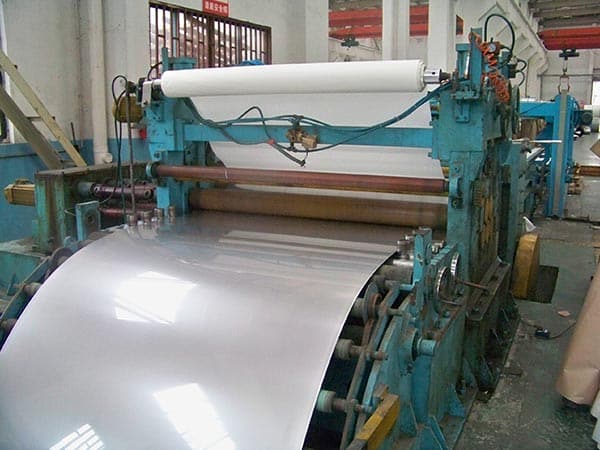
Understanding S420MC Steel: The Backbone of Modern Automotive Engineering
S420MC steel represents a pinnacle of High Strength Low Alloy (HSLA) materials, specifically engineered for cold forming applications within the demanding automotive sector. Governed by the EN 10149-2 standard, this thermomechanically rolled steel offers a unique balance of high yield strength and exceptional ductility. Manufacturers prioritize S420MC when looking to reduce vehicle weight without compromising structural integrity or safety. The 'S' denotes structural steel, '420' refers to the minimum yield strength of 420 MPa, and 'MC' signifies its suitability for cold forming and its thermomechanically rolled condition.
During the year 2020, the global steel market experienced unprecedented volatility, making the price of S420MC a critical variable for procurement departments. Understanding why this specific grade commands a premium over standard carbon steels requires a deep dive into its metallurgical composition and the sophisticated manufacturing processes involved in its production.
Chemical Composition and Metallurgical Precision
The performance of S420MC is rooted in its precise chemical makeup. Unlike traditional mild steels, HSLA steels like S420MC utilize micro-alloying elements to refine grain structure and enhance strength. Elements such as Niobium (Nb), Vanadium (V), and Titanium (Ti) are added in minute quantities to prevent grain growth during the rolling process.
| Element | Maximum Content (%) |
|---|---|
| Carbon (C) | 0.12 |
| Manganese (Mn) | 1.60 |
| Silicon (Si) | 0.50 |
| Phosphorus (P) | 0.025 |
| Sulfur (S) | 0.015 |
| Aluminum (Al) | 0.015 |
| Nb + V + Ti | 0.22 |
This low carbon content is essential for ensuring excellent weldability and toughness, particularly in low-temperature environments. The controlled addition of Manganese improves hardenability and tensile strength, while the micro-alloys provide the necessary precipitation hardening effects that allow the steel to reach its 420 MPa yield threshold without the need for heavy alloying or expensive heat treatments.
Mechanical Properties and Performance Metrics
The primary reason the automotive industry relies on S420MC is its mechanical reliability. It provides a high strength-to-weight ratio, which is the cornerstone of the 'lightweighting' trend aimed at improving fuel efficiency and reducing CO2 emissions. The mechanical properties are tested longitudinally to the rolling direction to ensure they meet the rigorous safety standards of vehicle manufacturing.
- Yield Strength (ReH): Minimum 420 MPa.
- Tensile Strength (Rm): 480 to 620 MPa.
- Elongation (A80mm): Minimum 16% to 19% depending on the thickness of the sheet.
- Bending Radius: Excellent cold bending properties, typically allowing for a 0.5t to 1.5t bend radius depending on thickness.
These properties ensure that components made from S420MC can withstand significant stress during a collision, absorbing energy through controlled deformation while maintaining the integrity of the passenger cabin. The high elongation factor is particularly impressive for a steel with such high yield strength, allowing for complex geometries to be stamped without cracking.
Advanced Processing: Welding, Forming, and Cutting
S420MC is designed for ease of integration into modern assembly lines. Its processing characteristics are optimized for high-volume production environments. Weldability is one of its strongest suits; due to its low carbon equivalent, it can be welded using standard methods such as MAG (Metal Active Gas), TIG (Tungsten Inert Gas), and laser welding without the risk of cold cracking in the heat-affected zone.
In terms of cold forming, S420MC excels in bending, flanging, and drawing. It is frequently used for longitudinal beams, cross members, and chassis components where complex shapes are required. However, engineers must account for springback, which is more pronounced in high-strength steels compared to softer grades. Precise tooling and modern CNC press brakes are typically employed to achieve the tight tolerances required in automotive assembly.
Laser and Plasma Cutting: The clean metallurgical structure of S420MC allows for high-precision thermal cutting. The edges remain stable, and the minimal thermal distortion ensures that parts fit perfectly during subsequent welding or bolting stages.
Automotive Industry Applications
The versatility of S420MC makes it a staple in both passenger vehicles and heavy-duty trucks. Its application is primarily found in structural parts that are not visible but are vital for the vehicle's skeleton. Common uses include:
- Chassis Frames: Providing the rigid base for trucks and SUVs.
- Cross Members: Connecting longitudinal beams to enhance torsional rigidity.
- Bumper Brackets: Energy-absorbing components that protect the vehicle during low-speed impacts.
- Seat Frames: Reducing the weight of interior components while maintaining occupant safety.
- Suspension Parts: Handling dynamic loads and road vibrations.
By substituting traditional S235 or S355 grades with S420MC, manufacturers can use thinner gauges of steel to achieve the same or better structural performance, leading to a significant reduction in the overall curb weight of the vehicle.
Analyzing the 2020 Price Trends for S420MC
The year 2020 was a landmark period for the steel industry, characterized by extreme price fluctuations. At the beginning of the year, prices were relatively stable, but the global pandemic caused a sharp contraction in demand as automotive plants across Europe, Asia, and North America temporarily shuttered. This led to a dip in S420MC prices during the second quarter of 2020.
However, the latter half of 2020 saw a dramatic reversal. As economies reopened and the automotive sector rebounded faster than expected, a supply-demand imbalance emerged. Several factors contributed to the price surge of S420MC in late 2020:
- Raw Material Costs: Iron ore prices reached multi-year highs due to supply disruptions in Brazil and high demand from China.
- Logistics Constraints: Global shipping costs increased, and container shortages delayed the delivery of specialized steel coils.
- Production Lag: Steel mills that had reduced capacity during the lockdowns struggled to ramp up production quickly enough to meet the surging automotive orders.
In 2020, the price for S420MC typically ranged from $580 to $850 per metric ton, depending on the region, order volume, and specific surface finish (hot rolled vs. pickled and oiled). By December 2020, prices were on a steep upward trajectory that continued well into 2021, marking one of the most volatile periods in recent history for automotive procurement teams.
Environmental Adaptability and Sustainability
Beyond its mechanical prowess, S420MC contributes to the sustainability goals of the automotive industry. The ability to use less material (down-gauging) directly translates to lower energy consumption during the manufacturing phase and lower fuel consumption throughout the vehicle's lifecycle. Furthermore, S420MC is 100% recyclable. At the end of a vehicle's life, these high-strength components can be melted down and repurposed without loss of quality, supporting a circular economy.
Its resistance to atmospheric corrosion is comparable to other carbon steels, but when paired with modern coating technologies like galvanization or E-coating, S420MC components can last the entire lifespan of a vehicle even in harsh, salt-heavy winter environments. This durability ensures that the safety-critical structures of the vehicle remain intact over decades of use.
Selecting the Right Supplier for S420MC
When sourcing S420MC, especially considering the price volatility seen in 2020 and beyond, it is crucial to partner with suppliers who provide full traceability and mill test certificates (MTC). Quality assurance is paramount; variations in the chemical composition or the thermomechanical rolling process can lead to inconsistencies in forming behavior, which can disrupt automated production lines.
Modern buyers look for suppliers who offer value-added services such as precision slitting, decoiling, and pickling. Pickled and oiled (P&O) S420MC is often preferred in the automotive industry as it removes mill scale, providing a clean surface for welding and painting, and protecting the steel from rust during transport and storage.
Leave a message