
What is yield strength of BS700MC steels for automobile structure
Explore the technical specifications, yield strength, and automotive applications of BS700MC high-strength steel, focusing on lightweighting and structural integrity.
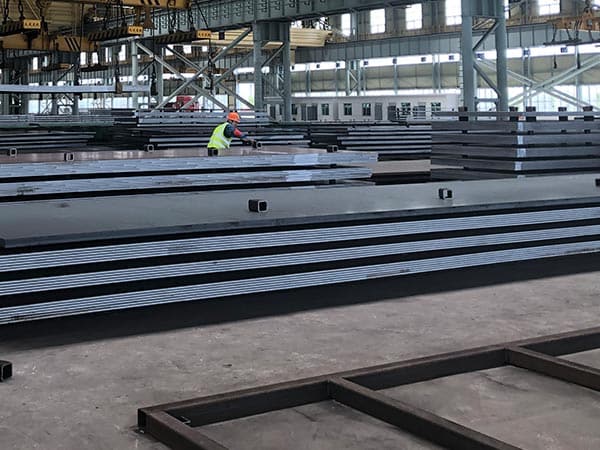
Defining the Yield Strength Threshold of BS700MC
BS700MC stands as a benchmark in the high-strength low-alloy (HSLA) steel category, specifically engineered for the rigorous demands of the automotive and heavy transport industries. The numerical designation "700" refers to its minimum yield strength of 700 Megapascals (MPa). In the context of structural engineering, yield strength is the critical point at which a material transitions from elastic deformation—where it returns to its original shape—to plastic deformation, where permanent changes occur. For automotive designers, this 700 MPa threshold allows for the construction of components that can withstand immense stress while maintaining a reduced cross-sectional thickness.
The yield strength of BS700MC is achieved through a combination of precise chemical alloying and advanced Thermomechanical Controlled Processing (TMCP). Unlike traditional hot-rolled steels that rely on high carbon content for strength, BS700MC utilizes micro-alloying elements such as Niobium (Nb), Vanadium (V), and Titanium (Ti). These elements facilitate grain refinement and precipitation hardening, resulting in a fine-grained ferritic-bainitic microstructure that offers an exceptional strength-to-weight ratio.
Mechanical Properties and Performance Metrics
Beyond the primary yield strength, the comprehensive mechanical profile of BS700MC determines its suitability for complex automotive structures. It is essential to evaluate the relationship between yield strength (Re), tensile strength (Rm), and elongation (A) to understand how the material behaves under various loading conditions. The following table outlines the standard mechanical requirements for BS700MC according to common industrial specifications like EN 10149-2.
| Property Type | Specification Requirement | Typical Values |
|---|---|---|
| Yield Strength (ReH) | Min 700 MPa | 720 - 780 MPa |
| Tensile Strength (Rm) | 750 - 950 MPa | 800 - 900 MPa |
| Elongation (A5) | Min 12% | 14% - 18% |
| Bending (180° Mandrel) | 2.0a (where a is thickness) | Pass |
The high tensile strength, which often reaches up to 950 MPa, ensures that the material has a significant safety margin beyond its yield point. This characteristic is vital for energy absorption during vehicle collisions, where the structural components must deform in a controlled manner to protect occupants.
Chemical Composition and Grain Refinement
The secret to maintaining a 700 MPa yield strength without sacrificing weldability lies in the low carbon equivalent (Ceq) of BS700MC. By keeping carbon levels low, typically below 0.12%, the steel avoids the formation of brittle martensite during welding. Instead, it relies on micro-alloying for its structural integrity.
- Manganese (Mn): Typically present at 1.5% to 2.1%, it increases hardenability and solid solution strength.
- Niobium (Nb) and Titanium (Ti): These elements form stable carbides and nitrides that pin grain boundaries during the rolling process, preventing grain growth and ensuring a ultra-fine microstructure.
- Silicon (Si) and Aluminum (Al): Act as deoxidizers and contribute to the overall cleanliness of the steel matrix.
This refined grain structure is the primary reason why BS700MC exhibits high toughness even at sub-zero temperatures, a property often quantified by Charpy V-notch impact testing. For automotive structures operating in diverse climates, this environmental adaptability is non-negotiable.
Cold Forming and Fabrication Advantages
One might assume that a material with 700 MPa yield strength would be difficult to shape. However, BS700MC is specifically designed for cold forming. Its high ductility allows for tight bending radii and complex geometries, which are common in chassis cross-members and longitudinal beams. The cold-forming capacity is a result of the steel's clean internal structure and controlled inclusion morphology, often achieved through calcium treatment for sulfide shape control.
When fabricating components from BS700MC, it is crucial to account for springback. Due to the high yield strength, the elastic recovery after bending is more pronounced than in lower-strength steels like Q235 or S355. Precision tooling and over-bending techniques are standard practices to achieve the desired final dimensions in automotive assembly lines.
Impact on Automotive Lightweighting
The drive for fuel efficiency and reduced CO2 emissions has made weight reduction a primary goal for vehicle manufacturers. By replacing traditional structural steels with BS700MC, engineers can reduce the weight of a truck frame or trailer chassis by 20% to 30% without compromising load-bearing capacity. This is possible because the 700 MPa yield strength allows for significantly thinner gauges to carry the same structural loads.
In the heavy-duty vehicle sector, this weight saving translates directly into increased payload capacity. For fleet operators, this means fewer trips and lower operational costs, highlighting the economic value of high-strength steel beyond its physical properties. The integration of BS700MC into the "body-in-white" (BIW) of commercial vehicles is a testament to its role in modern sustainable transport solutions.
Welding Integrity and Structural Stability
Welding is the primary joining method in automotive structural assembly. BS700MC exhibits excellent weldability using standard processes such as MAG (Metal Active Gas) and laser welding. Because the strength is derived from TMCP and micro-alloying rather than heat treatment, the heat-affected zone (HAZ) remains relatively stable. However, careful control of heat input is necessary to prevent excessive grain growth in the HAZ, which could locally reduce the yield strength.
The use of matching filler metals is generally recommended to ensure the weld joint matches the 700 MPa yield strength of the base material. When properly executed, the welded joints in BS700MC structures provide the fatigue resistance necessary for long-haul transport applications, where cyclic loading is a constant factor.
Extended Applications in Industry
While the automotive sector is the primary consumer, the attributes of BS700MC extend its utility to other high-stress environments. Crane boom manufacturing, for instance, benefits from the high yield strength to achieve greater reach and lifting capacity. Similarly, the construction of telecommunication towers and agricultural machinery utilizes BS700MC to ensure durability under extreme mechanical loads.
The material's resistance to atmospheric corrosion can be further enhanced through galvanizing or specialized coatings. Since the silicon content is carefully controlled, BS700MC is suitable for hot-dip galvanizing, providing a long-lasting protective barrier for structural components exposed to road salts and moisture.
Advanced Manufacturing and Future Trends
As the industry moves toward electric vehicles (EVs), the role of BS700MC is evolving. The heavy battery packs in EVs require reinforced chassis structures to maintain safety standards. The high yield strength of BS700MC provides the necessary rigidity to protect battery compartments during side-impact scenarios. Furthermore, the development of even higher grades, such as 900MC and 1100MC, builds upon the metallurgical foundations laid by the 700MC standard.
The synergy between material science and digital manufacturing—such as using finite element analysis (FEA) to optimize the thickness of BS700MC parts—is pushing the boundaries of what is possible in vehicle architecture. By placing the strength exactly where it is needed, manufacturers are creating the next generation of safe, efficient, and high-performance automobiles.
Leave a message