
Grade S355MC automobile structure steel strip ASME equivalent steel
A professional guide to Grade S355MC automobile structural steel strip, exploring its mechanical properties, chemical composition, and ASME/ASTM equivalents for global engineering applications.
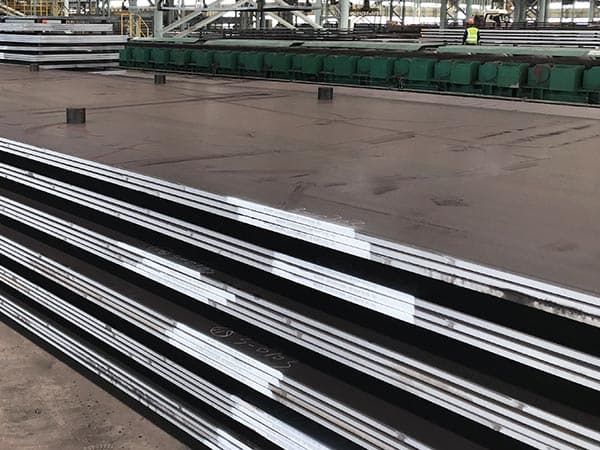
Understanding Grade S355MC in the Context of Modern Engineering
Grade S355MC represents a pinnacle in thermomechanically rolled high-yield strength steels specifically engineered for cold forming. Governed by the European standard EN 10149-2, this material has become a cornerstone in the automotive and heavy machinery sectors. The "S" denotes structural steel, "355" indicates a minimum yield strength of 355 MPa, and "MC" signifies that the steel is thermomechanically rolled (M) and intended for cold forming (C). Unlike traditional hot-rolled structural steels like s355jr, the MC variant offers superior formability and weight-reduction potential, making it indispensable for complex structural components.
Chemical Composition and Metallurgical Precision
The performance of S355MC is rooted in its precise chemical balance. By utilizing micro-alloying elements such as Niobium (Nb), Vanadium (V), and Titanium (Ti), manufacturers achieve a fine-grained microstructure without the need for high carbon content. This low carbon approach is critical for maintaining excellent weldability and toughness.
| Element | Maximum Content (%) |
|---|---|
| Carbon (C) | 0.12 |
| Manganese (Mn) | 1.50 |
| Silicon (Si) | 0.50 |
| Phosphorus (P) | 0.025 |
| Sulfur (S) | 0.020 |
| Aluminum (Al) | 0.015 |
| Niobium (Nb) | 0.09 |
| Vanadium (V) | 0.20 |
| Titanium (Ti) | 0.15 |
The integration of these micro-alloys facilitates grain refinement during the thermomechanical rolling process. This process involves controlled deformation at specific temperature ranges, which prevents grain growth and results in a structure that is both strong and ductile. The low sulfur and phosphorus levels are particularly vital for ensuring isotropic properties, meaning the steel maintains consistent strength and toughness across both longitudinal and transverse directions.
Mechanical Properties and Performance Benchmarks
For engineers designing automotive chassis or heavy-duty frames, the mechanical reliability of S355MC is non-negotiable. It provides a high strength-to-weight ratio, allowing for thinner gauges to be used without compromising structural integrity. This contributes significantly to vehicle lightweighting and improved fuel efficiency.
| Property | Value Range |
|---|---|
| Yield Strength (ReH) | Min 355 MPa |
| Tensile Strength (Rm) | 430 - 550 MPa |
| Elongation (A80mm) | Min 19% (Thickness < 3mm) |
| Elongation (A5.65) | Min 23% (Thickness ≥ 3mm) |
| Bending Radius (180°) | 0.5t to 1.5t (Depending on thickness) |
The high elongation values indicate that S355MC can withstand significant deformation during stamping and pressing operations. This is a critical factor for automotive manufacturers who need to produce complex geometries such as cross members and longitudinal beams with minimal risk of cracking or springback.
ASME and ASTM Equivalent Steel Grades
In global procurement and engineering, identifying the correct equivalent between European (EN) and American (ASME/ASTM) standards is essential. While there is no 100% identical match due to differences in testing methodologies and alloying philosophies, several grades serve as functional equivalents.
- ASTM A1011/A1011M Grade 50 (HSLAS Class 1): This is the most common American equivalent for S355MC in strip form. It offers a similar yield strength (approx. 345 MPa) and is designed for high-strength structural applications where formability is required.
- ASME SA-1011 Grade 50: As ASME often adopts ASTM standards for pressure vessel and structural applications, SA-1011 Grade 50 is the direct counterpart within the ASME Boiler and Pressure Vessel Code framework.
- ASTM A656 Grade 50: For thicker plates or strips requiring improved notch toughness and formability, A656 Grade 50 is often specified, particularly in heavy truck frames.
- ASTM A572 Grade 50: While A572 is a standard structural steel, it lacks the specific thermomechanical processing and micro-alloying optimization for high-level cold forming found in S355MC.
When substituting S355MC with an ASME equivalent, designers must verify the specific requirements for elongation and bending radii, as European standards often have stricter tolerances for these parameters in the "MC" category.
Advanced Processing: Bending, Welding, and Cutting
The utility of S355MC extends beyond its raw strength into its ease of fabrication. Its low carbon equivalent (CEV) makes it exceptionally suitable for all standard welding processes, including MIG/MAG, TIG, and submerged arc welding. Because the steel is fine-grained, the Heat Affected Zone (HAZ) remains relatively stable, though excessive heat input should be avoided to prevent grain coarsening.
Cold forming is where S355MC truly excels. It can be bent to very tight radii without surface fracturing. For a 3mm strip, a typical minimum bending radius is 0.5 times the thickness (0.5t) when bending transverse to the rolling direction. This allows for the creation of compact, high-strength joints and brackets. Furthermore, the material's clean chemistry ensures that laser cutting results in smooth, burr-free edges, reducing the need for secondary finishing operations.
Strategic Applications in the Automotive and Industrial Sectors
The adoption of S355MC has transformed the manufacturing of structural components. In the commercial vehicle industry, it is the standard for truck chassis, where it provides the necessary rigidity to handle heavy loads while remaining light enough to maximize payload capacity. Beyond the frame, it is used for crane booms, agricultural machinery, and cold-pressed profiles for construction.
In the automotive sector, S355MC is frequently utilized for:
- Chassis Cross Members: Providing lateral stability and crash protection.
- Suspension Components: Where fatigue resistance and strength are paramount.
- Seat Frames: Combining lightweighting with safety-critical durability.
- Bumper Brackets: Absorbing energy through controlled deformation.
Environmental Adaptability and Long-term Durability
While S355MC is not a weathering steel, its fine-grained structure provides a degree of inherent resistance to atmospheric corrosion compared to coarser structural steels. However, for long-term exposure, it is typically supplied in a pickled and oiled condition or subsequently galvanized. The material responds well to hot-dip galvanizing, provided the silicon content is controlled to avoid the Sandelin effect, which can lead to brittle coating layers. Its fatigue life is also superior, as the fine microstructure inhibits the initiation and propagation of micro-cracks under cyclic loading conditions common in transport applications.
Technical Benchmarks for Procurement and Quality Control
When sourcing S355MC, it is imperative to ensure compliance with EN 10149-2. Quality documentation should include Mill Test Certificates (MTC) to 3.1 or 3.2 levels, detailing the actual yield and tensile values, as well as the chemical analysis. For projects requiring ASME equivalents, the certification should ideally show dual-compliance or provide data that meets the ASTM A1011 HSLAS-F Grade 50 requirements. Buyers should also specify surface finish requirements, such as "as rolled" or "pickled and oiled," depending on the intended welding and coating processes. Proper storage is essential to prevent edge rust, which can interfere with precision laser cutting and automated welding systems.
Leave a message