
Growth of S460MC steel for earth moving machines exported to the Middle East
Explore why S460MC high-strength steel is becoming the standard for earth-moving machinery exported to the Middle East, focusing on its mechanical properties, fabrication advantages, and environmental resilience.
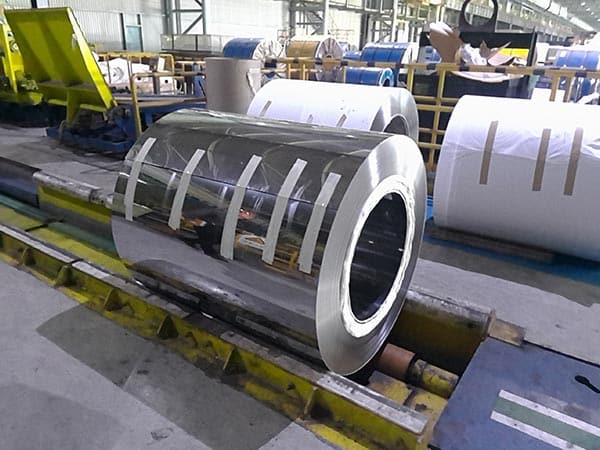
Strategic Adoption of S460MC Steel in the Middle Eastern Infrastructure Landscape
The Middle East is currently witnessing an unprecedented surge in infrastructure development, ranging from the ambitious NEOM project in Saudi Arabia to massive urban expansions in the UAE and Qatar. This boom has triggered a massive demand for heavy-duty earth-moving machinery—excavators, bulldozers, and loaders—that can withstand some of the harshest operating conditions on the planet. Manufacturers exporting to this region are increasingly pivoting toward S460MC high-strength low-alloy (HSLA) steel. This material shift is not merely a trend but a technical necessity driven by the need for equipment that offers higher payloads, reduced fuel consumption, and exceptional structural integrity under extreme thermal stress.
S460MC, governed by the EN 10149-2 standard, represents a category of thermomechanically rolled steels designed specifically for cold forming. Its adoption in the export market for the Middle East addresses the dual challenge of demanding mechanical requirements and the economic pressure for lightweighting. By utilizing S460MC, engineers can reduce the thickness of structural components without compromising safety or durability, which is a critical factor in lowering shipping costs and improving the operational efficiency of the machines on-site.
Mechanical Superiority and Material Composition
The core appeal of S460MC lies in its balanced mechanical profile. With a minimum yield strength of 460 MPa, it provides a significant upgrade over conventional S355 grades. This increased strength allows for the design of thinner, lighter sections that can carry the same or higher loads. The thermomechanical rolling process ensures a fine-grained microstructure, which is essential for maintaining toughness even at high operating temperatures common in desert environments.
| Property | Value (S460MC) | Technical Significance |
|---|---|---|
| Yield Strength (ReH) | Min 460 MPa | Higher load-bearing capacity for booms and arms. |
| Tensile Strength (Rm) | 520 - 670 MPa | Ensures structural integrity under peak stress. |
| Elongation (A5) | Min 14% (t < 3mm) / 17% (t ≥ 3mm) | Excellent ductility for complex forming. |
| Carbon Equivalent (CEV) | Approx. 0.30 - 0.38 | Superior weldability without preheating. |
The chemical composition of S460MC is meticulously controlled. Low carbon content (typically below 0.12%) is supplemented with micro-alloying elements like Niobium (Nb), Vanadium (V), and Titanium (Ti). These elements facilitate grain refinement and precipitation hardening. For machines operating in the Middle East, this fine grain structure is vital because it resists the micro-cracking that can be exacerbated by the rapid thermal cycling between scorching daytime temperatures and cooler desert nights.
Exceptional Cold Forming and Fabrication Performance
For manufacturers of earth-moving equipment, the ease of fabrication is as important as the final strength of the steel. S460MC is engineered for excellent cold forming properties. Unlike older high-strength steels that were prone to cracking during bending, S460MC allows for tight bend radii. This capability is crucial for creating the complex, aerodynamic, and ergonomic shapes required in modern excavator cabs and chassis components.
- Bending Precision: The consistent mechanical properties across the plate ensure that springback is predictable, which is essential for automated robotic bending cells.
- Laser and Plasma Cutting: The low impurity levels and clean surface finish of S460MC result in high-quality cut edges with minimal heat-affected zones (HAZ), reducing the need for secondary grinding operations.
- Surface Quality: The thermomechanical process produces a thin, tightly adherent scale, which is easier to remove during shot blasting, providing a superior substrate for high-performance anti-corrosion coatings.
When exporting to the Middle East, the aesthetic and functional longevity of the paint system is paramount due to the high UV index and abrasive sand. The superior surface quality of S460MC ensures that protective coatings bond more effectively, preventing the premature delamination often seen in lower-grade steels.
Welding Integrity in Heavy-Duty Structures
The structural frames of earth-moving machines are subjected to intense vibration and cyclical loading. Therefore, the weldability of the steel is a non-negotiable factor. S460MC excels in this regard due to its low carbon equivalent (CEV). In the manufacturing of large components like excavator booms or loader frames, the ability to weld without extensive preheating significantly reduces production time and energy costs.
The fine-grained structure of S460MC remains relatively stable in the heat-affected zone (HAZ) during welding. This stability prevents the localized softening that can occur in some quenched and tempered steels. Consequently, the welded joints maintain a high level of fatigue resistance, which is critical for machines that will spend thousands of hours digging through compacted sand and rocky terrain in the Middle East. Utilizing advanced welding techniques such as MAG (Metal Active Gas) or robotic submerged arc welding with S460MC ensures consistent penetration and minimal distortion.
Environmental Resilience: Conquering Heat and Abrasion
Operating earth-moving machinery in the Middle East presents unique environmental challenges. The ambient temperature can frequently exceed 50°C, and the equipment is constantly exposed to fine, abrasive silica sand. S460MC provides a robust foundation for overcoming these obstacles. While S460MC itself is not an "abrasion-resistant" steel like the Hardox series, its high yield strength allows it to serve as a durable structural backbone for components that are then fitted with specialized wear liners.
Furthermore, the material's performance at elevated temperatures is superior to standard carbon steels. It maintains its mechanical properties more effectively under thermal expansion, reducing the risk of structural warping. The high purity of the steel also minimizes the presence of non-metallic inclusions, which can act as initiation points for corrosion in the humid, saline coastal air of cities like Dubai, Abu Dhabi, and Jeddah.
Economic Impact and Lightweighting Advantages
The transition to S460MC offers a compelling return on investment (ROI) for both the manufacturer and the end-user. For the exporter, the primary advantage is weight reduction. By replacing S355 with S460MC, it is often possible to reduce the weight of structural components by 15% to 25%. This reduction directly translates to lower shipping costs—a significant factor in international trade.
For the operator in the Middle East, a lighter machine means better fuel efficiency and the ability to carry larger payloads. In the context of massive earth-moving projects, a 10% increase in bucket capacity or a 5% reduction in fuel consumption can lead to millions of dollars in savings over the fleet's lifecycle. Additionally, the enhanced durability of S460MC structures leads to longer service intervals and reduced downtime, which is vital in remote desert locations where maintenance facilities may be hundreds of kilometers away.
Future Outlook for S460MC in Heavy Machinery
As the Middle East continues to invest in "Giga-projects" and sustainable infrastructure, the demand for high-performance materials like S460MC will only grow. Manufacturers are now looking toward even higher grades, such as S500MC and S700MC, but S460MC remains the "sweet spot" for many applications, offering the best balance between cost, strength, and ease of processing. The growth of S460MC in this sector highlights a broader shift toward engineering-driven material selection, where the goal is to build machines that are not just bigger, but smarter, lighter, and more resilient to the world's most demanding environments.
Leave a message