
What corrodes steel en 10149-2 s700mc the fastest?
An expert analysis of what causes the fastest corrosion in EN 10149-2 S700MC steel. Explore the impact of chlorides, acids, and environmental stressors on high-yield strength steel performance.
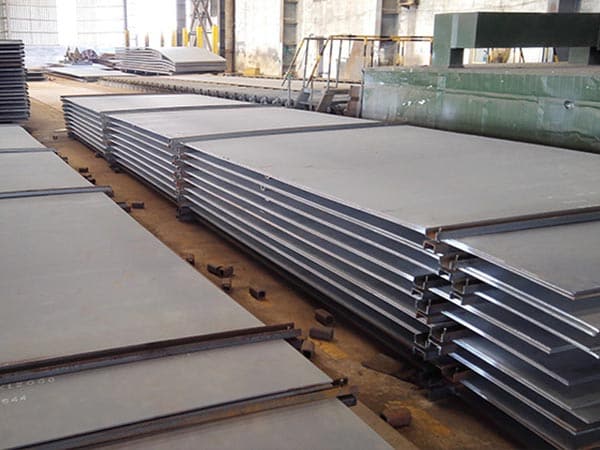
Understanding the Chemical Vulnerability of S700MC Steel
EN 10149-2 S700MC is a high-yield strength, thermomechanically rolled steel designed for cold forming. While it offers exceptional mechanical properties, particularly a minimum yield strength of 700 MPa, it remains a low-alloy steel. Unlike stainless steels, it lacks a high chromium content to form a protective passive layer. Therefore, understanding what corrodes this material the fastest is critical for engineers and manufacturers who utilize it in demanding structural applications.
The corrosion rate of S700MC is not a fixed value; it depends heavily on the interaction between its refined microstructure and the specific aggressive agents in its environment. Because this steel is often used in weight-sensitive applications like truck chassis, crane arms, and heavy machinery, even localized corrosion can lead to significant structural integrity risks.
The Primary Catalyst: Chloride-Rich Environments
Among all natural and industrial agents, chlorides are arguably the fastest common corrodents for EN 10149-2 S700MC. Chloride ions, typically found in marine environments or from road de-icing salts, are exceptionally small and highly mobile. They penetrate the initial iron oxide layers (rust) that form on the steel surface.
When S700MC is exposed to salt spray or coastal air, the chlorides facilitate an electrochemical process known as pitting corrosion. Unlike uniform corrosion, pitting creates deep, localized holes. For a high-strength steel like S700MC, these pits act as stress concentrators. Under mechanical load, these tiny pits can initiate cracks, leading to premature failure far below the theoretical load-bearing capacity of the material.
- Marine Exposure: Direct contact with seawater or salt-laden mist accelerates the cathodic and anodic reactions.
- De-icing Salts: In the automotive and transport sectors, S700MC chassis components face rapid degradation during winter months due to calcium and sodium chlorides.
- Concentration Gradients: Areas where salt water can collect and evaporate lead to high chloride concentrations, exponentially increasing the corrosion rate.
Industrial Acids and Chemical Attack
While chlorides are common, strong mineral acids are the fastest chemical corrodents in industrial settings. S700MC is highly susceptible to solutions containing sulfuric acid (H2SO4), hydrochloric acid (HCl), and nitric acid (HNO3). These chemicals directly dissolve the iron matrix of the steel.
In environments such as chemical processing plants or where industrial exhaust (containing sulfur oxides) mixes with moisture to form acid rain, the degradation of S700MC is rapid. The low alloy content of S700MC—primarily manganese, niobium, and vanadium—provides virtually no resistance to low-pH environments. In a concentrated acidic solution, S700MC can lose significant mass and thickness within days, rendering structural components unsafe.
The Role of Microstructure in Stress Corrosion Cracking (SCC)
S700MC derives its strength from a very fine grain structure achieved through thermomechanical rolling. However, this high-strength state makes it more susceptible to Stress Corrosion Cracking (SCC) when exposed to specific corrosive media like hydrogen sulfide (H2S) or certain alkaline solutions.
Hydrogen embrittlement is a specific form of rapid degradation. When S700MC corrodes in an environment where hydrogen is generated (such as in sour gas applications or during certain pickling processes), the hydrogen atoms diffuse into the steel's grain boundaries. This causes the steel to become brittle and crack suddenly under tension. For a material designed for high-load capacity, this is the most dangerous form of 'corrosion' because it happens with very little visible surface metal loss.
Environmental and Process Factors Influencing Corrosion Rates
| Factor | Impact on S700MC Corrosion | Severity Level |
|---|---|---|
| Humidity & Oxygen | High humidity provides the electrolyte needed for oxidation. | Moderate |
| Chloride Concentration | Breaks down surface films and causes localized pitting. | High |
| Temperature | Chemical reactions double in speed for every 10°C rise. | High |
| pH Level (Acidity) | pH < 4 causes rapid dissolution of the steel matrix. | Extreme |
| Galvanic Coupling | Contact with noble metals (like copper) accelerates S700MC decay. | Moderate to High |
The Impact of Cold Forming and Welding
EN 10149-2 S700MC is prized for its cold forming capabilities. However, the process of bending and shaping introduces residual stresses into the material. Areas with high residual stress are often more anodic than the rest of the structure, meaning they will corrode faster when exposed to moisture—a phenomenon known as stress-accelerated corrosion.
Welding also plays a significant role. Although S700MC has low carbon equivalent values for good weldability, the Heat Affected Zone (HAZ) undergoes microstructural changes. If the welding parameters are not strictly controlled, the HAZ can become a localized site for galvanic corrosion, where the weld bead or the surrounding metal acts as an anode and degrades rapidly compared to the base plate.
Comparative Analysis: S700MC vs. Other Steel Grades
When comparing S700MC to standard structural steels like s355jr, the corrosion rate in terms of 'millimeters per year' is often similar because both are essentially carbon-manganese steels. However, the consequences of corrosion are much faster and more severe for S700MC. Because S700MC components are usually designed with thinner cross-sections to save weight, a loss of 1mm of thickness represents a much higher percentage of structural loss than it would for a thicker S355 plate.
Furthermore, the high yield strength of S700MC makes it more sensitive to 'notches' caused by corrosion. A small pit that might be negligible on a mild steel plate can trigger a catastrophic fracture in a high-strength S700MC component under high cyclic loading.
Protecting S700MC from Rapid Corrosion
To prevent the rapid degradation caused by the factors mentioned above, several protective strategies are essential for S700MC applications:
- High-Performance Coatings: Zinc-rich primers, epoxy coatings, or hot-dip galvanizing are the most common methods to isolate the steel from chlorides and moisture.
- Cathodic Protection: In marine or underground applications, sacrificial anodes can be used to protect the S700MC structure.
- Design Optimization: Avoiding 'water traps' and ensuring proper drainage prevents the stagnant moisture and salt accumulation that leads to accelerated local corrosion.
- Material Selection: If the environment is consistently acidic or highly saline, moving from S700MC to a weathered steel (like Corten) or a stainless steel grade may be necessary, despite the higher cost.
Summary of Accelerated Corrosion Triggers
The fastest corrosion of EN 10149-2 S700MC occurs when multiple stressors overlap. For instance, a welded S700MC joint under high tension, exposed to warm, oxygenated seawater, will degrade at an alarming rate. The combination of chemical attack (chlorides), electrochemical potential (welding HAZ), and mechanical stress creates a 'perfect storm' for material failure.
By identifying these aggressive agents early in the design phase, the longevity of S700MC can be significantly extended, ensuring that its high strength and excellent forming properties are utilized to their full potential without the risk of sudden environmental degradation.
Leave a message