
Why laser cutting keeps S355MC pickling steel coil company with precise size
Discover the technical synergy between S355MC pickling steel coils and laser cutting technology. Learn how material composition and surface treatment ensure dimensional accuracy.
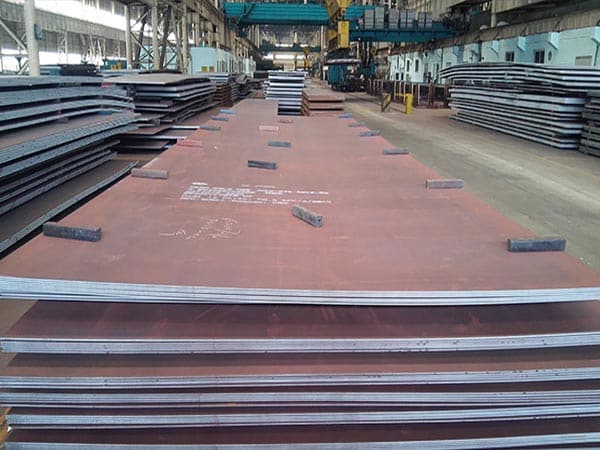
The Synergy of Material Science and Precision Engineering
In the modern manufacturing landscape, the demand for high-strength components with tight tolerances has never been higher. S355MC pickling steel coil stands out as a premier choice for engineers who require a balance of high yield strength and excellent cold-forming properties. When paired with advanced laser cutting technology, this material exhibits remarkable dimensional stability. The relationship between the material's metallurgical profile and the laser's thermal dynamics is the core reason why manufacturers achieve such precise sizes consistently.
S355MC is a thermomechanically rolled, high-yield strength steel governed by the EN 10149-2 standard. Unlike traditional hot-rolled steels, the "MC" designation indicates a specific rolling process that refines the grain structure, making it highly predictable during thermal processing. This predictability is exactly what laser cutting systems require to maintain accuracy across large production runs.
Chemical Composition and Its Impact on Laser Interaction
The precision of a laser cut is largely determined by how the material absorbs and dissipates heat. S355MC features a low carbon content (typically ≤ 0.12%) and is micro-alloyed with elements like Niobium (Nb), Vanadium (V), and Titanium (Ti). These elements create a fine-grain structure that prevents excessive grain growth during the localized heating of a laser beam.
When the laser hits the surface of an S355MC coil, the micro-alloying elements help stabilize the melt pool. A stable melt pool translates to a narrower kerf (the width of the cut) and a smaller Heat Affected Zone (HAZ). This minimizes thermal distortion, ensuring that the final part matches the CAD design within microns. Furthermore, the low silicon content (often ≤ 0.03%) prevents the formation of thick, irregular slag on the underside of the cut, which is common in higher-silicon steels.
The Critical Role of the Pickling Process
Standard hot-rolled steel is covered in a layer of iron oxide scale (mill scale). This scale is a nemesis to laser cutting precision. Mill scale has a different thermal conductivity and laser absorption rate than the base metal, leading to inconsistent cutting speeds and "blow-outs" where the laser fails to penetrate cleanly.
Pickling and Oiling (P&O) removes this scale through a controlled hydrochloric acid bath, leaving a clean, uniform metallic surface. For S355MC, this surface treatment provides several advantages for laser precision:
- Consistent Absorption: The absence of scale ensures the laser beam's energy is absorbed uniformly across the entire surface of the coil.
- Reduced Reflection: A clean surface reduces the risk of back-reflection, which can damage fiber laser optics and cause power fluctuations.
- Smooth Feed: Pickled steel has a lower coefficient of friction, allowing for smoother movement through automated laser feed systems, reducing mechanical errors.
- Immediate Post-Processing: The clean surface allows for immediate inspection and measurement, ensuring that any deviation is caught before a large batch is processed.
Mechanical Properties and Dimensional Stability
The mechanical integrity of S355MC is a significant factor in why it remains the preferred "company" for laser cutting machines. With a minimum yield strength of 355 MPa, it provides the structural rigidity needed for complex geometries without the bulk of traditional carbon steels.
| Property | Value (Typical) | Impact on Laser Precision |
|---|---|---|
| Yield Strength (ReH) | ≥ 355 MPa | Reduces structural sagging during the cutting of large spans. |
| Tensile Strength (Rm) | 430 - 550 MPa | Ensures the edges remain crisp and do not deform under thermal stress. |
| Elongation (A80) | ≥ 19% | Allows for stress relief without cracking during rapid cooling. |
| Surface Finish | Pickled & Oiled | Provides a constant focal point for the laser head. |
Managing Residual Stress for Flatness
One of the greatest challenges in laser cutting is material "bowing" or "spring-back." This occurs when internal stresses within the steel coil are released as the laser cuts through the material. S355MC, through its thermomechanical rolling process, is engineered to have lower and more uniform residual stresses compared to standard hot-rolled plates.
When a laser cutter navigates intricate patterns, the S355MC material stays flat on the cutting bed. This flatness is crucial because laser cutting relies on a constant distance between the nozzle and the workpiece (the focal length). If the material warps during the cut, the focal point shifts, leading to wider kerfs, dross formation, and dimensional inaccuracies. The inherent stability of S355MC ensures the focal point remains optimal throughout the entire process.
Environmental and Industrial Adaptability
S355MC is widely utilized in the automotive, heavy machinery, and agricultural sectors. These industries require parts that are not only precise but also capable of withstanding harsh environments. The laser-cut edges of S355MC are remarkably clean, which is vital for subsequent processes like robotic welding or powder coating.
Because the laser-cut edge of a pickled S355MC sheet is free from carbonization and heavy oxide layers, the weldability of the parts is significantly enhanced. There is no need for secondary grinding or cleaning operations, which preserves the precise dimensions achieved during the cutting stage. This "ready-to-use" quality is a major cost-saver for high-volume manufacturers.
Optimizing the Laser Cutting Parameters for S355MC
To maximize the precision of S355MC, operators typically use Nitrogen (N2) as an assist gas for thinner gauges and Oxygen (O2) for thicker sections. Nitrogen cutting (fusion cutting) is particularly effective with S355MC pickling steel because it prevents oxidation of the cut edge, maintaining the exact silver-bright finish of the pickled surface. This method results in a square edge with zero taper, which is essential for parts that must fit together in tight assemblies.
The use of high-pressure Nitrogen also helps in cooling the material rapidly, which further restricts the Heat Affected Zone. This synergy between the gas, the laser, and the S355MC's chemical purity allows for the creation of holes and slots that are smaller than the material thickness—a feat difficult to achieve with other steel grades.
Future-Proofing Production with S355MC
As laser technology moves toward higher power (20kW and beyond), the quality of the raw material becomes even more critical. S355MC pickling steel coils are uniquely suited for high-speed fiber laser cutting. The uniformity of the material allows for "fly-cutting" techniques where the laser never stops, maintaining a blistering pace while keeping tolerances within +/- 0.1mm.
Choosing S355MC is not just about the strength of the steel; it is about the reliability of the manufacturing workflow. The consistency from coil to coil means that once a laser cutting program is optimized, it can be replicated across thousands of tons of material without the need for constant adjustment. This level of process stability is the ultimate goal for any precision-oriented company.
Leave a message