
What is the BBNSteel company din en 10149-2 price
Discover the latest pricing factors for DIN EN 10149-2 high yield strength steel at BBNSteel. Explore technical specifications, mechanical properties, and market trends for S315MC to S700MC grades.
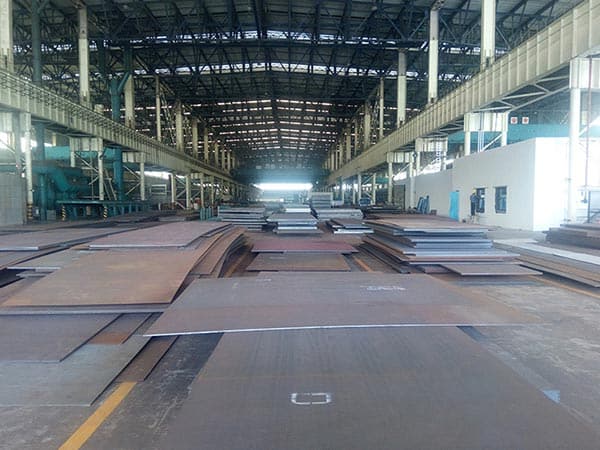
Understanding the DIN EN 10149-2 Pricing Structure at BBNSteel
Determining the exact price of DIN EN 10149-2 steel requires a deep dive into the specific grades and technical requirements of your project. At BBNSteel, the price for these high-yield strength, thermomechanically rolled steels—ranging from S315MC to S700MC—is influenced by global raw material fluctuations, processing complexities, and order volumes. Unlike standard structural steels, the DIN EN 10149-2 series is engineered for cold forming, which necessitates a more refined production process. This technical sophistication is reflected in the market value, as these materials offer a superior strength-to-weight ratio that significantly reduces overall project costs by lowering material consumption.
Current market trends suggest that prices for mid-range grades like S355MC and S420MC remain relatively stable, while ultra-high-strength grades such as S700MC command a premium due to the specialized micro-alloying elements like Niobium, Titanium, and Vanadium required to achieve their exceptional properties. BBNSteel provides real-time quotes based on current LME nickel and iron ore indexes, ensuring that customers receive the most competitive rates for high-performance flat products.
The Technical Superiority of S-MC Series Steel
The DIN EN 10149-2 standard specifies hot-rolled flat products made of high yield strength steels for cold forming. The "MC" designation indicates that these steels are thermomechanically rolled (M) and possess high cold-formability (C). This manufacturing process is critical because it allows the steel to achieve high strength without the need for high carbon content, which would otherwise compromise weldability and toughness.
Thermomechanical Rolling (TMCP): This process involves precise temperature control during the rolling stages. By finishing the rolling at a specific temperature, the grain structure of the steel is refined to a microscopic level. This fine-grained structure is the primary reason why BBNSteel's DIN EN 10149-2 products exhibit such high yield points while maintaining excellent ductility. For engineers, this means the ability to design lighter components without sacrificing safety or structural integrity.
Chemical Composition and Its Influence on Cost
The chemical makeup of DIN EN 10149-2 steel is a primary driver of its price. To achieve high yield strength while maintaining weldability, the carbon content is kept extremely low (typically below 0.12%). Instead of carbon, micro-alloying elements are added. These elements are more expensive than standard carbon steel additives, which accounts for the price delta between S235JR and S700MC.
| Grade | C % (max) | Mn % (max) | Si % (max) | P % (max) | S % (max) | Al % (min) |
|---|---|---|---|---|---|---|
| S315MC | 0.12 | 1.30 | 0.50 | 0.025 | 0.020 | 0.015 |
| S420MC | 0.12 | 1.60 | 0.50 | 0.025 | 0.015 | 0.015 |
| S500MC | 0.12 | 1.70 | 0.50 | 0.025 | 0.015 | 0.015 |
| S700MC | 0.12 | 2.10 | 0.60 | 0.025 | 0.015 | 0.015 |
The addition of Niobium (Nb), Vanadium (V), and Titanium (Ti) as grain refiners is what truly sets these steels apart. These elements form carbides and nitrides that pin grain boundaries during the rolling process, preventing grain growth and ensuring a uniform, high-strength matrix. BBNSteel ensures that every batch meets these stringent chemical requirements, providing mill test certificates (MTC) to verify the alloy composition.
Mechanical Performance Benchmarks
When evaluating the price of DIN EN 10149-2, one must consider the mechanical performance you are purchasing. Higher grades allow for thinner sections to carry the same load as thicker, lower-grade steels. This "down-gauging" capability is the most significant economic advantage of the S-MC series.
- Yield Strength: Ranges from 315 MPa (S315MC) up to 700 MPa (S700MC). This is the stress level at which the steel begins to deform plastically.
- Tensile Strength: The maximum stress the material can withstand before breaking, ranging from 390 MPa to 950 MPa depending on the grade.
- Elongation: Despite their high strength, these steels maintain good elongation (typically 12% to 20% for S700MC depending on thickness), allowing for complex bending and forming operations.
- Impact Toughness: Many of these grades are tested at low temperatures (e.g., -20°C or -40°C) to ensure they do not become brittle in cold environments, a crucial factor for mobile machinery and transport vehicles.
Processing Advantages: Why BBNSteel Products Save You Money
The value of BBNSteel's DIN EN 10149-2 steel extends beyond the initial purchase price. Because these steels are designed for cold forming, they offer exceptional processing characteristics that reduce manufacturing costs downstream.
Excellent Weldability: Due to the low carbon equivalent (CEV), S-MC steels can be welded using all standard methods (MIG, TIG, Laser, Submerged Arc) without the need for extensive pre-heating. This speeds up production cycles and reduces energy consumption in the workshop.
Superior Laser Cutting: The clean chemical composition and uniform surface quality of BBNSteel products make them ideal for high-speed laser cutting. The absence of heavy scale and internal stresses ensures precise cuts and minimal distortion, which is vital for automated assembly lines.
Bending and Folding: The "C" in the grade designation guarantees that the steel can be bent to tight radii without cracking. This allows for the design of complex, single-piece components that replace multi-part welded assemblies, further reducing labor costs and potential failure points.
Market Dynamics Affecting DIN EN 10149-2 Quotes
When you ask for the BBNSteel company DIN EN 10149-2 price, several external factors are at play. Steel pricing is dynamic, and understanding these variables can help in timing your procurement. First, the cost of alloying elements like Niobium and Vanadium fluctuates based on global mining output. Second, energy costs in the manufacturing region impact the thermomechanical rolling process, which is energy-intensive.
Furthermore, logistics play a major role. BBNSteel offers various delivery conditions, including FOB, CIF, and DDP. Shipping high-strength steel requires careful handling to prevent surface damage or moisture exposure, which could lead to oxidation. We provide specialized packaging and moisture-resistant wrapping to ensure the steel arrives in pristine condition, ready for immediate use in your production line.
Applications Across High-End Manufacturing
The adoption of DIN EN 10149-2 steel is growing rapidly across sectors where weight reduction is a priority. In the automotive industry, using S700MC for truck chassis and longitudinal beams allows for a lighter vehicle weight, which translates directly into higher payload capacity and lower fuel consumption. This environmental adaptability makes it a preferred choice for companies aiming to meet stringent carbon emission targets.
In the construction and heavy machinery sector, crane booms, telescopic arms, and agricultural equipment benefit from the high yield strength. These components must withstand extreme stresses while remaining as light as possible to maintain stability. The durability of BBNSteel's high-strength plates ensures a long service life even under cyclical loading conditions, providing a high return on investment for equipment manufacturers.
BBNSteel also supplies these grades for the energy sector, specifically for wind turbine components and support structures where high strength and fatigue resistance are non-negotiable. By choosing the right grade from the DIN EN 10149-2 standard, engineers can optimize their designs for both performance and cost-efficiency, ensuring that the final product is competitive in a global market.
Leave a message