
Is en 10149-2 s355mc equivalent hot or cold rolled?
A comprehensive technical guide to S355MC steel under EN 10149-2, explaining its thermomechanical hot-rolling process, mechanical properties, and industrial applications.
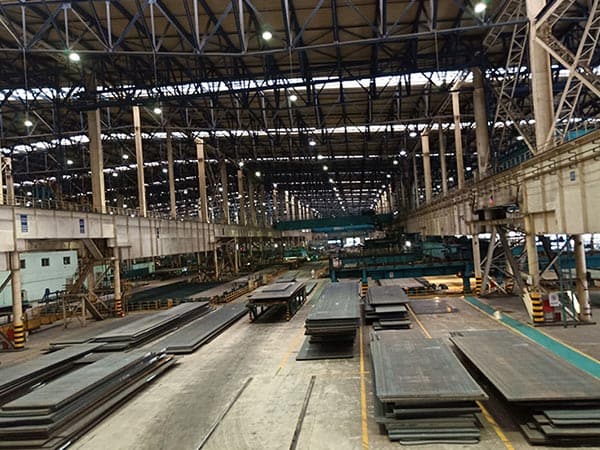
The Fundamental Definition: Is S355MC Hot or Cold Rolled?
Understanding the metallurgical status of S355MC is crucial for engineers and procurement specialists. According to the EN 10149-2 standard, S355MC is a high-yield-strength steel specifically designed for cold forming, but it is produced through a hot-rolling process. Specifically, the 'M' in its designation stands for 'Thermomechanically Rolled,' and the 'C' indicates it is suitable for 'Cold Forming.' This often leads to confusion, as many assume that steel intended for cold forming must be cold-rolled. In reality, S355MC is a hot-rolled product that undergoes a sophisticated cooling and rolling regime to achieve properties that rival or exceed those of traditional cold-rolled materials.
Thermomechanical rolling (TMCP) is a process where the final deformation is carried out in a specific temperature range, leading to a fine-grained microstructure that cannot be achieved by traditional heat treatment alone. This process allows S355MC to maintain high strength while offering the ductility required for complex bending and flanging operations. Unlike standard hot-rolled structural steels like s355jr, S355MC provides a much more consistent surface finish and tighter dimensional tolerances, bridging the gap between traditional hot-rolled and cold-rolled plates.
Chemical Composition and the Role of Micro-alloying
The exceptional performance of S355MC stems from its precise chemical makeup. Unlike commodity steels, S355MC utilizes micro-alloying elements such as Niobium (Nb), Vanadium (V), and Titanium (Ti). These elements are added in minute quantities to refine the grain size and provide precipitation hardening. The low carbon content is also a defining feature, ensuring that the material remains highly weldable without the risk of cold cracking.
| Element | Maximum Content (%) |
|---|---|
| Carbon (C) | 0.12 |
| Manganese (Mn) | 1.50 |
| Silicon (Si) | 0.50 |
| Phosphorus (P) | 0.025 |
| Sulfur (S) | 0.020 |
| Aluminium (Al) | 0.015 (min) |
| Nb + V + Ti | 0.22 (total) |
The reduction in carbon and sulfur levels is intentional. Low sulfur content, often achieved through ladle desulfurization, results in fewer sulfide inclusions. This is critical for the steel's isotropic properties, meaning it performs consistently whether it is being bent parallel or perpendicular to the rolling direction. This characteristic is a significant advantage over standard S355 grades, which may exhibit lamellar tearing or cracking when subjected to severe cold deformation.
Mechanical Properties and Yield Strength Efficiency
The '355' in S355MC refers to its minimum yield strength of 355 MPa for thicknesses up to 16mm. This high strength-to-weight ratio allows designers to use thinner sections without compromising structural integrity. This is a key driver in the automotive and transport industries, where weight reduction directly translates to fuel efficiency and increased payload capacity.
The tensile strength typically ranges between 430 and 550 MPa, providing a robust safety margin. Furthermore, the elongation properties (A80 or A5, depending on thickness) are superior to many other structural steels, ensuring that the material can absorb significant energy before failure. This makes it an ideal candidate for safety-critical components in heavy machinery and vehicle chassis.
- Yield Strength (ReH): min. 355 MPa
- Tensile Strength (Rm): 430 - 550 MPa
- Elongation (A5): min. 23% (for thicknesses < 3mm)
- Bending Radius: Can be bent at very tight radii (e.g., 0.5t to 1.5t depending on thickness)
Processing Performance: Bending, Welding, and Cutting
One of the primary reasons for choosing S355MC is its excellent processability. In the workshop, the material behaves predictably, which is essential for automated production lines. Because it is thermomechanically rolled, it possesses a very fine ferrite-pearlite structure. This structure is particularly beneficial for laser cutting. The low silicon and controlled phosphorus content ensure a clean, smooth cut edge with minimal dross, reducing the need for secondary finishing operations.
When it comes to welding, S355MC is remarkably forgiving. Its low Carbon Equivalent (CEV) value means it can be welded using all standard methods, including MIG/MAG, TIG, and submerged arc welding, usually without the need for preheating. This accelerates production cycles and reduces energy costs. However, it is important to note that excessive heat input should be avoided to prevent grain growth in the heat-affected zone (HAZ), which could locally reduce the yield strength.
Cold forming is where S355MC truly shines. It is capable of being bent into complex shapes that would cause standard S355JR to crack. The minimum bending radius for S355MC is significantly smaller than that of traditional hot-rolled structural steels. This allows for more compact and efficient component designs, particularly in the manufacturing of brackets, sections, and structural profiles.
Comparative Analysis: S355MC vs. S355JR and Cold Rolled Grades
A common question arises: why not use S355JR or a standard cold-rolled DC01 grade? The answer lies in the balance of strength and formability. S355JR is a standard structural steel with higher carbon and sulfur limits; it is not optimized for complex bending and lacks the grain refinement of S355MC. While S355JR is cheaper, the risk of failure during fabrication often makes it more expensive in the long run.
Compared to cold-rolled steels (like SPCC or DC01), S355MC offers much higher yield strength. Cold-rolled steels are typically limited in thickness (usually up to 3mm) and have lower structural strength. S355MC provides the strength of a structural steel with the formability approaching that of a cold-rolled sheet, available in thicknesses from 1.5mm up to 20mm or more. This makes it a versatile "hybrid" solution for industrial applications.
Environmental Adaptability and Durability
S355MC is often used in environments where it is exposed to the elements. While it is not a weathering steel (like Corten), its fine-grained structure provides a slightly better resistance to atmospheric corrosion than coarse-grained steels. Most S355MC is supplied in a pickled and oiled condition (S355MC+P&O), which removes the mill scale and provides a clean surface for painting, galvanizing, or powder coating. This surface preparation is vital for ensuring long-term coating adhesion and corrosion protection in harsh environments.
In terms of temperature stability, S355MC maintains its mechanical properties across a reasonable range of operating temperatures. While EN 10149-2 does not strictly mandate impact testing at sub-zero temperatures (unlike the 'J2' or 'K2' designations in EN 10025), the thermomechanical process naturally improves the transition temperature, making it more resistant to brittle fracture than standard hot-rolled grades in colder climates.
Industry Applications: Where S355MC Dominates
The unique properties of S355MC have made it a staple in several high-demand industries. Its ability to be formed into lightweight yet strong components is utilized extensively in:
- Automotive Industry: Chassis parts, cross members, and structural reinforcements for trucks and trailers.
- Heavy Machinery: Crane arms, excavator buckets, and agricultural equipment where weight saving is critical for performance.
- Construction: Cold-formed sections, purlins, and racking systems that require high load-bearing capacity.
- Energy Sector: Components for wind turbine towers and solar mounting structures that demand high reliability.
In the transport sector, the move toward S355MC and higher grades like S700MC has revolutionized trailer design. By using S355MC, manufacturers can reduce the dead weight of a vehicle by up to 20%, allowing for higher payloads and reduced carbon emissions per ton-kilometer. This alignment with modern sustainability goals is a major factor in the steel's growing popularity.
Technical Considerations for Procurement
When specifying S355MC, it is essential to ensure compliance with EN 10149-2. Buyers should verify the mill test certificates (MTC) for the 'M' (thermomechanical) and 'C' (cold forming) designations. It is also important to consider the surface finish. For parts that will be laser cut or painted, the pickled and oiled condition is highly recommended to avoid the abrasive mill scale that can damage cutting heads and compromise paint quality.
Furthermore, understanding the thickness-dependent properties is key. As thickness increases, the cooling rate during thermomechanical rolling changes, which can slightly affect the grain structure. Reputable suppliers provide detailed data on the minimum bending radii for each thickness to ensure that fabrication processes do not exceed the material's limits.
The Future of High-Strength Steels
The evolution of S355MC represents a broader trend in metallurgy toward High-Strength Low-Alloy (HSLA) steels. As industries push for greater efficiency and lower environmental impact, the demand for steels that offer "more with less" continues to rise. S355MC is the entry point into this high-performance world, providing a cost-effective, reliable, and highly processable solution for modern engineering challenges. By choosing S355MC, manufacturers are not just selecting a steel grade; they are adopting a material technology that enables smarter, lighter, and more durable designs.
Leave a message