
Is en 10149-2 s700mc mild steel?
Explore whether EN 10149-2 S700MC is classified as mild steel. This guide covers chemical composition, mechanical properties, and industrial applications of S700MC.
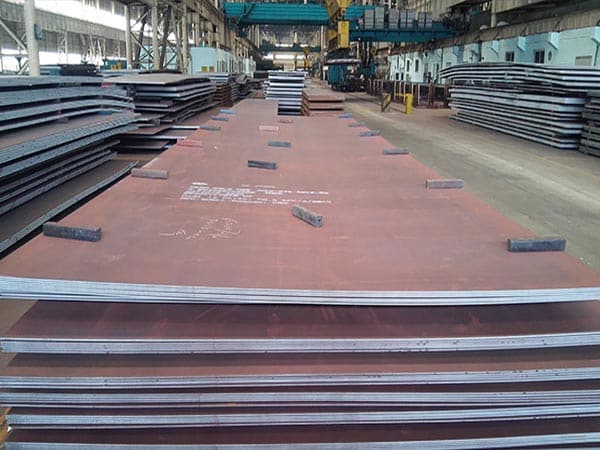
Understanding the Classification: Is S700MC Mild Steel?
When evaluating materials for structural engineering or automotive manufacturing, the term "mild steel" often surfaces as a baseline for comparison. However, classifying EN 10149-2 S700MC as mild steel is technically inaccurate. While both materials share a low carbon content, S700MC is a sophisticated High Strength Low Alloy (HSLA) steel specifically designed for cold forming. Traditional mild steel, such as S235JR, typically offers a yield strength of around 235 MPa. In stark contrast, S700MC boasts a minimum yield strength of 700 MPa, placing it in an entirely different performance bracket.
The "MC" suffix in S700MC indicates that the material is thermomechanically rolled (M) and intended for cold forming (C). This specialized manufacturing process creates a fine-grained microstructure that allows the steel to achieve high strength without the brittleness typically associated with high-carbon alloys. Therefore, while it shares the weldability and formability traits of mild steel, its load-bearing capacity is nearly three times higher.
Chemical Composition: The Secret Behind the Strength
The chemical makeup of S700MC is meticulously controlled to ensure a balance between extreme strength and excellent ductility. Unlike traditional mild steels that rely primarily on carbon for strength, S700MC utilizes micro-alloying elements. Elements such as Niobium (Nb), Vanadium (V), and Titanium (Ti) are added in minute quantities to refine the grain structure during the thermomechanical rolling process.
| Element | S700MC Max % | Typical Mild Steel (S235) Max % |
|---|---|---|
| Carbon (C) | 0.12 | 0.17 - 0.20 |
| Manganese (Mn) | 2.10 | 1.40 |
| Silicon (Si) | 0.60 | - |
| Phosphorus (P) | 0.025 | 0.035 |
| Sulphur (S) | 0.015 | 0.035 |
| Nb + V + Ti | 0.22 | N/A |
As shown in the table, S700MC actually maintains a lower carbon content than many grades of mild steel. This low carbon equivalent is vital for maintaining superior weldability. The strength is derived from the grain refinement and precipitation hardening provided by the micro-alloys, rather than high carbon levels which would compromise toughness and weldability.
Mechanical Properties and Performance Metrics
The defining characteristic of S700MC is its mechanical performance. Under the EN 10149-2 standard, this steel must meet rigorous requirements for yield strength, tensile strength, and elongation. These properties allow engineers to design lighter structures by using thinner sections of S700MC to replace thicker, heavier sections of mild steel.
- Yield Strength (ReH): Minimum 700 MPa.
- Tensile Strength (Rm): 750 to 950 MPa.
- Elongation (A80mm): Minimum 10-12% depending on thickness.
- Impact Energy: Often tested at -20°C or -40°C to ensure low-temperature toughness.
This high strength-to-weight ratio is the primary reason S700MC is preferred in transport and lifting industries. Using S700MC can reduce the dead weight of a vehicle chassis by up to 30% compared to traditional mild steel, directly translating to higher payloads and improved fuel efficiency.
Cold Forming and Bending Characteristics
Despite its high strength, S700MC is specifically engineered for cold forming. Fabricators often worry that high-strength steels will crack during bending, but the fine-grained structure of S700MC mitigates this risk. However, it requires more force to bend than mild steel, and the springback effect is more pronounced.
When working with S700MC, it is essential to adhere to the recommended minimum bending radii. For a sheet thickness (t), the recommended inner bending radius is typically 2.0t to 2.5t for 90-degree bends. Using high-quality tooling and ensuring the bending axis is perpendicular to the rolling direction can further enhance the quality of the finished component.
Welding and Fabrication Best Practices
Welding S700MC is straightforward due to its low carbon equivalent (CEV). It can be welded using standard methods such as MAG (Metal Active Gas), MIG, or Laser welding. However, because the strength of S700MC is derived from its thermomechanical processing, excessive heat input must be avoided.
High heat input can lead to grain growth in the Heat Affected Zone (HAZ), which may result in a localized reduction in strength. To maintain the integrity of the joint, it is recommended to use low heat input welding parameters and ensure rapid cooling. Preheating is generally not required for S700MC unless the ambient temperature is extremely low or the material thickness is exceptional, which is rare for this grade as it is typically produced in thicknesses up to 20mm.
Environmental Adaptability and Fatigue Resistance
S700MC exhibits excellent fatigue resistance, making it suitable for components subjected to dynamic loading. The fine-grained structure hinders the initiation and propagation of cracks. In terms of environmental adaptability, while S700MC is not a weathering steel like Corten, its clean chemical composition provides a consistent surface for galvanizing or painting.
For applications in cold climates, S700MC offers reliable notch toughness. This ensures that the material remains ductile and resistant to brittle fracture even at sub-zero temperatures, a critical requirement for mobile cranes and offshore equipment operating in harsh environments.
Industrial Applications of S700MC
The transition from mild steel to S700MC is driven by the need for efficiency and performance. Several industries have adopted this material as a standard for high-stress components.
- Automotive & Trucking: Chassis frames, cross members, and bumper reinforcements where weight reduction is critical.
- Lifting Equipment: Telescopic booms for cranes, aerial work platforms, and support structures.
- Agricultural Machinery: Plow frames, trailer chassis, and heavy-duty harvesters.
- Waste Management: Refuse collection vehicle bodies and containers where high wear resistance and strength are needed.
By utilizing S700MC, manufacturers can achieve a "lightweighting" effect. This not only reduces material costs by using less steel but also enhances the environmental profile of the end product by reducing carbon emissions during the vehicle's operational life.
Comparison Table: S700MC vs. Mild Steel (S235JR)
| Feature | S700MC (EN 10149-2) | Mild Steel (S235JR) |
|---|---|---|
| Yield Strength | 700 MPa min | 235 MPa min | Weight Reduction Potential | High (Up to 40%) | Low (Baseline) | Formability | Excellent (Optimized for Cold Forming) | Excellent | Weldability | Excellent (Requires Heat Control) | Excellent (Very Forgiving) | Cost per Ton | Higher | Lower |
| Overall Project Cost | Often Lower (Less Material Used) | Standard |
The choice between these materials depends on the specific engineering requirements. If the design is stiffness-limited (where Young's Modulus is the deciding factor), the advantage of S700MC is minimized because all steels have roughly the same Modulus of Elasticity. However, if the design is strength-limited or weight-sensitive, S700MC is the superior choice.
Modern engineering demands materials that push the boundaries of what is possible. EN 10149-2 S700MC represents the evolution of structural steel, moving beyond the limitations of mild steel to provide a solution that is both incredibly strong and highly versatile for complex fabrication. Understanding these technical distinctions ensures that the right material is selected for the right application, balancing performance, safety, and cost-effectiveness.
Leave a message