
How to select the qualified S315MC high yield strength alloy quality steel
Learn how to identify and source high-quality S315MC high yield strength steel. This comprehensive guide covers chemical composition, mechanical properties, processing performance, and industrial applications for engineers and buyers.
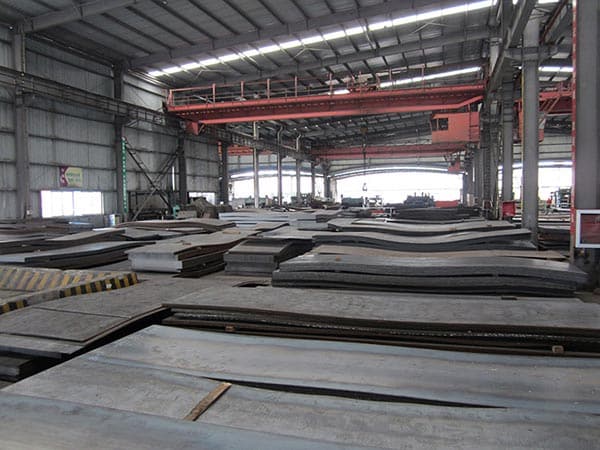
Understanding the Core Essence of S315MC High Yield Strength Steel
S315MC belongs to the category of high-yield-strength steels for cold forming, governed by the European standard EN 10149-2. The 'S' denotes structural steel, '315' indicates the minimum yield strength of 315 MPa, and 'MC' signifies that the steel is thermomechanically rolled (M) and intended for cold forming (C). This material is a cornerstone in modern engineering where weight reduction and structural integrity must coexist.
Selecting qualified S315MC requires more than a glance at a datasheet. It demands an understanding of how its fine-grained microstructure, achieved through controlled rolling and cooling, influences its behavior under stress and during fabrication. High-quality S315MC offers a unique balance of strength, ductility, and weldability that standard carbon steels cannot match.
The Chemical Blueprint: What Makes S315MC Qualified?
The chemical composition is the foundation of S315MC’s performance. Unlike traditional structural steels, S315MC utilizes micro-alloying elements such as Niobium (Nb), Titanium (Ti), and Vanadium (V) to refine the grain structure. This refinement is what allows the steel to remain tough even at high strength levels.
When reviewing a Mill Test Certificate (MTC), pay close attention to these elements. A qualified S315MC heat should maintain low Carbon (C) and Manganese (Mn) levels to ensure excellent weldability while relying on the micro-alloys for strength. High Sulfur (S) or Phosphorus (P) content can lead to brittleness and should be strictly limited.
| Element | Maximum Content (%) | Role in S315MC Performance |
|---|---|---|
| Carbon (C) | 0.12 | Ensures weldability and prevents hardening in the HAZ. |
| Manganese (Mn) | 1.30 | Improves strength and hardenability without losing toughness. |
| Silicon (Si) | 0.50 | Acts as a deoxidizer during the steelmaking process. |
| Phosphorus (P) | 0.025 | Kept low to prevent cold shortness and cracking. |
| Sulfur (S) | 0.020 | Low levels improve ductility and surface finish. |
| Nb + Ti + V | 0.22 (Total) | Micro-alloys that facilitate grain refinement. |
Mechanical Performance: Beyond the 315 MPa Threshold
While the name suggests a focus on yield strength, a qualified S315MC plate or coil is defined by its holistic mechanical profile. The yield strength of 315 MPa is a minimum; however, the Tensile Strength typically ranges between 390 and 510 MPa. The real indicator of quality is the Elongation, which must be high enough to permit complex cold-forming operations without fracture.
Ductility is critical. For thicknesses less than 3mm, the minimum elongation should be around 24% (Lo=5.65√So). If the steel fails to meet these elongation benchmarks, it may lead to micro-cracking during the bending process, compromising the safety of the final component. Furthermore, impact energy tests (often at -20°C) are frequently requested for specialized applications to ensure the material does not undergo a brittle transition in cold environments.
The Importance of Thermomechanical Rolling (TMCP)
The 'M' in S315MC stands for Thermomechanically Rolled. This is not just a manufacturing step; it is the process that gives the steel its superior properties. By controlling the temperature and the reduction ratio during the rolling process, manufacturers can create a very fine ferrite-pearlite structure. This eliminates the need for subsequent heat treatments like normalizing, which saves energy and costs.
When selecting a supplier, verify their rolling technology. Qualified S315MC must be produced in mills capable of precise temperature control. If the rolling temperature is too high, the grains grow too large, reducing toughness. If it is too low, internal stresses may lead to warping during laser cutting or welding.
Superior Cold Forming and Bending Characteristics
One of the primary reasons engineers choose S315MC is its exceptional cold-forming capability. It is designed to be bent, folded, and flanged with ease. A qualified batch of S315MC should withstand a 180-degree bend over a mandrel with a radius related to the plate thickness (t). For S315MC, a typical bending radius is 0.5t to 1.0t depending on the orientation (longitudinal vs. transverse).
- Uniformity: High-quality S315MC exhibits uniform mechanical properties across the entire width of the coil, ensuring consistent springback during CNC bending.
- Surface Integrity: The surface must be free from scales, slivers, or cracks that could act as stress concentrators during the forming process.
- Edge Quality: When sheared or slit, the edges should remain clean without excessive hardening, allowing for smooth subsequent processing.
Weldability: The Key to Structural Integrity
Because S315MC has a very low Carbon Equivalent (CEV), it offers outstanding weldability. It can be welded using all standard methods, including MIG/MAG, TIG, and submerged arc welding. Unlike higher alloy steels, it generally does not require preheating, which significantly reduces labor costs and increases throughput in production lines.
However, quality selection involves ensuring the steel is compatible with your specific welding consumables. The fine-grained structure of S315MC is sensitive to excessive heat input. Over-welding or using excessively high currents can lead to grain coarsening in the Heat Affected Zone (HAZ), which reduces the local yield strength. A qualified supplier should provide guidance on optimal heat input to preserve the TMCP-induced properties.
Environmental Adaptability and Surface Protection
While S315MC is not a weathering steel like Corten, its chemical purity makes it an excellent substrate for various protective coatings. Whether you are hot-dip galvanizing, powder coating, or painting, the low silicon and phosphorus content ensures a high-quality finish with strong adhesion.
In environments where corrosion is a concern, the uniformity of S315MC prevents localized galvanic corrosion cells that can form in dirtier, lower-quality steels. For transport applications where exposure to road salts and moisture is common, the structural integrity of S315MC remains stable over long lifecycles, provided it is correctly treated and coated.
Application Industries: Where S315MC Shines
Qualified S315MC is widely used in industries where strength-to-weight ratio is paramount. By replacing standard S235JR with S315MC, engineers can often reduce the thickness of components by 15-20% without losing structural capacity. This is vital for the Automotive and Transport industry, specifically for truck chassis, trailers, and crane booms, where every kilogram saved translates to higher payloads and lower fuel consumption.
In the Storage and Logistics sector, S315MC is used for racking systems and shelving where high load-bearing capacity and precise dimensions are required. Its ability to be cold-formed into complex profiles makes it ideal for these structural applications. Additionally, in Agricultural Machinery, it provides the toughness needed to withstand the rugged conditions of soil cultivation and harvesting equipment.
How to Verify and Inspect Your S315MC Purchase
To ensure you are receiving qualified material, a rigorous inspection protocol is necessary. Do not rely solely on the price; the hidden costs of using sub-standard steel—such as tool wear, welding failures, and field recalls—far outweigh initial savings.
- Verify MTC (Mill Test Certificate): Ensure the certificate is 3.1 or 3.2 according to EN 10204. Cross-check the heat numbers on the steel with the documents.
- Dimensional Tolerances: Check against EN 10051 for hot-rolled sheet/plate. Precision in thickness and flatness is a hallmark of high-end TMCP production.
- Visual Inspection: Look for surface defects. S315MC should have a smooth, clean surface, especially if it is pickled and oiled (S315MC+P).
- Hardness Testing: While not always required by the standard, a quick Rockwell or Brinell test can confirm the uniformity of the batch.
Optimizing Procurement: Choosing the Right Partner
Selecting qualified S315MC is ultimately about choosing a supplier who understands the technical nuances of the material. A reputable distributor or mill will not only provide the steel but also offer technical support regarding bend radii, welding parameters, and coating compatibility. They should be able to provide data on the steel's performance in fatigue-critical applications and offer traceability from the iron ore to the finished coil.
When evaluating suppliers, ask about their sourcing. Is the steel coming from a mill with advanced TMCP capabilities? Can they provide ultra-flat sheets leveled by high-precision tension levelers? These details separate a premium S315MC product from a generic high-strength steel, ensuring your manufacturing process remains efficient and your final product remains superior.
Leave a message