
What is S355MC hot-rolled steel
Discover the comprehensive technical profile of S355MC hot-rolled steel. This guide covers its chemical composition, mechanical properties, welding capabilities, and industrial applications under EN 10149-2 standards.
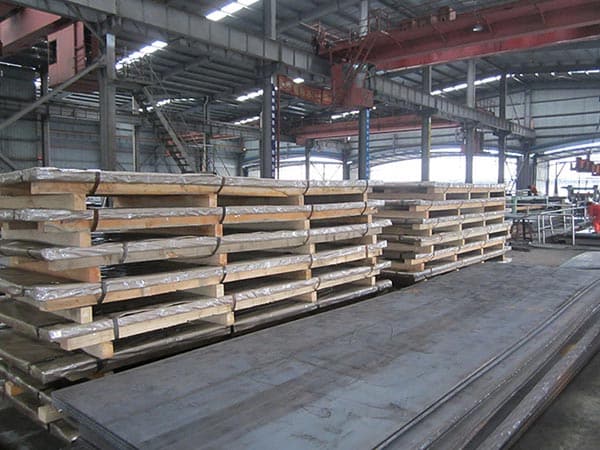
Understanding S355MC: The High-Strength Low-Alloy Powerhouse
S355MC is a high-yield strength, hot-rolled steel specifically designed for cold forming. Governed by the European standard EN 10149-2, this material belongs to the family of thermomechanically rolled steels. The designation 'S' signifies structural steel, '355' represents the minimum yield strength of 355 megapascals (MPa), 'M' denotes its thermomechanical rolling process, and 'C' indicates its suitability for cold forming. This steel is engineered to provide a superior balance between high strength and excellent ductility, making it a preferred choice for industries seeking to reduce weight without compromising structural integrity.
The Metallurgy of S355MC: Micro-Alloying and Grain Refinement
The exceptional performance of S355MC stems from its sophisticated chemical composition and precise manufacturing process. Unlike traditional carbon steels, S355MC utilizes micro-alloying elements such as Niobium (Nb), Vanadium (V), and Titanium (Ti). These elements, even in minute quantities, play a critical role in grain refinement during the thermomechanical control process (TMCP). By creating a fine-grained microstructure, the steel achieves higher strength and toughness than conventional hot-rolled grades.
The low carbon content (typically below 0.12%) is a defining characteristic. This low carbon level is essential for ensuring superior weldability and preventing the formation of brittle phases in the heat-affected zone (HAZ). Manganese is added to enhance hardenability and tensile strength, while Silicon acts as a deoxidizer. The following table outlines the chemical requirements as per EN 10149-2:
| Element | Max % Content |
|---|---|
| Carbon (C) | 0.12 |
| Manganese (Mn) | 1.50 |
| Silicon (Si) | 0.50 |
| Phosphorus (P) | 0.025 |
| Sulfur (S) | 0.020 |
| Aluminum (Al) | 0.015 |
| Nb + V + Ti | 0.22 |
Mechanical Properties: Strength Meets Flexibility
The primary advantage of S355MC is its high yield-to-tensile ratio. This allows engineers to design components that can withstand significant loads while remaining relatively thin. The thermomechanical rolling process ensures that these properties are consistent throughout the entire coil or plate. Below are the core mechanical specifications:
| Property | Value |
|---|---|
| Yield Strength (Reh) | Min 355 MPa |
| Tensile Strength (Rm) | 430 - 550 MPa |
| Elongation (A80mm, t < 3mm) | Min 19% |
| Elongation (A5, t ≥ 3mm) | Min 23% |
These mechanical values are not just numbers; they translate into real-world performance. The high elongation percentage ensures that the steel can undergo severe deformation during stamping or bending without cracking. This is particularly vital for complex geometric parts found in modern vehicle chassis and heavy machinery.
Processing Performance: Cold Forming and Bending
The 'C' in S355MC highlights its optimized cold-forming capabilities. Because of its fine-grained structure and low impurity levels, it exhibits isotropic behavior, meaning its properties are relatively uniform regardless of the rolling direction. This allows for tighter bend radii compared to standard s355jr steel. When bending S355MC, it is recommended to follow minimum internal bend radii to maintain structural integrity. For thicknesses under 3mm, a bend radius of 0.25 times the thickness is often achievable, though 0.5t to 1t is safer for high-stress applications.
Superior Weldability for Complex Assemblies
Welding is a cornerstone of modern manufacturing, and S355MC excels in this area. Its low Carbon Equivalent Value (CEV) means it is highly resistant to cold cracking. It can be welded using all standard methods, including MIG/MAG, TIG, and submerged arc welding. Because the steel relies on its fine-grained structure for strength, it is important to control the heat input during welding. Excessive heat can lead to grain growth in the heat-affected zone, slightly reducing the local yield strength. However, with proper welding parameters, the joint efficiency remains exceptionally high, often matching the parent metal's performance.
Environmental Adaptability and Surface Treatment
S355MC is typically supplied in either the 'as-rolled' (black) condition or the 'pickled and oiled' (P&O) condition. The pickled surface is preferred for applications requiring high-quality finishes, such as powder coating or painting, as it removes the mill scale. While S355MC is not a weathering steel like Corten, its chemical purity provides a consistent substrate for galvanizing or sophisticated anti-corrosion coatings. In environments with high humidity or chemical exposure, proper surface protection is essential to prevent oxidation, though the material's inherent toughness helps it resist stress corrosion cracking better than many higher-carbon alternatives.
Industry Applications: Driving Efficiency and Lightweighting
The push for 'lightweighting'—reducing the mass of a structure to improve energy efficiency—has made S355MC a staple in several high-demand sectors. By replacing standard S235JR or S355JR with S355MC, manufacturers can often reduce the thickness of a part by 15-25% while maintaining the same load-bearing capacity.
- Automotive Industry: Used extensively for truck chassis, cross members, and suspension components where weight reduction directly impacts fuel economy and payload capacity.
- Lifting and Mobile Equipment: Essential for crane booms, forklift frames, and telescopic handlers where high strength-to-weight ratios are critical for stability and reach.
- Agricultural Machinery: Found in plow frames, trailers, and harvester components that must endure harsh outdoor conditions and high mechanical stress.
- Cold-Formed Profiles: Used to manufacture C-sections, Z-sections, and custom profiles for solar panel racking and industrial shelving.
S355MC vs. S355JR: A Technical Comparison
A common point of confusion is the difference between S355MC and S355JR. While both have a minimum yield strength of 355 MPa, they are intended for different uses. S355JR (EN 10025-2) is a general-purpose structural steel often used in hot-rolled sections like I-beams and channels. It is not specifically optimized for cold forming and may crack if bent too sharply. S355MC, through its TMCP process, offers much better ductility and tighter tolerances. If your process involves laser cutting followed by precision bending, S355MC is the superior choice due to its lower internal stresses and consistent flatness.
Optimizing Fabrication: Laser Cutting and Punching
The consistency of S355MC makes it an ideal candidate for automated fabrication. In laser cutting, the lack of internal stresses ensures that parts do not 'spring' or warp after being cut from the sheet. This precision is vital for downstream assembly. Similarly, in punching and shearing operations, the steel's ductility prevents the formation of micro-cracks at the edges of the holes, which can be a failure point in high-vibration environments like vehicle frames.
Economic Impact and Sustainability
From a lifecycle perspective, S355MC offers significant economic advantages. Although the per-ton price might be higher than basic carbon steel, the total cost of ownership is often lower. Thinner sections mean lower material weight, reduced shipping costs, and faster welding times. Furthermore, the high recyclability of HSLA steels supports a circular economy. S355MC can be fully recovered and reprocessed into new high-quality steel products without losing its fundamental properties, aligning with global sustainability goals in the manufacturing sector.
Strategic Procurement Considerations
When sourcing S355MC, it is vital to verify the mill test certificates (MTC) to ensure compliance with EN 10149-2. Attention should be paid to the surface finish and edge condition (mill edge vs. slit edge). For high-precision applications, requesting 'extra-flat' material can further improve the efficiency of automated laser and bending cells. Understanding the specific requirements of the end-use application—whether it is impact resistance at low temperatures or high fatigue life—will determine if S355MC is the optimal grade or if a higher grade like S420MC or S700MC is required.
Leave a message