
S420MC steel for car body with low and intermediate tensile strength
A comprehensive technical analysis of S420MC steel, focusing on its mechanical properties, cold forming capabilities, and applications in the automotive industry for lightweight and durable structural components.
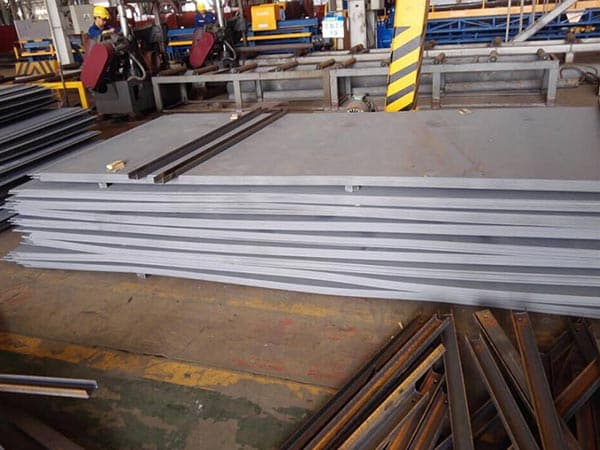
The Technical Foundation of S420MC High-Strength Steel
S420MC steel represents a critical category of high-yield strength steels specifically engineered for cold forming. Governed by the EN 10149-2 standard, this material is produced through a thermomechanically rolled process. Unlike traditional hot-rolled steels, the thermomechanical control process (TMCP) allows for a fine-grained microstructure that combines high strength with exceptional ductility. This unique balance makes S420MC a preferred choice for automotive engineers seeking to reduce vehicle weight without compromising structural integrity or safety standards.
The nomenclature 'S' denotes structural steel, '420' indicates a minimum yield strength of 420 MPa, and 'MC' signifies its suitability for cold forming (M) and its thermomechanically rolled condition (C). Within the landscape of modern metallurgy, S420MC bridges the gap between conventional mild steels and ultra-high-strength grades, offering a 'sweet spot' for components that require significant deformation during manufacturing but must sustain high loads during operation.
Chemical Composition and the Role of Micro-alloying
The superior properties of S420MC are not accidental; they are the result of precise chemical engineering. The carbon content is kept deliberately low (typically below 0.12%) to ensure excellent weldability and toughness. However, the strength is achieved through the addition of micro-alloying elements such as Niobium (Nb), Vanadium (V), and Titanium (Ti).
| Element | Max Content (%) | Metallurgical Function |
|---|---|---|
| Carbon (C) | 0.12 | Maintains weldability and prevents brittleness. |
| Manganese (Mn) | 1.60 | Increases strength and hardness through solid solution strengthening. |
| Silicon (Si) | 0.50 | Deoxidizer and contributes to tensile strength. |
| Niobium (Nb) | 0.09 | Refines grain size and prevents grain growth during rolling. |
| Titanium (Ti) | 0.15 | Provides precipitation hardening and nitrogen fixation. |
These micro-alloying elements work by forming fine precipitates within the steel matrix, which pin grain boundaries and impede dislocation movement. This grain refinement is the primary mechanism that allows S420MC to achieve high yield strength while maintaining a high elongation percentage, a feat difficult to achieve with carbon alone.
Mechanical Performance and Structural Reliability
For automotive structural parts, mechanical reliability is paramount. S420MC is tested rigorously to ensure it meets the demands of dynamic loading and crash safety. The mechanical properties are defined by its yield strength, tensile strength, and elongation at break.
- Yield Strength (ReH): Minimum 420 MPa. This is the stress level at which the steel begins to deform plastically.
- Tensile Strength (Rm): 480 to 620 MPa. This range ensures the material can withstand significant tension before failing.
- Elongation (A80mm): Minimum 16% (for thicknesses < 3mm). This high ductility is essential for complex stamping and bending.
- Impact Strength: Often tested at -20°C or -40°C to ensure the material does not become brittle in cold climates.
The ratio between yield strength and tensile strength in S420MC is relatively high, which is a characteristic of TMCP steels. This allows designers to utilize the material's strength more efficiently, enabling thinner gauges to replace thicker sections of lower-grade steels like S355MC, leading to weight reductions of up to 15-20% in specific components.
Cold Forming and Processing Advantages
One of the most significant advantages of S420MC is its exceptional cold forming performance. In automotive manufacturing, parts like longitudinal beams, cross members, and chassis frames are often produced through cold bending or stamping. S420MC exhibits low springback compared to other high-strength steels, which improves dimensional accuracy in the final part.
When processing S420MC, it is important to consider the minimum bending radius. For a sheet thickness (t), the recommended inner bending radius is typically 0.5t to 1.0t, depending on the orientation of the bend relative to the rolling direction. The fine-grained structure reduces the risk of 'orange peel' effects or surface cracking during tight bends. Furthermore, S420MC is highly suitable for laser cutting and plasma cutting, as its low carbon equivalent (CEV) minimizes the hardening of the cut edges, facilitating subsequent machining or welding operations.
Superior Weldability for Automated Assembly
Automotive assembly lines rely heavily on robotic welding, including MIG/MAG, spot welding, and laser welding. S420MC is designed with a very low carbon equivalent, which ensures that the heat-affected zone (HAZ) does not become excessively hard or brittle. This reduces the risk of cold cracking and ensures that the welded joint retains a strength comparable to the base metal.
The stability of the arc during welding S420MC is excellent, partly due to the clean surface quality provided by the pickling and oiling process (S420MC+P). Manufacturers can achieve high-speed welding without the need for preheating, which significantly boosts production efficiency and reduces energy consumption. The consistency of the chemical composition across different batches ensures that welding parameters do not need frequent adjustment, making it ideal for high-volume production environments.
Environmental Adaptability and Fatigue Resistance
Automotive components are subjected to harsh environmental conditions, including road salt, moisture, and extreme temperature fluctuations. S420MC provides a stable substrate for various anti-corrosion treatments. Whether it is hot-dip galvanizing, electro-galvanizing, or KTL (e-coating), the surface of S420MC bonds well with protective layers, ensuring long-term durability against rust.
Moreover, the fatigue resistance of S420MC is a critical factor for chassis components. Under cyclic loading, the fine-grained ferrite-pearlite microstructure resists the initiation and propagation of micro-cracks. This high fatigue limit allows the vehicle to maintain its structural integrity over hundreds of thousands of kilometers, even when subjected to the constant vibrations and shocks of road travel.
Expanding Applications Across the Transport Sector
While S420MC is a staple in the passenger car industry for seat frames, bumper brackets, and reinforcements, its utility extends far beyond. In the heavy vehicle sector, it is used extensively for truck chassis rails and crane arms. The high strength-to-weight ratio is particularly valuable in commercial vehicles, where every kilogram saved in the chassis translates directly into increased payload capacity and improved fuel economy.
In the renewable energy sector, S420MC is finding its way into the structural supports for solar panels and wind turbine internal components. Its ability to be formed into complex shapes while maintaining high load-bearing capacity makes it a versatile material for any industry focused on structural efficiency and material optimization. The transition toward electric vehicles (EVs) has further accelerated the demand for S420MC, as battery enclosures and protective structures require materials that can manage energy absorption during impacts while remaining lightweight to offset battery weight.
| Application Category | Specific Components | Key Benefit of S420MC |
|---|---|---|
| Passenger Cars | Chassis cross members, seat rails | Weight reduction and crash safety. |
| Commercial Vehicles | Truck frames, trailer side guards | Increased payload and durability. |
| Industrial Equipment | Cold-pressed profiles, racking systems | Cost-effective high-load capacity. |
| Lifting Gear | Telescopic booms, support legs | High yield strength for safety margins. |
Selecting S420MC involves understanding the balance between cost, performance, and manufacturability. Compared to higher grades like S500MC or S700MC, S420MC offers a more forgiving processing window, requiring less specialized tooling while still providing a significant step up from standard structural steels. This makes it an economically viable solution for a wide range of engineering challenges where performance cannot be sacrificed for cost.
Leave a message