
What is the S355MC pickling steel coil company price export to South Africa
A comprehensive analysis of S355MC pickling steel coil prices for export to South Africa, covering technical specifications, mechanical properties, processing advantages, and market dynamics.
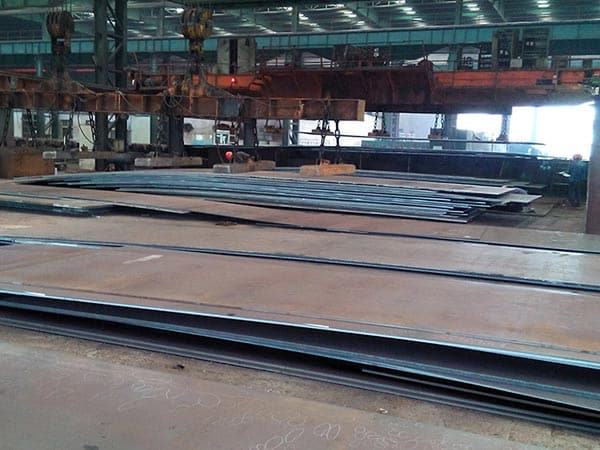
Understanding the S355MC Grade: A High-Strength Cold-Forming Standard
S355MC is a high-yield strength, thermomechanically rolled steel specifically designed for cold forming processes. Governed by the EN 10149-2 standard, this grade represents a significant leap in metallurgical engineering, offering a unique balance of strength, ductility, and weldability. For South African industrial buyers, S355MC is often the material of choice when weight reduction and structural integrity are paramount. The "MC" designation indicates that the steel is thermomechanically rolled (M) and intended for cold forming (C). This process involves precise temperature control during the rolling stages, which results in a fine-grained microstructure that traditional hot-rolling methods cannot achieve. This refined grain structure is the secret behind its superior mechanical properties, allowing for thinner gauges to replace thicker, heavier structural steels like s355jr without sacrificing safety or performance.
The Critical Role of the Pickling and Oiling (P&O) Process
When discussing the price of S355MC for the South African market, the "pickling" aspect is a major cost and quality driver. Hot-rolled steel naturally develops a layer of iron oxide, or scale, during the cooling process. Pickling involves passing the steel through a series of hydrochloric acid baths to chemically remove this scale, followed by a thorough water rinse and the application of a protective oil film. This results in a clean, smooth, and scale-free surface. For South African manufacturers involved in precision laser cutting, robotic welding, or high-end painting, pickled and oiled (P&O) coils are essential. The absence of abrasive scale extends the life of expensive tooling and ensures that weld pools are not contaminated by oxides. Furthermore, the oiled surface provides a temporary barrier against corrosion during the long maritime transit from global export hubs to ports like Durban or Cape Town.
Detailed Chemical Composition and Micro-alloying
The performance of S355MC is dictated by its chemical makeup, which is strictly controlled to ensure consistency across different production batches. Unlike standard structural steels, S355MC utilizes micro-alloying elements such as Niobium (Nb), Vanadium (V), and Titanium (Ti). These elements facilitate grain refinement and precipitation hardening. Below is the typical chemical composition based on the EN 10149-2 standard:
| Element | Maximum Content (%) |
|---|---|
| Carbon (C) | 0.12 |
| Manganese (Mn) | 1.50 |
| Silicon (Si) | 0.50 |
| Phosphorus (P) | 0.025 |
| Sulfur (S) | 0.020 |
| Aluminum (Al) | 0.015 (Min) |
| Niobium (Nb) | 0.09 |
| Vanadium (V) | 0.20 |
| Titanium (Ti) | 0.15 |
The low carbon content (max 0.12%) is particularly beneficial for South African fabricators because it significantly improves weldability and reduces the risk of cold cracking in the heat-affected zone (HAZ). The combined content of Nb, V, and Ti is usually capped at 0.22% to maintain the optimal balance between strength and toughness.
Mechanical Properties and Structural Reliability
S355MC is defined by its yield strength. In the context of engineering design, the yield strength is the point at which the material begins to deform plastically. For S355MC, this value is a minimum of 355 MPa. This high strength-to-weight ratio allows for the design of lighter components, which is a critical factor in the South African transport and mining sectors where fuel efficiency and payload capacity are major economic drivers. The mechanical requirements are summarized below:
| Property | Value Range |
|---|---|
| Yield Strength (ReH) | Min 355 MPa |
| Tensile Strength (Rm) | 430 - 550 MPa |
| Elongation (A80mm) for t < 3mm | Min 19% |
| Elongation (A5.65) for t ≥ 3mm | Min 23% |
| Bending Radius (180°) | 0.5t to 1.5t (depending on thickness) |
These properties ensure that the steel can withstand significant stress while remaining ductile enough to be bent and shaped into complex geometries without fracturing. The elongation values are particularly impressive for a steel of this strength level, highlighting its suitability for rigorous cold-forming operations.
Processing Performance: Bending, Welding, and Cutting
South African engineering firms often prioritize S355MC due to its exceptional processing characteristics. In cold bending, the material exhibits minimal springback compared to other high-strength grades, allowing for tighter tolerances in chassis and frame manufacturing. The fine grain structure also ensures that the edges remain smooth during laser or plasma cutting, reducing the need for secondary grinding operations. When it comes to welding, S355MC is compatible with all standard methods, including MIG, TIG, and submerged arc welding. Because of its low carbon equivalent (CEV), pre-heating is rarely required for standard thicknesses, which speeds up production cycles and reduces energy costs for local workshops. This ease of fabrication directly impacts the total cost of ownership, making S355MC a cost-effective choice despite its higher initial purchase price compared to commercial quality (CQ) grades.
Factors Influencing Export Prices to South Africa
The "company price" for S355MC pickling steel coils exported to South Africa is not a static figure; it is influenced by a complex interplay of global and local factors. Primarily, the base price is driven by the cost of iron ore and coking coal on the international market. However, several specific variables apply to the South African route. Freight Rates: Shipping costs from major Asian or European mills to Durban are subject to seasonal fluctuations and fuel surcharges. Containerized shipping vs. breakbulk shipping can also create price variances. Exchange Rates: The volatility of the South African Rand (ZAR) against the US Dollar (USD) is a constant challenge for importers. A weakening Rand can significantly inflate the landed cost of the steel. Import Duties and Regulations: South Africa's International Trade Administration Commission (ITAC) occasionally adjusts duties on steel imports to protect local primary producers. Buyers must stay informed about the latest tariff schedules and SABS (South African Bureau of Standards) certification requirements to avoid unexpected costs at the port of entry. Pickling Premiums: The additional cost for the pickling and oiling process typically adds $30 to $50 per ton over the hot-rolled black coil price, reflecting the chemical costs and environmental compliance required in modern pickling lines.
Strategic Applications in the South African Industrial Landscape
The demand for S355MC in South Africa is concentrated in several key growth sectors. Automotive and Transport: The country is a hub for automotive manufacturing. S355MC is extensively used in the production of truck chassis, trailers, and specialized vehicle frames where high strength and low weight are mandatory. Mining Equipment: Given South Africa's vast mining industry, S355MC is utilized in the fabrication of conveyor systems, underground support structures, and mineral processing equipment that requires durability under vibration and heavy loads. Renewable Energy: As the country transitions toward greener energy, S355MC is finding its way into the mounting systems for large-scale solar farms and the internal components of wind turbine towers. Agricultural Machinery: The toughness of S355MC makes it ideal for ploughs, harvesters, and irrigation equipment that must operate in the demanding South African soil conditions. By utilizing this grade, manufacturers can produce equipment that is both robust and light enough to be pulled by smaller, more fuel-efficient tractors.
Navigating the Procurement Process for S355MC
When sourcing S355MC pickling steel coils for export to South Africa, it is vital to partner with companies that provide full traceability and Mill Test Certificates (MTC) according to EN 10204 3.1. These documents verify the chemical and mechanical properties mentioned earlier. Buyers should also specify the desired oiling level—ranging from light to heavy—depending on the expected storage duration and the humidity levels at the destination warehouse. For projects in coastal cities like Durban or Port Elizabeth, a slightly heavier oiling or specialized VCI (Volatile Corrosion Inhibitor) packaging might be necessary to prevent sea-salt induced corrosion during the final leg of the journey. Understanding these nuances ensures that the material arriving on the factory floor is ready for immediate processing, thereby maximizing efficiency and maintaining the high standards expected in the South African engineering community.
Leave a message