
What is the difference between S315MC steel properties steel and mild steel?
A detailed technical comparison between S315MC high-strength low-alloy steel and traditional mild steel, focusing on mechanical properties, chemical composition, and industrial applications.
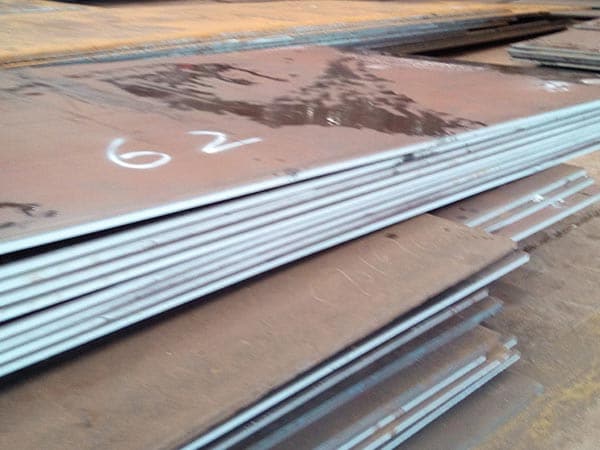
Understanding the Fundamental Classification of S315MC and Mild Steel
When evaluating materials for structural or automotive engineering, the choice between S315MC and standard mild steel (often categorized as S235JR or ASTM A36) is a pivotal decision that impacts weight, durability, and manufacturing costs. S315MC is a high-yield-strength steel specifically designed for cold forming, governed by the EN 10149-2 standard. It is produced through a thermomechanically rolled process, which gives it a refined grain structure. In contrast, mild steel is a generic term for low-carbon steel that prioritizes ductility and ease of production over high strength-to-weight ratios.
The primary distinction lies in their metallurgical heritage. Mild steel relies on basic carbon-manganese chemistry, whereas S315MC belongs to the High-Strength Low-Alloy (HSLA) family. This means S315MC utilizes micro-alloying elements to achieve superior performance without the brittleness typically associated with high-carbon steels. For engineers, this translates to a material that can withstand higher loads while remaining thin enough to reduce the overall mass of a component.
Chemical Composition: The Role of Micro-Alloying
The chemical makeup of S315MC is precisely controlled to ensure weldability and formability. Unlike mild steel, which may have higher carbon content to reach specific strength levels, S315MC keeps carbon levels extremely low (typically ≤ 0.12%). This low carbon content is the secret behind its exceptional welding characteristics.
S315MC incorporates micro-alloying elements such as Niobium (Nb), Titanium (Ti), and Vanadium (V). These elements facilitate grain refinement during the thermomechanical rolling process. A finer grain structure directly results in higher yield strength and improved toughness. Mild steel lacks these specific micro-alloys, relying instead on a simpler ferrite-pearlite microstructure that provides basic structural integrity but lacks the refined resilience of HSLA grades.
| Element (Max %) | S315MC (EN 10149-2) | Mild Steel (S235JR) |
|---|---|---|
| Carbon (C) | 0.12 | 0.17 - 0.20 |
| Manganese (Mn) | 1.30 | 1.40 |
| Silicon (Si) | 0.50 | - |
| Phosphorus (P) | 0.025 | 0.035 |
| Sulfur (S) | 0.020 | 0.035 |
| Aluminium (Al) | 0.015 (Min) | - |
Mechanical Properties: Yield Strength and Ductility
The most visible difference between these two materials is the yield strength. S315MC offers a minimum yield strength of 315 MPa. Standard mild steel, such as S235, typically offers around 235 MPa. This 34% increase in yield strength allows designers to use thinner sections of S315MC to achieve the same load-bearing capacity as thicker mild steel plates.
Despite its higher strength, S315MC maintains excellent elongation and cold-forming properties. It is specifically engineered to be bent, folded, and pressed into complex shapes without cracking. Mild steel is also very ductile, but because it lacks the grain refinement of S315MC, it may not perform as consistently in high-precision automated pressing lines where springback and material uniformity are critical factors.
- Yield Strength: S315MC (≥315 MPa) vs. Mild Steel (~235 MPa).
- Tensile Strength: S315MC (390-510 MPa) vs. Mild Steel (360-510 MPa).
- Elongation: S315MC provides high ductility (≥20% for thickness < 3mm), ensuring safety in deformation.
Processing Performance: Welding and Cold Forming
In the workshop, the behavior of S315MC differs from mild steel during fabrication. Because S315MC is thermomechanically rolled, it has a very low Carbon Equivalent (CEV). This makes it exceptionally easy to weld using standard methods like MIG, TIG, or submerged arc welding. Unlike higher carbon steels, S315MC does not typically require pre-heating, which significantly reduces production time and energy costs.
When it comes to cold forming, S315MC is superior. The standard EN 10149-2 specifies guaranteed minimum bending radii, which is a critical metric for manufacturers of chassis parts or complex brackets. Mild steel can also be bent, but its performance is less predictable in tight radii compared to the specialized "MC" (Micro-alloyed Cold-forming) grades. S315MC’s consistent mechanical properties across the entire coil or plate ensure that automated bending machines require fewer adjustments, leading to higher throughput.
Environmental Adaptability and Fatigue Resistance
While neither S315MC nor mild steel are inherently "corrosion-resistant" like stainless steel, their reaction to environmental stressors varies. S315MC’s refined grain structure provides slightly better resistance to fatigue cracking under cyclic loading. This makes it a preferred choice for dynamic environments, such as vehicle frames or moving machinery parts, where vibration and repetitive stress are constant factors.
For atmospheric protection, both steels require coating (galvanizing, painting, or powder coating). However, the thinner profiles achievable with S315MC mean that the total surface area to be treated might be less in terms of weight, though the physical surface remains proportional to the design. In cold weather environments, the impact toughness of S315MC is generally more reliable than basic mild steel, which can undergo a ductile-to-brittle transition at higher temperatures than HSLA steels.
Industry Applications: Where S315MC Outshines Mild Steel
The shift from mild steel to S315MC is most prominent in industries where weight reduction (lightweighting) is essential for fuel efficiency or payload capacity. In the automotive sector, S315MC is used for truck chassis, cross members, and structural reinforcements. These components must be strong enough to support heavy loads but light enough to maximize the vehicle's efficiency.
In the agricultural and construction machinery sectors, S315MC is utilized for crane arms, trailer frames, and harvester components. Mild steel remains the standard for general construction, simple brackets, and non-load-bearing architectural elements where the priority is the lowest possible material cost per kilogram and where weight is not a primary concern.
Economic Considerations: Cost vs. Performance
From a procurement perspective, S315MC typically carries a higher price per ton than standard mild steel due to the micro-alloying elements and the specialized thermomechanical rolling process. However, a purely price-per-ton comparison is misleading. Because S315MC allows for material thickness reduction, the total weight of steel required for a project can be reduced by 15% to 25%.
This reduction in material volume leads to secondary savings: lower shipping costs, reduced welding consumables, and faster processing times. For high-volume manufacturing, the consistency of S315MC reduces scrap rates, which further offsets the initial material price premium. Therefore, for sophisticated engineering projects, S315MC often represents a lower "total cost of ownership" compared to traditional mild steel.
Technical Comparison Summary
| Feature | S315MC (HSLA) | Mild Steel (Standard) |
|---|---|---|
| Primary Advantage | High strength-to-weight ratio | Low initial cost and availability |
| Formability | Excellent (Optimized for cold forming) | Good (General purpose) | Excellent (Low CEV) | Excellent |
| Grain Structure | Fine-grained (Thermomechanical) | Coarser (Normal rolled) |
| Typical Thickness | Often used in 1.5mm - 12mm | Available in all ranges |
Selecting the right grade involves balancing the mechanical requirements of the application with the manufacturing capabilities of the facility. While mild steel serves as the backbone of general industry, S315MC provides the technical edge necessary for modern, efficient, and high-performance engineering solutions. By leveraging the micro-alloyed properties of S315MC, manufacturers can produce safer, lighter, and more durable products that meet the rigorous demands of today’s global market.
Leave a message