
What is the alloy s420mc astm equivalent
Discover the precise ASTM equivalents for S420MC steel. This guide compares mechanical properties, chemical composition, and industrial applications for engineering excellence.
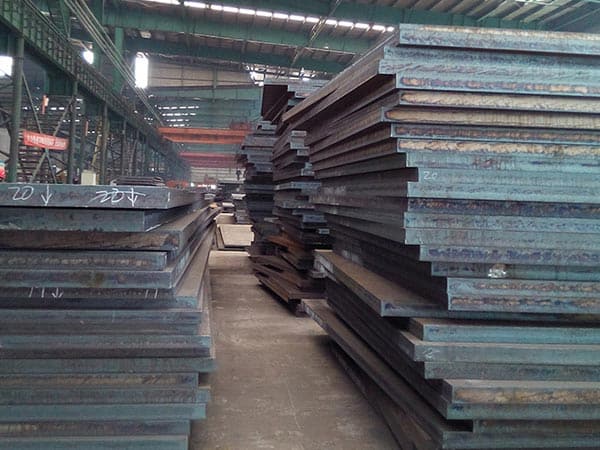
Understanding the Core Identity of S420MC Steel
In the global steel trade, identifying the correct cross-reference between European and American standards is vital for structural integrity and cost-efficiency. S420MC is a high-yield strength, thermomechanically rolled steel designed specifically for cold forming. Governed by the EN 10149-2 standard, this material is prized for its combination of high strength, excellent weldability, and superior impact resistance at low temperatures.
The 'S' stands for structural steel, '420' denotes a minimum yield strength of 420 MPa, and 'MC' indicates the material is thermomechanically rolled (M) and intended for cold forming (C). When engineers ask "What is the alloy s420mc astm equivalent?", they are usually looking for a material that offers similar performance in North American projects, typically pointing toward ASTM A1011 Grade 60 or ASTM A656 Grade 60.
Direct ASTM Equivalents: Mapping the Standards
Finding a 1:1 match between EN and ASTM standards is rarely straightforward because the testing methodologies and chemical tolerances differ. However, for most industrial applications, the following ASTM grades serve as the primary equivalents:
- ASTM A1011 HSLAS Class 1 Grade 60: This is the most common substitute for sheet-thickness S420MC. It provides a similar yield strength (approx. 415-420 MPa) and is designed for high-strength applications where weight reduction is necessary.
- ASTM A1018 HSLAS Grade 60: Used for thicker sections (over 6mm), this standard mirrors the high-strength low-alloy (HSLA) characteristics of S420MC.
- ASTM A656 Grade 60: Often specified for structural shapes and plates, this grade emphasizes improved formability and weldability, much like the 'MC' designation in the European standard.
Chemical Composition Nuances
The performance of S420MC is rooted in its low carbon content and micro-alloying strategy. Unlike traditional carbon steels, S420MC utilizes elements like Niobium (Nb), Vanadium (V), and Titanium (Ti) to achieve grain refinement during the thermomechanical rolling process.
| Element (Max %) | S420MC (EN 10149-2) | ASTM A1011 Grade 60 | ASTM A656 Grade 60 |
|---|---|---|---|
| Carbon (C) | 0.12 | 0.15 | 0.18 |
| Manganese (Mn) | 1.60 | 1.35 | 1.65 |
| Silicon (Si) | 0.50 | - | 0.60 |
| Phosphorus (P) | 0.025 | 0.020 | 0.035 |
| Sulfur (S) | 0.015 | 0.020 | 0.035 |
S420MC maintains a strictly lower carbon maximum compared to ASTM A656, which generally translates to better weldability and a lower risk of cold cracking in the heat-affected zone (HAZ). The precision in the EN standard's sulfur control also contributes to its superior edge-stretching capacity during punching or flanging operations.
Mechanical Performance and Yield Dynamics
The defining characteristic of S420MC is its yield strength. In the European system, the yield strength is measured as the point where permanent deformation begins, whereas ASTM standards often use the 0.2% offset method. Despite these technical differences, the functional output is nearly identical.
S420MC guarantees a minimum yield strength of 420 MPa (approx. 61 ksi). ASTM Grade 60 materials specify a minimum yield of 60 ksi (415 MPa). While the ASTM version is slightly lower on paper, the overlap in actual mill test reports (MTRs) is significant. However, S420MC often exhibits higher elongation values, making it more forgiving during complex deep-drawing or tight-radius bending processes.
Processing Advantages: Bending and Welding
One of the primary reasons engineers specify S420MC over standard structural steels is its cold-forming capability. The thermomechanical rolling process creates a fine-grained microstructure that allows for tight bending radii without surface cracking.
When substituting with an ASTM equivalent, it is crucial to specify HSLAS (High-Strength Low-Alloy Steel) rather than standard CS (Carbon Steel). Standard carbon steels with 420 MPa yield strength are often too brittle for the bending requirements of modern automotive chassis or crane arms. S420MC allows for a bending radius of approximately 0.5t to 1.5t (where t is thickness), a feat that requires the "Improved Formability" designation in the ASTM A1011 or A656 specifications.
From a welding perspective, the low Carbon Equivalent (CEV) of S420MC ensures that it can be welded using all conventional methods (MIG, TIG, Laser, Submerged Arc) without extensive preheating. This efficiency is mirrored in ASTM A656, though S420MC's tighter chemical tolerances often result in more consistent weld bead morphology in automated production lines.
Environmental Adaptability and Durability
While S420MC is not a weathering steel like Corten, its refined grain structure provides better resistance to atmospheric corrosion than standard mild steels. The lack of heavy alloying elements means it reacts well to modern coating systems, such as KTL (E-coating), galvanizing, and powder coating.
In low-temperature environments, S420MC retains its toughness better than many ASTM A1011 equivalents unless the ASTM material is specifically ordered with Charpy V-notch impact testing. For machinery operating in arctic or sub-zero conditions, S420MC’s predictable energy absorption makes it a safer choice for safety-critical components.
Industry-Specific Applications
The shift toward S420MC and its ASTM equivalents is driven by the global push for lightweighting. By using a thinner gauge of high-strength steel to replace a thicker gauge of S235 or A36, manufacturers can reduce the weight of a component by up to 30% without sacrificing load-bearing capacity.
- Automotive Industry: Used extensively for truck chassis, cross members, and reinforcement beams where weight reduction directly impacts fuel efficiency.
- Heavy Machinery: Essential for crane booms, excavator buckets, and agricultural equipment that require high fatigue strength.
- Construction: Utilized in cold-pressed profiles and structural sections where high strength-to-weight ratios are required for long-span designs.
- Storage Systems: High-density racking and shelving benefit from the material's ability to handle high vertical loads with minimal profile thickness.
Final Technical Considerations for Procurement
When sourcing an ASTM equivalent for S420MC, it is not enough to simply match the yield strength. Procurement teams must verify the formability requirements. If the part involves intricate bends, ASTM A1011 HSLAS Class 2 or ASTM A656 Grade 60 should be requested to ensure the inclusion of grain-refining elements that prevent cracking.
Furthermore, ensure that the mill provides certifications for both standards if the product is intended for a global market. Many high-tier mills now dual-certify their products as both EN 10149-2 S420MC and ASTM A1011 Gr 60 to simplify supply chain logistics. This dual certification guarantees that the material meets the strictest chemical limits of the EN standard while satisfying the mechanical testing protocols of the ASTM standard.
Leave a message