
What is the en 10149-2 pdf hot rolling
Comprehensive technical analysis of EN 10149-2 standard for thermomechanically rolled high yield strength steels, covering mechanical properties, TMCP process, and industrial applications.
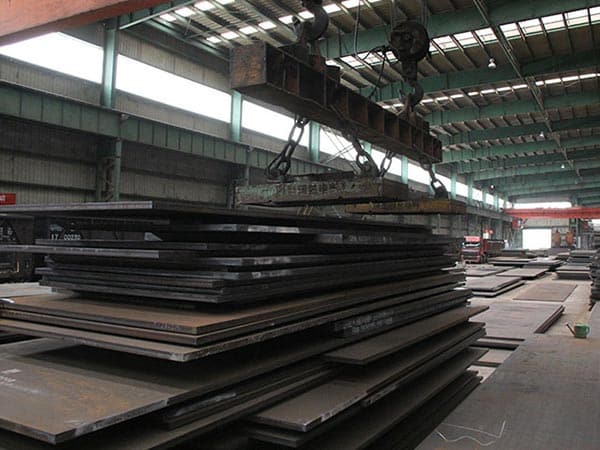
The Core Philosophy of EN 10149-2: Beyond Basic Hot Rolling
When engineers and procurement specialists search for EN 10149-2 pdf hot rolling, they are looking for more than just a document; they are seeking the technical foundation for modern lightweight construction. The EN 10149-2 standard specifies the technical delivery conditions for flat products made of high yield strength steels for cold forming. Specifically, Part 2 focuses on thermomechanically rolled (TMCP) steels. Unlike traditional hot rolling, which primarily focuses on achieving the desired thickness, the thermomechanical process described in EN 10149-2 is a sophisticated metallurgical strategy that manipulates the steel's microstructure during the rolling phase.
The significance of this standard lies in its ability to provide materials that combine high yield strength with exceptional ductility. This combination is essential for industries where reducing weight without sacrificing structural integrity is paramount. By understanding the nuances of the MC series (where 'M' stands for thermomechanically rolled and 'C' for cold forming), manufacturers can optimize their production lines for better efficiency and lower material costs.
Chemical Composition: The Micro-Alloying Secret
The performance of EN 10149-2 steels, such as S355MC, S420MC, and S700MC, is rooted in their precise chemical makeup. These are not standard carbon steels; they are micro-alloyed. The standard mandates extremely low carbon levels (often below 0.12%) to ensure excellent weldability and toughness. The strength is derived from the addition of micro-alloying elements like Niobium (Nb), Vanadium (V), and Titanium (Ti).
These elements work in tandem during the TMCP process to inhibit grain growth and promote the formation of a fine-grained ferrite-pearlite or bainitic microstructure. The following table illustrates the typical chemical requirements for key grades under this standard:
| Grade | C % (max) | Mn % (max) | Si % (max) | P % (max) | S % (max) | Al % (min) |
|---|---|---|---|---|---|---|
| S315MC | 0.12 | 1.30 | 0.50 | 0.025 | 0.020 | 0.015 |
| S420MC | 0.12 | 1.60 | 0.50 | 0.025 | 0.015 | 0.015 |
| S700MC | 0.12 | 2.10 | 0.60 | 0.025 | 0.015 | 0.015 |
The low sulfur content is particularly important for lamellar tearing resistance and improved cold forming properties. By controlling these impurities, EN 10149-2 ensures that the steel can withstand severe bending without cracking.
Mechanical Properties and Yield Strength Mastery
The primary reason for selecting EN 10149-2 grades is their impressive yield strength range. The standard covers grades from 315 MPa up to 700 MPa. This allows for significant weight reduction (down-gauging) in structural components. For instance, replacing a standard S235JR structural steel with S700MC can potentially reduce the weight of a component by over 50% while maintaining the same load-bearing capacity.
- Yield Strength: Measured as the minimum stress that produces a permanent deformation.
- Tensile Strength: The maximum stress the material can withstand before necking.
- Elongation: A measure of the material's ability to stretch before breaking, crucial for complex cold forming.
The mechanical properties are tested longitudinal to the rolling direction. However, due to the fine-grained nature of TMCP steel, these materials exhibit remarkably isotropic behavior compared to traditional hot-rolled plates.
The Physics of Thermomechanical Rolling (TMCP)
Understanding hot rolling in the context of EN 10149-2 requires looking at the temperature-time-deformation cycle. Traditional rolling involves heating the slab to high temperatures and rolling it while it's fully austenitic. In contrast, TMCP involves controlled rolling at specific temperature ranges, often finishing near or below the recrystallization temperature.
This process prevents the austenite grains from recrystallizing and growing large. When the steel cools, these "pancaked" austenite grains transform into an extremely fine ferrite structure. This grain refinement is the only strengthening mechanism that simultaneously increases both strength and toughness. It eliminates the need for subsequent heat treatments like normalizing, which saves energy and reduces the carbon footprint of the manufacturing process.
Cold Forming and Fabricating Performance
The 'C' in the grade designation (e.g., S500MC) signifies that the steel is specifically designed for cold forming. This includes bending, flanging, and cold folding. Because the steel is so clean and fine-grained, it can handle tight bend radii that would cause standard steels to fail.
When working with high-strength grades like S700MC, fabricators must account for springback. Higher strength materials store more elastic energy, meaning they will return slightly toward their original shape after the bending force is removed. Advanced CNC press brakes and precise tooling are required to master these materials. Additionally, the edge quality is vital; laser cutting or high-definition plasma cutting is recommended to ensure the edges are free from micro-cracks before forming.
Welding Dynamics of High-Strength TMCP Steels
A common concern with high-strength steels is their weldability. EN 10149-2 steels excel here due to their low Carbon Equivalent (CEV). Unlike quenched and tempered steels, which may require complex preheating and post-weld heat treatment (PWHT), TMCP steels can usually be welded using standard methods (MAG, TIG, Laser) with minimal preheating.
However, the heat-affected zone (HAZ) requires careful management. Excessive heat input can lead to grain coarsening in the HAZ, which might locally reduce the strength. Using low-heat input welding parameters and appropriate filler metals ensures that the welded joint maintains the integrity of the base metal. This makes EN 10149-2 grades ideal for automated welding environments in the automotive and heavy machinery sectors.
Industrial Applications: Driving Innovation
The versatility of EN 10149-2 has made it a staple in several high-performance industries. Its adoption is driven by the need for efficiency and durability.
- Automotive Industry: Used for chassis frames, cross members, and structural reinforcements where weight saving directly translates to better fuel economy or increased battery range for EVs.
- Lifting and Transport: Crane booms, telescopic arms, and trailer frames benefit from the high strength-to-weight ratio of S700MC.
- Agriculture: Soil cultivation equipment and harvesters use these steels to resist wear and mechanical stress while remaining light enough for efficient field operation.
- Cold-Formed Sections: Manufacturers of C and Z purlins use lower MC grades to create lightweight yet rigid structural profiles for building construction.
Environmental Adaptability and Sustainability
In the modern industrial landscape, the environmental impact of material choice is a critical factor. EN 10149-2 steels contribute to sustainability in two ways. First, the TMCP process is more energy-efficient than traditional quenching and tempering. Second, the ability to use less steel to achieve the same structural performance reduces the total energy required for ore extraction, transportation, and processing.
Furthermore, these steels perform exceptionally well in low-temperature environments. The fine grain structure provides excellent impact toughness at temperatures as low as -20°C or even -40°C (if specified), making them suitable for equipment operating in arctic conditions or high-altitude environments.
Technical Comparison: EN 10149-2 vs. EN 10025
It is important to distinguish EN 10149-2 from the more common EN 10025 structural steel standard. While EN 10025-2 (e.g., S355J2) is designed for general construction and bolting, EN 10149-2 is optimized for forming and weight reduction. The MC grades typically have lower carbon equivalents and better cold-forming radii than their EN 10025 counterparts of similar yield strength. When the project requires intricate shapes or significant weight savings, EN 10149-2 is almost always the superior choice.
Choosing the right grade involves balancing the required yield strength with the complexity of the forming process. While S700MC offers the highest strength, it requires more sophisticated equipment to form than S355MC. Engineering teams must evaluate the total cost of ownership, including material price, fabrication time, and the long-term benefits of a lighter final product.
Leave a message