
Alloy steel s420 pickling steel equivalent 10mm thick size
Explore the technical specifications of S420 alloy pickling steel in 10mm thickness. Learn about its mechanical properties, international equivalents, and industrial applications.
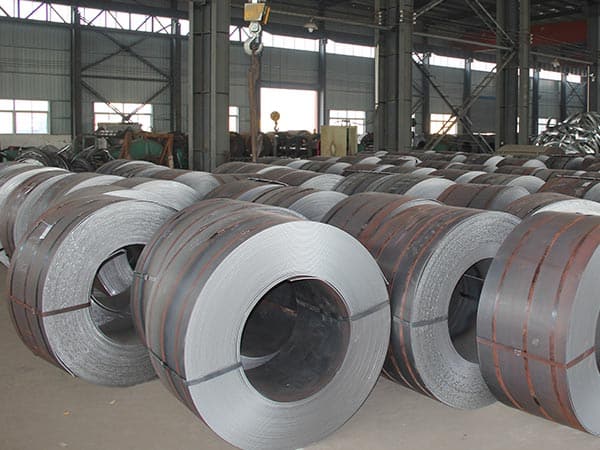
The Technical Superiority of S420 Pickling Alloy Steel at 10mm Thickness
In the demanding world of structural engineering and heavy machinery manufacturing, S420 alloy steel stands out as a high-strength low-alloy (HSLA) powerhouse. When this material is processed through pickling and oiling (HRPO), it undergoes a transformation that makes it ideal for precision fabrication. Specifically, at a 10mm thickness, S420 offers a unique balance between extreme structural integrity and the flexibility required for cold forming. Unlike standard hot-rolled plates, the pickling process removes surface scales, providing a clean, metallic finish that is essential for high-quality welding and painting.
Understanding the S420 Grade and Its Metallurgical Composition
S420, often categorized under the EN 10149-2 standard as S420MC, is a thermomechanically rolled steel. This means its strength is derived not just from its chemistry, but from a tightly controlled cooling and rolling process. The 'MC' suffix denotes its suitability for cold forming. At 10mm thick, the grain structure remains fine and uniform, which is critical for preventing cracks during heavy bending operations.
The chemical composition of S420 is meticulously balanced to ensure weldability. By keeping the carbon equivalent (CEV) low, manufacturers ensure that even 10mm plates can be joined without the extensive preheating required by higher-carbon alloys. The inclusion of micro-alloying elements like Niobium (Nb), Vanadium (V), and Titanium (Ti) facilitates grain refinement, which directly contributes to the steel's high yield strength of 420 MPa.
| Element | Max Content (%) |
|---|---|
| Carbon (C) | 0.12 |
| Manganese (Mn) | 1.60 |
| Silicon (Si) | 0.50 |
| Phosphorus (P) | 0.025 |
| Sulfur (S) | 0.015 |
| Aluminium (Al) | 0.015 |
Mechanical Properties of 10mm S420 Pickled Steel
The primary reason engineers specify S420 pickling steel is its mechanical performance. For a 10mm thick plate, the material must maintain its yield strength while providing enough elongation to withstand dynamic loads. The pickling process ensures that surface defects, which could act as stress concentrators, are eliminated, thereby enhancing the fatigue life of the finished component.
- Yield Strength: Minimum 420 MPa (for thicknesses up to 16mm).
- Tensile Strength: 480 to 620 MPa.
- Elongation: Minimum 16% to 19% depending on the specific sub-grade.
- Impact Toughness: Excellent performance even at low temperatures (typically tested at -20°C or -40°C).
Global Equivalents for S420 Alloy Steel
Navigating international standards is crucial for global procurement. While S420 is a European designation (EN), many projects require cross-referencing with American (ASTM), Japanese (JIS), or Chinese (GB) standards. When looking for an S420 equivalent for 10mm thickness, it is important to match not just the yield strength, but also the cold-forming capabilities.
| Standard | Equivalent Grade | Comparison Notes |
|---|---|---|
| EN 10149-2 | S420MC | The primary standard for thermomechanical rolling. |
| ASTM | A572 Grade 60 / A1011 HSLAS-F 60 | Commonly used in North American structural projects. |
| JIS G3134 | SPFC 590 | Japanese standard for high strength hot rolled steel. |
| GB/T 1591 | Q420ME | Chinese equivalent with similar micro-alloying. |
The Role of Pickling and Oiling (HRPO) in 10mm Plates
Why choose pickling for a 10mm thick plate? At this thickness, hot-rolled steel typically carries a heavy layer of iron oxide (mill scale). If left untreated, this scale can damage laser cutting nozzles, contaminate welding pools, and cause paint to peel prematurely. Pickled and oiled (HRPO) S420 provides a surface that is as clean as cold-rolled steel but retains the cost-effectiveness and thickness range of hot-rolled material.
For 10mm sizes, the pickling process involves passing the steel through an acid bath (usually hydrochloric acid) to chemically dissolve the scale. This is followed by a light oiling to prevent flash rusting. The result is a smooth, greyish finish that allows for high-speed automated laser cutting with minimal slag, which is a massive advantage for high-volume manufacturing.
Fabrication Advantages: Bending, Welding, and Cutting
Working with 10mm S420 requires an understanding of its metallurgical limits. Because it is an HSLA steel, it exhibits a higher springback effect compared to mild steel. However, the S420MC variant is specifically designed for tight bending radii. For a 10mm plate, a typical internal bending radius (Ri) of 1.0 to 1.5 times the thickness is achievable without surface cracking, provided the bend is transverse to the rolling direction.
Welding 10mm S420 is highly efficient. Due to its low alloy content, it is less susceptible to hydrogen-induced cracking. Standard MIG/MAG or submerged arc welding processes work exceptionally well. The clean, pickled surface ensures that there is no scale interference, leading to deeper penetration and cleaner weld beads. This reduces the need for post-weld grinding, saving significant labor costs.
Diverse Industrial Applications for 10mm S420
The combination of high strength and a 10mm profile makes S420 pickling steel a favorite in several heavy-duty sectors. In the automotive and transportation industry, it is used for truck chassis frames and cross-members where weight reduction is vital without compromising load-bearing capacity. By using 10mm S420 instead of a thicker 12mm or 14mm mild steel, manufacturers can reduce the overall vehicle weight, improving fuel efficiency and payload.
In agricultural machinery, S420 is used for plow frames and harvester components that endure constant abrasion and stress. The 10mm thickness provides the necessary rigidity to handle soil resistance, while the pickled surface allows for high-durability powder coating that resists corrosion in harsh outdoor environments. Additionally, the lifting and mobile crane industry utilizes S420 for telescopic boom sections and support outriggers, where the strength-to-weight ratio is the most critical design factor.
Environmental Adaptability and Longevity
S420 alloy steel demonstrates excellent environmental resilience. While it is not a stainless grade, its fine-grained structure provides better atmospheric corrosion resistance than basic carbon steels. When the 10mm pickled surface is treated with modern zinc-rich primers or galvanization, the lifespan of the structure can extend decades. The absence of mill scale ensures that protective coatings bond at a molecular level, preventing the "under-film" corrosion that often plagues unpickled structural steels.
Furthermore, S420 is fully recyclable. As the global industry moves toward a circular economy, the ability to reclaim high-value alloy elements from S420 scrap makes it a sustainable choice for long-term infrastructure projects. The precision offered by the 10mm thickness also means less material waste during the initial nesting and cutting phases, further enhancing its green credentials.
Critical Factors When Sourcing 10mm S420 Pickling Steel
When procuring this material, buyers must verify the Mill Test Certificate (MTC) to ensure compliance with EN 10149-2 or equivalent standards. Pay close attention to the flatness tolerances; for 10mm pickled plates, maintaining a high degree of flatness is essential for automated feed systems in CNC machines. Additionally, ensure the oiling is uniform to prevent localized oxidation during sea freight or long-term storage.
S420 alloy steel at 10mm thickness represents the pinnacle of modern steel technology—combining raw strength with sophisticated surface processing. Whether for a complex crane arm or a heavy-duty truck frame, this material provides the reliability and efficiency required by today's most demanding engineering challenges.
Leave a message