
What are the wide applications of fe 420 steel equivalent
A comprehensive technical guide exploring Fe 420 steel equivalents, their mechanical properties, chemical composition, and diverse industrial applications in modern engineering.
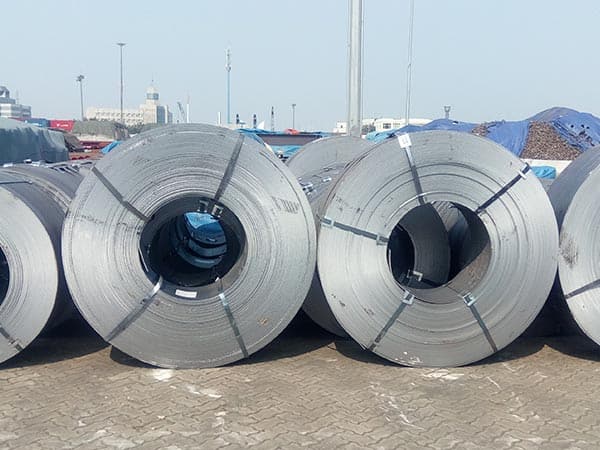
Understanding the Essence of Fe 420 Steel and Its Global Equivalents
Fe 420 steel, primarily recognized as a high-strength structural steel, serves as a cornerstone in modern engineering projects that demand a superior strength-to-weight ratio. The designation "Fe 420" typically refers to a minimum yield strength of 420 MPa, placing it firmly within the category of High-Strength Low-Alloy (HSLA) steels. In the global marketplace, identifying the correct Fe 420 steel equivalent is crucial for procurement, design compliance, and ensuring structural safety across international borders.
The most common equivalent for Fe 420 is found under the European standard EN 10025, specifically the S420 grade. Depending on the delivery condition—whether normalized (N), thermo-mechanically rolled (M), or quenched and tempered (QT)—the performance characteristics can vary slightly to meet specific environmental demands. Other international standards like ASTM A572 Grade 60 or JIS G3101 SS490 often provide comparable performance, though subtle differences in chemical composition and testing protocols must be carefully evaluated by metallurgical experts.
Cross-Reference Table: Fe 420 Steel International Equivalents
| Standard | Equivalent Grade | Delivery Condition |
|---|---|---|
| EN 10025-3 | S420N / S420NL | Normalized / Normalized Rolled |
| EN 10025-4 | S420M / S420ML | Thermo-mechanically Rolled |
| ASTM (USA) | A572 Grade 60 / A633 Grade E | As Rolled / Normalized |
| IS 2062 (India) | E410 / E450 (Approximate) | As Rolled |
| JIS (Japan) | SM490 / SM520 | Structural Steel |
Chemical Composition and the Role of Micro-Alloying
The superior performance of Fe 420 steel equivalent grades is not accidental; it is the result of precise chemical engineering. Unlike standard carbon steels, Fe 420 utilizes micro-alloying elements to achieve high strength without sacrificing weldability or toughness. The inclusion of Niobium (Nb), Vanadium (V), and Titanium (Ti) facilitates grain refinement during the rolling process.
- Carbon Content: Kept relatively low (typically below 0.20%) to ensure excellent weldability and prevent the formation of brittle martensite in the heat-affected zone (HAZ).
- Manganese (Mn): Usually ranges between 1.00% and 1.70%, acting as a solid solution strengthener and improving hardenability.
- Silicon (Si): Acts as a deoxidizer and contributes to the overall strength of the ferrite matrix.
- Sulfur and Phosphorus: Strictly controlled to minimal levels (often <0.025%) to enhance internal cleanliness and impact resistance.
Mechanical Properties: Yield, Tensile, and Elongation
The primary draw of Fe 420 steel is its mechanical prowess. By providing a minimum yield strength of 420 MPa, it allows engineers to use thinner sections compared to standard S235 or S355 steels, leading to significant weight savings in large-scale structures. This weight reduction directly translates to lower transportation costs, reduced foundation requirements, and a smaller carbon footprint for the project.
| Property | Value (Typical for S420) |
|---|---|
| Yield Strength (min) | 420 MPa (for thickness ≤ 16mm) |
| Tensile Strength | 500 - 680 MPa |
| Elongation (min) | 18% - 19% |
| Impact Energy (Charpy V-notch) | 27J to 40J at -20°C or -50°C (L/ML grades) |
Weldability and Fabrication Excellence
One of the most critical aspects of Fe 420 steel equivalent materials is their weldability. High-strength steels can sometimes be prone to cold cracking, but the low Carbon Equivalent Value (CEV) of Fe 420 makes it exceptionally friendly to modern welding processes such as SMAW, GMAW, and submerged arc welding (SAW). Because the strength is derived from grain refinement rather than high carbon content, the steel maintains its ductility even after the thermal cycles of welding.
During fabrication, Fe 420 exhibits excellent cold-forming properties. It can be bent and shaped with precision, provided the minimum bend radii are respected to avoid surface cracking. This makes it an ideal candidate for complex structural components that require both high load-bearing capacity and intricate geometry.
Applications in High-Rise Construction and Architecture
The urban landscape is perhaps the most visible beneficiary of Fe 420 steel. In the construction of skyscrapers and high-rise commercial buildings, the columns at the lower levels must withstand immense vertical loads. Using Fe 420 instead of traditional mild steel allows for smaller column cross-sections, which maximizes the usable floor space—a critical economic factor in high-density urban developments.
Beyond vertical loads, the steel's high yield strength provides enhanced resistance against seismic forces. The ductility of Fe 420 ensures that the structure can absorb and dissipate energy during an earthquake without sudden, catastrophic failure. This balance of strength and plasticity is why Fe 420 equivalent grades are frequently specified for heavy bracing and primary load-transfer trusses.
Infrastructure and Bridge Engineering
Bridges are subjected to constant dynamic loads, environmental fatigue, and corrosive atmospheres. Fe 420 steel equivalent grades, particularly those with enhanced low-temperature impact properties (like S420ML), are preferred for long-span bridges and highway overpasses. The ability to reduce the self-weight of the bridge deck allows for longer spans between piers, reducing the overall cost of the substructure and minimizing the environmental impact on the terrain below.
- Pedestrian Bridges: Where aesthetic slimness is required without compromising safety.
- Railway Bridges: To handle the extreme vibrations and heavy axle loads of modern freight and high-speed rail.
- Modular Bridging: For rapid deployment in emergency or military applications where lightweight components are essential for transport.
Energy Sector: Wind Towers and Offshore Platforms
The renewable energy sector relies heavily on high-performance materials to push the boundaries of efficiency. Wind turbine towers, which are growing taller to capture more consistent wind at higher altitudes, utilize Fe 420 steel to maintain structural rigidity while minimizing the weight of the nacelle support. In offshore environments, where salt spray and sub-zero temperatures are common, the "NL" or "ML" variants of Fe 420 provide the necessary notch toughness to prevent brittle fracture in the harsh North Sea or Arctic conditions.
In the oil and gas industry, Fe 420 is used for secondary structural components on offshore platforms, such as walkways, helidecks, and equipment skids. Its resistance to atmospheric corrosion, when combined with modern coating systems, ensures a long service life with minimal maintenance requirements.
Heavy Machinery and Transportation
The efficiency of mobile machinery is largely determined by its payload capacity relative to its gross weight. Manufacturers of cranes, excavators, and heavy-duty truck chassis utilize Fe 420 steel equivalent plates to build lighter, stronger equipment. A crane boom made from Fe 420 can reach further and lift more than one made from standard structural steel, directly increasing the operational efficiency of the machine.
In the transport sector, high-strength steel is used for the frames of trailers and rail wagons. Reducing the tare weight of a vehicle allows for a higher legal payload, which reduces fuel consumption and operational costs over the vehicle's lifespan. The fatigue resistance of Fe 420 is particularly valuable here, as these structures are subjected to millions of stress cycles during their service life.
Environmental Adaptability and Sustainability
Choosing Fe 420 steel is also a step toward sustainable engineering. Because less steel is required to achieve the same structural performance, the total energy consumed in the production, transport, and assembly of the steelwork is reduced. Furthermore, Fe 420 steel is 100% recyclable. At the end of a structure's life, the steel can be melted down and repurposed into new high-strength products without any loss of quality.
The fine-grain structure of the steel also provides a level of natural resistance to crack propagation. In environments with fluctuating temperatures, the material remains stable, ensuring that the integrity of the structure is not compromised by seasonal changes. This reliability makes it a preferred choice for infrastructure in regions experiencing extreme climatic variations.
Selecting the Right Fe 420 Equivalent for Your Project
When specifying an Fe 420 steel equivalent, it is essential to look beyond the yield strength. Factors such as the required impact testing temperature, the thickness of the material, and the intended welding method must guide the selection. For instance, if the project involves heavy welding of thick plates, a thermo-mechanically rolled grade (S420M) might be superior to a normalized grade due to its lower carbon equivalent and better grain stability.
Consulting with material suppliers and structural engineers ensures that the chosen equivalent meets all local building codes and international safety standards. By leveraging the high-performance attributes of Fe 420, industries can continue to innovate, building taller, longer, and more efficient structures that define the future of global infrastructure.
Leave a message