
How strong is s500mc data sheet?
Discover the comprehensive S500MC data sheet. This guide explores its 500MPa yield strength, chemical composition, welding, and cold-forming capabilities for industrial applications.
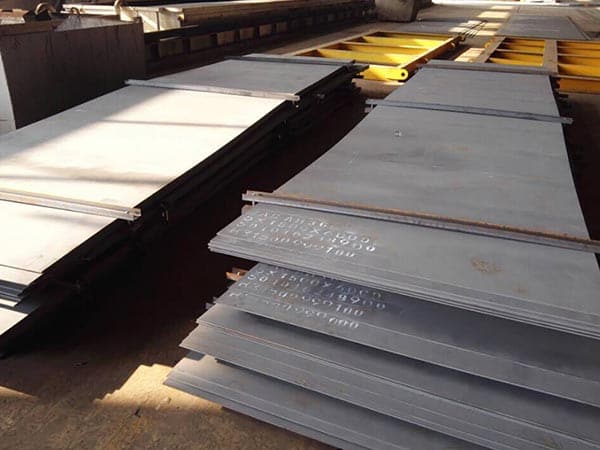
Understanding the Core Strength of S500MC High-Strength Steel
When evaluating the S500MC data sheet, engineers and procurement specialists are often looking for a specific balance between weight reduction and structural integrity. S500MC is a high-strength, low-alloy (HSLA) steel that falls under the EN 10149-2 standard. The "S" stands for structural steel, "500" represents the minimum yield strength of 500 MPa, and "MC" indicates that the material is thermomechanically rolled (M) and suitable for cold forming (C).
The strength of S500MC is not merely a result of its chemical composition but is deeply rooted in its manufacturing process. Thermomechanical rolling involves precise temperature control during the rolling process, which refines the grain structure of the steel. This fine-grained microstructure is the primary reason why S500MC can achieve such high strength without the need for heavy alloying elements that might otherwise compromise weldability or ductility.
Mechanical Properties: Analyzing the Data Sheet Numbers
The true measure of how strong S500MC is can be found in its mechanical performance metrics. Unlike standard carbon steels like S235 or S355, S500MC offers a significant leap in load-bearing capacity. Below is a detailed breakdown of the mechanical properties typically found in an S500MC data sheet:
| Property | Value (Metric) | Thickness Range |
|---|---|---|
| Yield Strength (Reh) | Min. 500 MPa | ≤ 16 mm |
| Tensile Strength (Rm) | 550 - 700 MPa | ≤ 16 mm |
| Elongation (A5) | Min. 12% - 14% | Depends on thickness |
| Bending Radius (90°) | 0.5t to 1.5t | Depending on orientation |
These figures demonstrate that while the material is exceptionally strong, it retains enough ductility to be shaped into complex geometries. The yield strength of 500 MPa allows designers to use thinner sections of steel to support the same loads as thicker, heavier sections of S355MC, leading to overall vehicle or structure weight reductions of up to 20-30%.
Chemical Composition and Grain Refinement
The secret to the S500MC's performance lies in its micro-alloying strategy. By adding trace amounts of Niobium (Nb), Vanadium (V), and Titanium (Ti), manufacturers can inhibit grain growth during the rolling process. This grain refinement is what provides the "strength without brittleness" characteristic of HSLA steels.
- Carbon (C): Kept low (typically ≤ 0.12%) to ensure excellent weldability and prevent hardening in the heat-affected zone (HAZ).
- Manganese (Mn): Added up to 1.60% to improve tensile strength and hardenability.
- Silicon (Si): Limited to 0.50% to maintain surface quality and prevent issues during galvanizing.
- Micro-alloys (Nb, V, Ti): These elements form fine precipitates that pin grain boundaries, ensuring a fine-grained ferrite-pearlite structure.
Because the carbon content is so low, the Carbon Equivalent (CEV) of S500MC is significantly lower than that of traditional quenched and tempered steels of similar strength. This makes it an ideal candidate for high-speed automated welding processes.
Cold Forming and Processing Characteristics
One of the most frequent questions regarding S500MC is how it behaves during fabrication. Since it is designated as a "C" (Cold forming) steel, it is optimized for bending, pressing, and folding. However, due to its high yield strength, the "springback" effect is more pronounced than with milder steels. Fabricators must account for this by over-bending the material slightly or using CNC-controlled press brakes with integrated angle measurement.
The minimum bending radius is a critical part of the S500MC data sheet. For thicknesses under 3mm, a bending radius of 0.5 times the thickness (0.5t) is often achievable when bending transverse to the rolling direction. For thicker plates, this might increase to 1.0t or 1.5t. It is essential to ensure that the bending tools are in good condition and that the material surface is free from deep scratches, as the high strength of the material makes it more sensitive to stress concentrations during the forming process.
Welding Performance: Maintaining Structural Integrity
S500MC is highly weldable using all standard methods, including MIG/MAG, TIG, and submerged arc welding (SAW). Because of its low carbon and micro-alloyed nature, it does not typically require preheating, provided the thickness is within the standard range (usually up to 16mm or 20mm). This is a massive advantage in assembly-line environments where preheating would slow down production cycles.
However, care must be taken with the heat input. Excessive heat can lead to grain growth in the heat-affected zone (HAZ), which may locally reduce the yield strength. It is generally recommended to use low-to-medium heat input and to select filler metals that match the strength of the base material, such as those classified under AWS A5.28 (e.g., ER80S-D2 or similar). Properly executed welds in S500MC will maintain the 500 MPa yield threshold across the joint.
Environmental Adaptability and Fatigue Resistance
In heavy-duty applications, strength is only half the story; durability is the other. S500MC exhibits excellent fatigue resistance, making it suitable for components subjected to cyclic loading, such as truck chassis frames and crane booms. The fine-grained structure helps to arrest micro-crack propagation more effectively than coarse-grained steels.
Regarding environmental resistance, S500MC is a non-alloyed steel and will oxidize (rust) if left unprotected. However, its low silicon content makes it very suitable for hot-dip galvanizing. When galvanized, the material gains a protective zinc layer that offers decades of corrosion resistance in outdoor environments. It is also an excellent substrate for powder coating and KTL (cathodic dip painting) processes commonly used in the automotive industry.
Expanding Industry Applications
The versatility of S500MC has led to its adoption across a wide range of demanding sectors. It is no longer just an "automotive steel" but a global standard for high-performance engineering.
- Automotive and Transport: Used for longitudinal beams, cross members, and chassis components in trucks and trailers where reducing tare weight increases payload capacity.
- Lifting and Handling: Crane arms, telescopic booms, and forklift frames benefit from the high strength-to-weight ratio.
- Agriculture: Plow frames, trailer bodies, and harvesting equipment utilize S500MC to withstand high stress while remaining light enough for fuel-efficient operation.
- Construction: Cold-formed profiles and structural sections for modern architectural designs where sleek, thin profiles are required to support heavy loads.
By replacing S355 with S500MC, manufacturers can often reduce the thickness of a component from 8mm to 6mm without sacrificing safety. This 25% reduction in material usage not only lowers the weight of the final product but also reduces shipping costs and carbon footprints during the manufacturing phase.
Technical Comparison: S500MC vs. S355MC and S700MC
Choosing the right grade involves understanding where S500MC sits in the hierarchy of HSLA steels. While S355MC is the "workhorse" of the industry, S500MC provides the next level of performance for high-stress applications. Conversely, while S700MC offers even higher strength (700 MPa yield), it is more difficult to form and requires even more precise welding controls. S500MC is often considered the "sweet spot" for many fabricators—offering substantial weight savings while remaining relatively easy to process with standard workshop equipment.
When reviewing your next project requirements, the S500MC data sheet should be your first point of reference for balancing cost, weight, and manufacturability. Its unique thermomechanical origin ensures that you are working with a material that is engineered for the future of lightweight, high-strength construction.
Leave a message