
What is the alloy s550mc automotive steel coil equivalent astm
A comprehensive technical analysis of S550MC automotive steel, comparing it with ASTM equivalents like A1011 and A656, covering mechanical properties, processing, and industry applications.
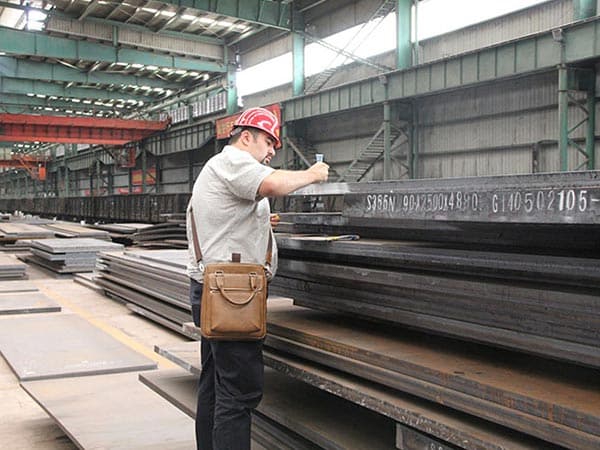
Understanding the Essence of S550MC in Modern Engineering
S550MC is a high-yield strength, thermomechanically rolled steel specifically designed for cold forming. Governed by the European standard EN 10149-2, this grade represents a pinnacle in the balance between weight reduction and structural integrity. In the automotive and heavy machinery sectors, the drive for fuel efficiency and payload optimization has made S550MC a staple material. Its nomenclature reveals its core characteristic: 'S' stands for structural steel, '550' denotes a minimum yield strength of 550 MPa, and 'MC' indicates it is thermomechanically rolled for cold forming applications.
The ASTM Equivalency Challenge: Finding the Right Match
When sourcing materials globally, engineers often need to bridge the gap between European (EN) and American (ASTM) standards. While no two standards are identical due to differing testing methodologies and chemical tolerances, the closest ASTM equivalent to S550MC is generally ASTM A1011 Grade 80 Class 1 or ASTM A656 Grade 80.
ASTM A1011 is typically used for hot-rolled sheets and strips where high strength and formability are required. ASTM A656, on the other hand, is a specification for high-strength low-alloy (HSLA) structural steel plates intended for use in truck frames, brackets, and crane booms. Both ASTM grades align with the 550 MPa (approximately 80 ksi) yield strength threshold of S550MC, making them suitable substitutes in most structural contexts.
| Property | S550MC (EN 10149-2) | ASTM A1011 Grade 80 | ASTM A656 Grade 80 |
|---|---|---|---|
| Yield Strength (min) | 550 MPa | 550 MPa (80 ksi) | 550 MPa (80 ksi) |
| Tensile Strength | 600 - 760 MPa | 620 MPa (90 ksi) min | 620 MPa (90 ksi) min |
| Elongation (min) | 12% - 14% (varies by thickness) | 12% | 12% - 15% |
| Rolling Method | Thermomechanically Rolled | Hot Rolled | Hot Rolled / Controlled Rolled |
Chemical Composition and Its Impact on Performance
The performance of S550MC is rooted in its precise chemical makeup. Unlike traditional carbon steels, S550MC utilizes micro-alloying elements such as Niobium (Nb), Vanadium (V), and Titanium (Ti). These elements facilitate grain refinement during the thermomechanical rolling process, which is critical for achieving high strength without sacrificing weldability or toughness.
- Carbon (C): Kept low (typically ≤ 0.12%) to ensure excellent weldability and prevent brittleness in the heat-affected zone (HAZ).
- Manganese (Mn): Acts as a solid solution strengthener and improves hardenability.
- Silicon (Si): Deoxidizes the steel and contributes to strength.
- Micro-alloys (Nb, V, Ti): These are the "secret sauce" that allows for a fine-grained microstructure, enhancing both yield strength and impact resistance at low temperatures.
Mechanical Superiority and Cold Forming Capabilities
The primary reason for selecting S550MC over standard structural steels is its high strength-to-weight ratio. By using a 550 MPa steel instead of a conventional 235 MPa or 355 MPa grade, manufacturers can significantly reduce the thickness of components while maintaining the same load-bearing capacity. This is vital for the automotive industry where reducing "unsprung mass" directly correlates to better handling and lower emissions.
Despite its high strength, S550MC maintains impressive cold forming properties. It can be bent, flanged, and cold-pressed into complex shapes. However, because of the higher yield strength, the springback effect is more pronounced than in lower-grade steels. Tooling must be designed to account for this, often requiring tighter radii and higher press forces.
Processing Performance: Welding and Cutting
S550MC is designed with fabrication in mind. Its low carbon equivalent (CEV) makes it highly compatible with standard welding processes, including MIG/MAG, TIG, and laser welding. Because the steel derives its strength from thermomechanical processing rather than high carbon content, it is less prone to cold cracking in the weld seam.
When it comes to cutting, S550MC performs exceptionally well with laser, plasma, and waterjet technologies. The clean, fine-grained structure ensures minimal distortion during thermal cutting. For high-volume automotive production, laser cutting S550MC coils provides high precision and clean edges, reducing the need for secondary finishing operations.
Environmental Adaptability and Durability
High-strength steels like S550MC are often deployed in harsh environments. While S550MC is not a "weathering steel" like Corten, its fine-grained structure provides a consistent substrate for protective coatings. Whether it is hot-dip galvanizing, E-coating, or powder coating, S550MC holds finishes well, protecting the underlying structure from oxidation.
Furthermore, the fatigue strength of S550MC is superior to that of lower-strength grades. In dynamic applications like truck chassis or crane arms, the material's ability to withstand cyclic loading without developing micro-cracks is a critical safety factor. Its low-temperature toughness (often tested at -20°C or -40°C) ensures that the steel remains ductile even in arctic conditions, preventing catastrophic brittle fractures.
Expanding Industry Applications
While often labeled as "automotive steel," the utility of S550MC extends far beyond passenger cars. Its unique properties have made it a preferred choice in several high-demand sectors:
- Commercial Vehicles: Used for truck frames, cross members, and longitudinal beams where weight reduction increases payload capacity.
- Lifting and Handling: Telescopic cranes, aerial work platforms, and forklift components benefit from the high strength and low weight.
- Agricultural Equipment: Plow frames, seeders, and harvester components require the durability and impact resistance that S550MC provides.
- Storage and Logistics: High-density racking systems and automated warehouse structures utilize S550MC to support massive loads with minimal material footprint.
- Renewable Energy: Components for wind turbine transport frames and solar tracking systems.
Strategic Sourcing: Why Equivalency Matters
Understanding the ASTM equivalents for S550MC is more than just a technical exercise; it is a strategic procurement advantage. In a global supply chain, being able to specify ASTM A1011 Grade 80 when S550MC is unavailable (or vice versa) prevents production delays. However, engineers must always verify that the specific sub-requirements—such as impact testing or specific elongation targets—are met by the alternative grade. S550MC remains a top-tier choice for those seeking a proven, high-performance steel that balances strength, formability, and weldability in the most demanding engineering environments.
Leave a message