
What is the price of s550mc high strength steel auto plate as per en 10149 in Malaysia
Explore the current market pricing, technical specifications, and industrial applications of S550MC high-strength steel plates in Malaysia. Learn about EN 10149 standards and mechanical performance.
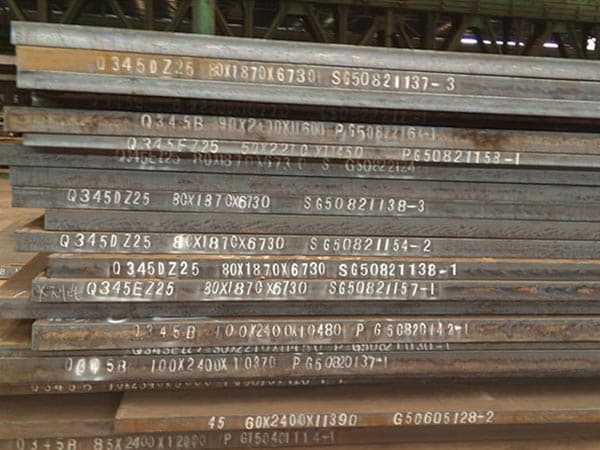
The Dynamics of S550MC High Strength Steel Pricing in Malaysia
Navigating the procurement landscape for S550MC high strength steel auto plates in Malaysia requires a deep understanding of both market economics and technical specifications. As a thermomechanically rolled steel grade defined by the EN 10149-2 standard, S550MC is prized for its exceptional yield strength and cold-forming capabilities. In the current Malaysian market, the price of S550MC typically fluctuates between USD 850 to USD 1,150 per metric ton, depending on thickness, width, and the origin of the material. Local stockists in Klang or Johor Bahru may offer different rates compared to direct mill imports from China or Europe due to logistics, import duties, and the Ringgit's exchange rate volatility.
The pricing is not merely a reflection of raw material costs like iron ore and coking coal. For Malaysian automotive and heavy machinery manufacturers, the value proposition of S550MC lies in its ability to reduce vehicle weight without compromising structural integrity. When evaluating the price, buyers must consider the Pickled and Oiled (P&O) finish versus the black surface, as surface treatment significantly impacts the final invoice. Furthermore, the thickness range—usually from 2.0mm to 12.0mm—plays a critical role; thinner gauges often command a premium due to the complexity of the rolling process required to maintain flatness and tight tolerances.
Technical Specifications: Decoding the EN 10149-2 Standard
S550MC is a High Yield Strength Steel (HSLA) specifically designed for cold forming. The "S" denotes structural steel, "550" represents the minimum yield strength of 550 MPa, and "MC" indicates that the steel is thermomechanically rolled (M) and suitable for cold forming (C). This manufacturing process involves precise temperature control during rolling, which creates a fine-grained microstructure that is impossible to achieve through traditional hot rolling or normalizing.
| Chemical Element | Max Content (%) | Mechanical Property | Value (min/max) |
|---|---|---|---|
| Carbon (C) | 0.12 | Yield Strength (ReH) | Min 550 MPa |
| Manganese (Mn) | 1.80 | Tensile Strength (Rm) | 600 - 760 MPa |
| Silicon (Si) | 0.50 | Elongation (A80mm) | Min 12% (t < 3mm) |
| Phosphorus (P) | 0.025 | Elongation (A5.65) | Min 14% (t ≥ 3mm) |
| Sulfur (S) | 0.015 | Bending Radius (180°) | 1.5 x Thickness |
The low carbon content (max 0.12%) is a defining characteristic of S550MC, ensuring that the material remains highly weldable. Micro-alloying elements such as Niobium (Nb), Vanadium (V), and Titanium (Ti) are added in minute quantities to refine the grain size, which provides the necessary strength while maintaining excellent toughness even at low temperatures.
Processing Performance: Bending, Welding, and Cutting
One of the primary reasons Malaysian engineers specify S550MC for automotive frames and crane arms is its superior cold-forming performance. Unlike traditional structural steels that may crack when bent to tight radii, S550MC allows for complex geometries. For a plate thickness of 5mm, a bending radius of 7.5mm (1.5t) is achievable, which is vital for creating streamlined, aerodynamic automotive components.
- Weldability: Due to its low carbon equivalent (CEV), S550MC can be welded using standard methods such as MAG, TIG, and laser welding. It does not require preheating under normal conditions, which reduces labor costs and increases production speed in Malaysian fabrication shops.
- Laser Cutting: The consistent chemical composition and controlled flatness of EN 10149-2 compliant plates make them ideal for high-speed laser cutting. This ensures clean edges and minimal heat-affected zones (HAZ), preserving the material's mechanical properties near the cut.
- Surface Quality: For automotive applications, the surface must be free of scale. Malaysian manufacturers often opt for S550MC in the Pickled and Oiled condition to ensure a smooth finish that is ready for painting or galvanizing.
Industrial Applications Across Malaysia
The demand for S550MC in Malaysia is driven by several key sectors that prioritize strength-to-weight ratios. In the automotive industry, it is used for chassis members, cross-beams, and longitudinal beams. By switching from standard s355jr to S550MC, manufacturers can reduce the thickness of components by up to 30% while maintaining the same load-bearing capacity, leading to better fuel efficiency and higher payload for commercial vehicles.
The transportation and logistics sector utilizes S550MC for the construction of lightweight trailers and tankers. In the rugged terrain of East Malaysia (Sabah and Sarawak), heavy-duty trucks equipped with S550MC components demonstrate better resistance to fatigue and impact. Additionally, the lifting and mobile crane industry relies on this grade for telescopic booms and outriggers, where high strength is non-negotiable for safety and performance.
Environmental Adaptability and Durability
Malaysia's tropical climate, characterized by high humidity and salt-laden air in coastal regions like Penang and Port Klang, poses a challenge for steel longevity. While S550MC is not a corrosion-resistant steel like stainless or weathering steel, its fine-grained structure provides a better substrate for protective coatings. When properly galvanized or coated with high-performance epoxy primers, S550MC components exhibit excellent durability in humid environments.
The material's impact toughness is another critical factor. EN 10149-2 specifies that these steels should maintain their properties at specific temperatures. For S550MC, the toughness is generally verified at -20°C or -40°C upon request, ensuring that machinery exported from Malaysia to colder climates performs reliably without brittle fracture risks.
Factors Influencing the Malaysian Market Price
When asking "What is the price of S550MC in Malaysia?", one must look beyond the base metal cost. Several localized factors influence the final quote:
- Import Tariffs and Trade Policies: Malaysia often implements anti-dumping duties on certain steel products from specific countries. Buyers must verify if the S550MC source is subject to these additional costs.
- Logistics and Warehousing: Shipping costs from major global mills to Port Klang or Tanjung Pelepas can vary. Local inland transportation to industrial zones like Shah Alam or Nilai also adds to the landed cost.
- Certification and Compliance: Plates accompanied by a Mill Test Certificate (MTC) to EN 10204 3.1 are essential for quality-critical applications. The assurance of traceability and compliance with EN 10149-2 often justifies a higher price point compared to uncertified commercial grades.
- Order Volume: Bulk orders for large-scale automotive projects typically secure lower per-ton rates compared to small-batch purchases for specialized fabrication.
How to Procure S550MC High Strength Steel Safely
To ensure you are getting the best value and genuine material, it is vital to partner with reputable suppliers who understand the nuances of high-strength low-alloy steels. Always request the MTC before the material leaves the warehouse. Verify the Yield Strength (ReH) and Tensile Strength (Rm) values against the EN 10149-2 requirements. If the price seems significantly lower than the market average, inspect the material for flatness issues or surface defects, as these can lead to costly failures during the automated welding or bending processes.
In conclusion, while the price of S550MC in Malaysia is subject to global steel trends, its technical advantages offer significant long-term savings. By enabling thinner, lighter, and stronger designs, S550MC remains the material of choice for forward-thinking Malaysian manufacturers aiming for global competitiveness.
Leave a message