
What is en 10149-2 automotive steel grade s355mc equivalent used for?
Explore the comprehensive guide to S355MC steel under EN 10149-2. Learn about its equivalents, mechanical properties, and diverse industrial applications.
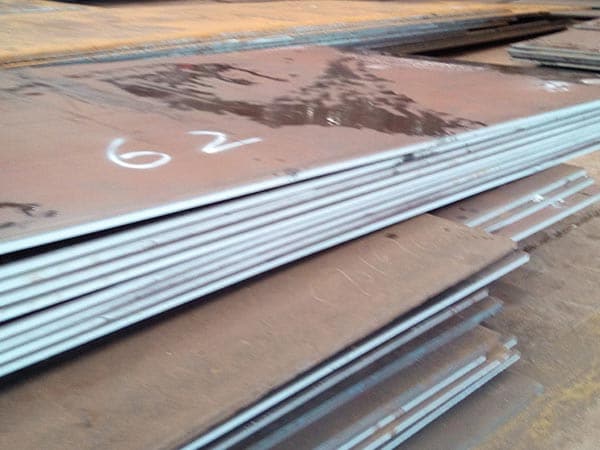
Understanding S355MC: The Thermomechanical Powerhouse
EN 10149-2 grade S355MC represents a pinnacle in the evolution of high-strength low-alloy (HSLA) steels specifically designed for cold forming. The "S" signifies structural steel, "355" denotes the minimum yield strength of 355 MPa, and the "MC" suffix indicates that the material is thermomechanically rolled (M) and possesses high cold-forming capacity (C). Unlike traditional hot-rolled structural steels, S355MC undergoes a sophisticated rolling process where temperature and deformation are precisely controlled to refine the grain structure. This fine-grained microstructure is the secret behind its exceptional balance of high strength, ductility, and toughness.
In the modern manufacturing landscape, the push for lightweighting—particularly in the automotive and heavy machinery sectors—has made S355MC a critical material. By utilizing higher strength steel, engineers can reduce the thickness of components without compromising structural integrity, leading to significant weight savings, improved fuel efficiency, and reduced carbon footprints. This material is not just a commodity; it is a strategic asset for manufacturers aiming to optimize performance-to-weight ratios.
Global Equivalents: Bridging International Standards
Navigating the world of steel standards can be complex, as different regions utilize varying nomenclature for materials with nearly identical properties. Identifying the correct equivalent for S355MC is essential for global supply chain management and cross-border engineering projects. While S355MC is the European designation under EN 10149-2, several international counterparts exist that serve similar functional purposes.
| Standard | Equivalent Grade | Region/Organization |
|---|---|---|
| ASTM A1011 | HSLAS Grade 50 Class 1 | USA / ASTM |
| JIS G3134 | SPFH 540 | Japan / JIS |
| GB/T 1591 | Q355B / Q355MC | China / GB |
| ISO 6930 | HSS 355 | International / ISO |
| DIN 17102 | QStE 360 TM | Germany (Legacy) |
When selecting an equivalent, it is vital to verify the specific delivery conditions. For instance, while ASTM A1011 Grade 50 offers similar yield strength, the grain refinement achieved through thermomechanical rolling in S355MC often provides superior cold-bending properties compared to standard hot-rolled grades. Engineers must scrutinize the elongation and bend radius requirements before finalizing a substitute.
Chemical Composition and the Role of Micro-Alloying
The superior performance of S355MC is rooted in its chemistry. Unlike standard carbon steels that rely heavily on carbon content for strength, S355MC maintains a very low carbon level, typically below 0.12%. This low carbon content is the primary reason for its excellent weldability. The strength is instead derived from the addition of micro-alloying elements such as Niobium (Nb), Vanadium (V), and Titanium (Ti).
- Niobium (Nb): Increases the recrystallization temperature during rolling, facilitating grain refinement.
- Titanium (Ti): Forms stable nitrides that prevent grain growth during welding and high-temperature processing.
- Vanadium (V): Contributes to precipitation hardening, further boosting yield strength.
- Manganese (Mn): Enhances hardenability and solid solution strengthening.
By keeping sulfur and phosphorus levels extremely low (typically <0.020% and <0.025% respectively), the steel achieves high purity, which translates to better impact toughness and reduced risk of lamellar tearing during fabrication.
Mechanical Properties: Precision Under Pressure
The mechanical profile of S355MC is engineered for predictability. For designers, the yield strength is the most critical parameter, but the tensile strength and elongation are equally important for ensuring the material can withstand forming stresses without fracturing. The following table outlines the typical mechanical requirements for S355MC according to EN 10149-2.
| Property | Value (Thickness ≤ 3mm) | Value (Thickness > 3mm) | 355 | 355 |
|---|---|---|
| Tensile Strength (MPa) | 430 - 550 | 430 - 550 |
| Min. Elongation (A80mm %) | 19 | - |
| Min. Elongation (A5 %) | - | 23 |
| 180° Cold Bend Radius | 0.5t | 0.5t |
The remarkably tight bend radius (0.5 times the thickness) highlights the material's exceptional formability. This allows for the creation of complex geometries and sharp angles in stamped or pressed parts, which is a frequent requirement in automotive chassis design.
Fabrication Excellence: Welding and Machining
One of the standout features of S355MC is its ease of fabrication. Because it is a low-carbon, micro-alloyed steel, it possesses a low Carbon Equivalent (CEV). This means it can be welded using all standard methods—including MIG/MAG, TIG, submerged arc, and laser welding—without the need for preheating in most thickness ranges. The Heat Affected Zone (HAZ) remains relatively tough, though care must be taken to avoid excessive heat input which could lead to grain coarsening and a localized drop in strength.
In terms of machining and cutting, S355MC is highly compatible with modern CNC laser, plasma, and waterjet cutting systems. Its clean surface finish (often supplied in pickled and oiled condition) ensures minimal dross and high-quality edges. When it comes to cold forming, the material exhibits low springback compared to other high-strength steels, allowing for high dimensional accuracy in mass-produced components.
Automotive Industry: The Primary Driver of S355MC Usage
The automotive sector is the largest consumer of S355MC, where it is used for structural components that require a balance of strength and weight reduction. In passenger vehicles and commercial trucks, S355MC is found in:
- Chassis Frames: The backbone of trucks and SUVs, where high yield strength is required to support heavy loads.
- Cross Members: Providing lateral rigidity to the vehicle frame while remaining light enough to improve fuel economy.
- Suspension Parts: Control arms and brackets that must endure cyclic loading and vibration.
- Seat Frames: Utilizing the high strength-to-weight ratio to enhance passenger safety without adding unnecessary bulk.
- Bumper Reinforcements: Absorbing energy during impacts through controlled deformation.
By replacing traditional S235JR or s355jr with S355MC, automotive engineers can often reduce the thickness of a part by 15-25%, which has a direct impact on the vehicle's total weight and performance metrics.
Beyond the Road: Diverse Industrial Applications
While "automotive steel" is a common label, the utility of S355MC extends far beyond cars and trucks. Any industry that requires high-strength components formed from sheet or plate can benefit from this grade.
Heavy Machinery and Construction: In the manufacturing of cranes, excavators, and agricultural equipment, S355MC is used for booms, buckets, and support structures. Its ability to be cold-formed into U-channels and C-profiles makes it ideal for telescopic sections.
Renewable Energy: The solar power industry utilizes S355MC for the production of solar trackers and mounting systems. These structures must withstand significant wind loads over decades, requiring a material that is both strong and easy to galvanize for corrosion protection.
Storage and Logistics: High-density racking systems, pallet converters, and shipping container components often leverage S355MC. The material's strength allows for taller, thinner racking uprights that can support immense vertical loads.
Environmental Adaptability and Longevity
S355MC performs admirably in various environmental conditions. While it is not a "weathering steel" like Corten, its fine-grained structure provides a degree of resistance to atmospheric corrosion that exceeds basic carbon steels. Furthermore, it is an excellent candidate for hot-dip galvanizing. The low silicon and phosphorus content ensures a controlled zinc-iron alloy layer growth, resulting in a smooth, aesthetic, and durable protective coating.
Fatigue resistance is another critical attribute. In applications subject to dynamic stresses, such as trailer axles or vibrating screens, the refined grain structure of S355MC helps inhibit the initiation and propagation of fatigue cracks. This extends the service life of the equipment and reduces maintenance costs over the long term.
Economic Considerations: Cost vs. Performance
From a procurement perspective, S355MC offers a compelling value proposition. While the per-ton price may be slightly higher than standard hot-rolled structural steel (like S355J2), the total cost of ownership is often lower. The weight savings mentioned earlier lead to lower shipping costs and reduced material usage per unit. Additionally, the excellent formability and weldability reduce scrap rates and fabrication time, further lowering the total production cost.
Choosing S355MC is an investment in manufacturing efficiency. It allows for the simplification of designs—moving from multi-part welded assemblies to single-piece cold-formed components—which reduces labor costs and potential failure points. For companies looking to stay competitive in a global market, the transition to high-performance steels like S355MC is often a necessary step in product evolution.
Leave a message