
What data needs to be confirmed for s355mc steel equivalent cutting
Detailed guide on confirming technical data for S355MC steel and its equivalents during the cutting process, focusing on chemical composition, mechanical properties, and industrial applications.
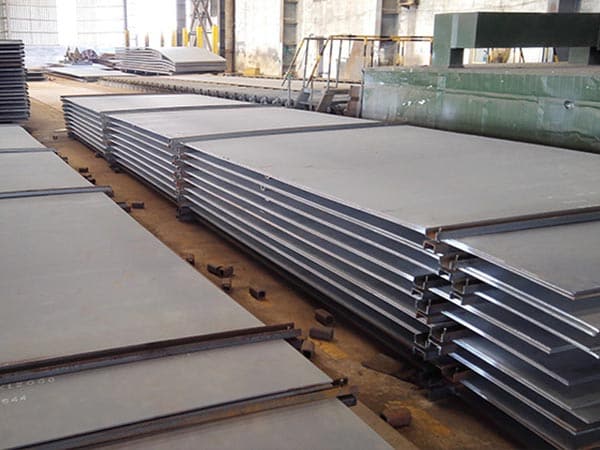
Understanding the Technical Foundation of S355MC Steel
S355MC is a high-yield strength, cold-forming steel produced through thermomechanical rolling, governed by the EN 10149-2 standard. Unlike traditional structural steels, its micro-alloyed structure provides a unique balance of strength and ductility. When approaching the cutting process for S355MC or its equivalents, the first data point to confirm is the manufacturing process. Thermomechanically rolled steels possess a refined grain structure that reacts differently to thermal inputs compared to normalized steels. Confirming whether the material is truly S355MC or a substitute like Q345B or ASTM A572 Gr50 is vital because the internal stress distribution varies significantly between these grades.
Critical Chemical Composition and Carbon Equivalent (Cev)
Before initiating any thermal cutting process such as laser, plasma, or oxy-fuel, the chemical analysis from the mill test report (MTR) must be verified. For S355MC, the carbon content is typically very low (max 0.12%), which enhances weldability and reduces the risk of hardening at the cut edge. However, the presence of micro-alloying elements like Niobium (Nb), Vanadium (V), and Titanium (Ti) is what gives the steel its strength. Confirming the Carbon Equivalent Value (Cev) is essential for predicting the Heat Affected Zone (HAZ) hardness. A higher Cev increases the likelihood of edge cracking during subsequent forming operations. When using equivalents, ensure the Silicon (Si) content is below 0.03% or between 0.15% and 0.25% to avoid the 'Sandelin Effect' during galvanizing, which can also affect the stability of the molten pool during laser cutting.
Mechanical Properties and Yield-to-Tensile Ratio
The '355' in S355MC denotes a minimum yield strength of 355 MPa. However, for precision cutting and subsequent bending, the actual yield strength and the yield-to-tensile ratio are more important than the nominal values. High-strength steels often exhibit significant springback. If the cutting data does not account for the material's actual tensile strength, the final dimensions after bending may deviate from the design. Confirming the elongation percentage (typically 19-23% for S355MC) ensures that the cut edge can withstand the stretching forces of cold forming without micro-tearing. If an equivalent material has lower ductility, the cutting speed must be adjusted to minimize thermal damage to the edge grain structure.
Surface Condition and Scale Adhesion
S355MC is often supplied in a pickled and oiled (P&O) condition or with a thin, tightly adherent black oxide scale. For laser cutting, the surface condition is a primary data point.
- Pickled and Oiled: Provides the most consistent beam absorption and allows for higher cutting speeds.
- Black Scale: Requires lower speeds and specific oxygen pressure to prevent the scale from popping, which can cause 'blowouts' or slag dross.
Thickness Tolerances and Flatness Requirements
Precision cutting relies on a consistent distance between the cutting nozzle and the material surface. S355MC is known for its excellent flatness due to the thermomechanical rolling process. However, equivalent grades might follow different dimensional standards like EN 10051 or ASTM A6. Confirming the flatness tolerance (e.g., 3mm/m) is crucial for automated fiber laser systems. If the material is bowed, the capacitive sensors in the cutting head may struggle to maintain the focal point, leading to inconsistent kerf widths and rougher surface finishes. Additionally, confirming the thickness tolerance ensures that the nesting software calculates the weight and thermal load accurately.
Thermal Conductivity and Heat Affected Zone (HAZ)
The fine-grained nature of S355MC makes it sensitive to excessive heat input. When cutting thick sections, the data regarding thermal conductivity must be considered. Compared to mild steel, S355MC dissipates heat slightly differently due to its alloy content. Plasma cutting data should specify the gas mixture (Oxygen/Air or Nitrogen/Hydrogen) to minimize the HAZ. A wide HAZ can lead to local softening, reducing the structural integrity of the component. For equivalent materials, if the grain size is coarser, the HAZ will likely be larger, necessitating a faster cutting speed or a different cooling cycle to preserve the mechanical properties near the cut edge.
Industrial Application-Specific Data
The requirements for S355MC cutting vary by industry. In the automotive and truck chassis manufacturing sector, the fatigue strength of the cut edge is paramount. Confirming the edge roughness (Rz value) is mandatory to prevent fatigue cracks from starting at cutting striations. In heavy machinery and crane construction, the focus is on the weldability of the cut edge. Data regarding the presence of any residual elements like Copper (Cu) or Chromium (Cr) in equivalent grades must be confirmed, as these can cause hot cracking in the weld pool. Agricultural equipment manufacturers often prioritize the ease of painting, meaning the cutting data must ensure no heavy oxide layer is left on the edge.
| Property Category | S355MC Standard (EN 10149-2) | Key Confirmation Data for Equivalents | Impact on Cutting Process |
|---|---|---|---|
| Yield Strength | Min 355 MPa | Actual Mill Test Value | Determines springback and edge stability |
| Carbon Content | Max 0.12% | Carbon Equivalent (Cev) | Affects HAZ hardness and weldability |
| Surface Finish | Pickled or Scaled | Presence of Primer or Rust | Dictates laser absorption and gas pressure |
| Elongation | Min 19% (t < 3mm) | Uniform Elongation Ratio | Influences edge cracking during forming |
| Flatness | EN 10051 Class B | Max deviation per meter | Essential for nozzle clearance and focus |
Optimizing Cutting Parameters for S355MC
To achieve the best results, the cutting data must be synchronized with the machine's capabilities. For Fiber Laser Cutting, using high-pressure Nitrogen as the assist gas is often preferred for S355MC to produce a clean, oxide-free edge that is ready for immediate welding or painting. If using Oxygen, the pressure must be lower (typically 0.5 to 1.5 bar) to control the exothermic reaction. When switching to an equivalent grade, a 'test cut' is recommended to verify the dross levels. If the equivalent has a higher Manganese (Mn) content, the molten metal will be more viscous, requiring an increase in gas pressure or a slight reduction in cutting speed to ensure a clean burr-free bottom edge.
Environmental and Storage Considerations
The environmental conditions where the S355MC or its equivalent is stored can alter the cutting data requirements. Moisture or condensation on the steel surface can lead to hydrogen embrittlement in the cut zone during thermal processing. Confirming the storage history and ensuring the material is at room temperature before cutting prevents 'spattering' during the piercing phase. For equivalent materials that may not have the same level of atmospheric corrosion resistance, checking for surface pitting is vital, as pits can deflect the laser beam or cause turbulence in the plasma arc, leading to rejected parts.
Leave a message