
What is the scope of appearance inspection of BS700MC weldable structural steel
Explore the detailed scope of appearance inspection for BS700MC weldable structural steel. This guide covers surface defects, dimensional tolerances, mechanical properties, and industrial application standards for high-strength steel.
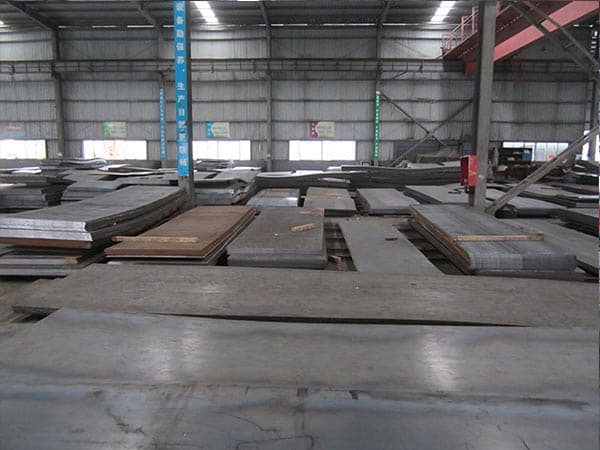
Technical Foundation of BS700MC High-Strength Structural Steel
BS700MC is a high-strength, cold-forming, thermomechanically rolled steel specifically designed for structural components that require significant weight reduction without compromising load-bearing capacity. As a member of the HSLA (High-Strength Low-Alloy) family, BS700MC relies on a fine-grained microstructure achieved through precise temperature control during the rolling process. Understanding the scope of appearance inspection is critical because surface integrity directly influences the fatigue life and welding reliability of the final component.
The '700' in its designation refers to a minimum yield strength of 700 MPa, while 'MC' indicates it is a thermomechanically rolled material suitable for cold forming. Because this steel is frequently used in safety-critical applications like crane booms and truck chassis, the inspection process goes beyond simple aesthetics. It serves as a primary diagnostic tool to ensure the material has not suffered from metallurgical degradation during processing.
Surface Quality Inspection Parameters
The primary focus of appearance inspection for BS700MC involves identifying defects that could act as stress concentrators. According to international standards like EN 10149-2, the surface must be free from defects that interfere with the application of the material. Specifically, the inspection scope includes:
- Cracks and Fissures: These are strictly prohibited. Even micro-cracks on the surface can propagate rapidly under cyclic loading, leading to catastrophic failure in mobile machinery.
- Pitting and Scale: While a thin layer of iron oxide (scale) is normal for hot-rolled products, excessive pitting can reduce the effective thickness of the sheet and complicate the painting or galvanizing process.
- Inclusions and Laminations: These are internal defects that sometimes manifest on the surface. They indicate impurities in the steel-making process and can lead to delamination during intensive cold bending.
- Mechanical Damage: Scratches, gouges, and roll marks caused by handling or machinery must be evaluated based on their depth relative to the nominal thickness.
Appearance inspection also monitors the uniformity of the surface finish. For BS700MC, a consistent texture is necessary for automated laser cutting and robotic welding, as variations in surface reflectivity or oxide thickness can affect sensor performance.
Dimensional and Geometrical Accuracy
Appearance inspection is inseparable from dimensional verification. For structural steel, the 'shape' of the plate determines how well it fits into complex assemblies. The scope includes:
| Inspection Metric | Requirement for BS700MC | Impact on Performance |
|---|---|---|
| Thickness Tolerance | Strict adherence to EN 10051 | Ensures consistent weight and load calculations. |
| Flatness | Max deviation per meter length | Critical for automated welding and laser cutting precision. |
| Camber and Out-of-Square | Minimal lateral curvature | Prevents assembly misalignments in long truck frames. |
| Edge Condition | Burr-free or trimmed edges | Reduces risk of cracking during cold forming. |
For high-strength steel like BS700MC, flatness is particularly vital. If the plate is not flat, internal stresses may be unevenly distributed, which can cause 'spring-back' issues during the bending process, leading to inaccurate part geometries.
Chemical Composition and Weldability Influence
The 'weldable' aspect of BS700MC is rooted in its low carbon equivalent (CEV). Appearance inspection often includes checking the heat number and mill certificates to verify the chemical balance. A low CEV ensures that the Heat Affected Zone (HAZ) does not become overly brittle, which is a common failure point in high-strength steels.
Micro-alloying elements such as Niobium (Nb), Vanadium (V), and Titanium (Ti) are used to refine the grain size. During visual inspection, a 'clean' surface usually indicates a well-controlled rolling environment where these elements have effectively prevented grain growth. If the steel shows 'orange peel' effects after bending, it may suggest localized grain coarsening, necessitating further metallurgical testing.
Mechanical Performance and Process Adaptation
While mechanical properties are confirmed through tensile tests, the appearance of the test specimens provides valuable data. BS700MC exhibits high ductility despite its strength. The inspection scope includes verifying:
- Yield Strength (ReH): Minimum 700 MPa.
- Tensile Strength (Rm): Usually between 750 and 950 MPa.
- Elongation (A5): Typically 12-14% minimum depending on thickness.
The bendability of BS700MC is one of its most prized features. Appearance inspection of a bent part should show no signs of 'crazing' or surface ruptures on the outer radius. Because of its high strength, the minimum bending radius is larger than that of mild steel, and visual checks ensure that operators are following the recommended R/t ratios.
Environmental Adaptability and Corrosion Protection
BS700MC is frequently used in outdoor environments where it is exposed to moisture, road salt, and temperature fluctuations. The inspection scope covers the material's readiness for protective coatings. The presence of oil, grease, or heavy rust on the surface must be noted, as these require intensive pre-treatment.
Furthermore, BS700MC maintains excellent low-temperature toughness. In Arctic or high-altitude applications, the steel must resist brittle fracture. Visual inspection of welds in these environments focuses on ensuring there are no 'undercuts' or 'cold laps' which could serve as initiation points for low-temperature cracking.
Application Industries for BS700MC
The versatility of BS700MC makes it a staple in industries where 'lighter and stronger' is the mantra. Inspection protocols are tailored to these specific needs:
- Automotive and Transportation: Used for truck side beams, cross members, and bumper reinforcements. Here, the focus is on weight reduction to increase payload.
- Lifting and Handling Equipment: Telescopic cranes and boom sections rely on the high yield strength. Appearance inspection here is rigorous regarding weld seam integrity.
- Agricultural Machinery: Plow frames and trailers benefit from the wear resistance and strength, requiring a surface that can handle abrasive soil contact.
- Construction and Infrastructure: Specialized structural supports where high load-bearing and weldability are required.
Operational Best Practices for Inspection
To conduct a professional appearance inspection of BS700MC, inspectors should utilize high-intensity lighting to reveal surface irregularities. For critical components, Non-Destructive Testing (NDT) methods such as Magnetic Particle Inspection (MPI) or Dye Penetrant Inspection (DPI) complement visual checks by uncovering sub-surface flaws that are invisible to the naked eye.
Documenting the edge quality is also essential. Since BS700MC is often sheared or laser-cut, the heat-affected edge from the cutting process should be inspected for hardness or micro-cracking before the part proceeds to the welding station. Proper storage is the final piece of the inspection puzzle; ensuring the steel is kept dry and away from corrosive chemicals prevents surface degradation before it even reaches the production line.
By strictly adhering to this comprehensive scope of appearance inspection, manufacturers can leverage the full potential of BS700MC, ensuring that every structural component meets the highest standards of safety, efficiency, and durability in the modern industrial landscape.
Leave a message