
What is S460MC automotive steel coil factory equivalent ASME material
A comprehensive technical guide comparing S460MC automotive steel with ASME/ASTM standards, detailing mechanical properties, metallurgy, and industrial applications.
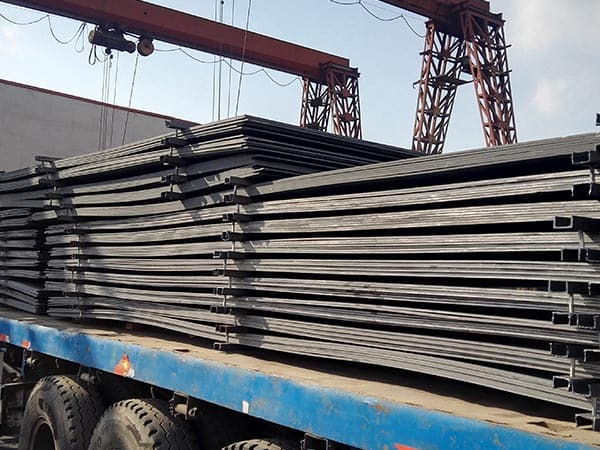
The Technical Essence of S460MC Automotive Steel
S460MC represents a pinnacle of thermomechanically rolled high-yield strength steel designed specifically for cold forming applications. Governed by the European standard EN 10149-2, this grade is engineered to provide a balance between extreme strength and excellent ductility. The "S" prefix denotes structural steel, "460" indicates a minimum yield strength of 460 MPa, and "MC" signifies that the material is thermomechanically rolled (M) and suitable for cold forming (C). In the global supply chain, procurement officers and engineers frequently seek the ASME or ASTM equivalent to ensure material consistency across international projects.
Identifying the ASME/ASTM Equivalent for S460MC
Finding a direct 1:1 equivalent in the ASME (American Society of Mechanical Engineers) or ASTM (American Society for Testing and Materials) system requires a nuanced understanding of chemical compositions and mechanical thresholds. While no single standard is an exact mirror, the most common cross-references include:
- ASTM A1011 Grade 65 or 70 (HSLAS): This is often the primary candidate for substitution in thin-gauge applications. High-Strength Low-Alloy Steel (HSLAS) Class 1 or Class 2 provides similar yield and tensile properties, though the elongation requirements might differ slightly from the EN standard.
- ASTM A656 Grade 65/70: For thicker plates or coils used in structural applications, A656 offers the high-strength characteristics and improved formability that align with S460MC's performance profile.
- ASME SA1011: The ASME version of the ASTM standard, used primarily for pressure vessel-related components or structural members within ASME-coded fabrications.
The choice between these equivalents depends on the specific thickness of the coil and the final application's requirements for weldability and impact toughness.
Mechanical and Chemical Profile Analysis
The superiority of S460MC lies in its precise metallurgical balance. Factories utilize micro-alloying elements like Niobium (Nb), Vanadium (V), and Titanium (Ti) to achieve grain refinement. This process allows the steel to maintain high strength without the brittleness typically associated with high-carbon steels.
| Property | S460MC (EN 10149-2) | ASTM A1011 HSLAS Gr 65 |
|---|---|---|
| Yield Strength (min) | 460 MPa | 450 MPa (65 ksi) |
| Tensile Strength | 520-670 MPa | 550 MPa (80 ksi) min |
| Elongation (min) | 14% (t < 3mm) | 12-14% |
| Carbon (max) | 0.12% | 0.22% (varies by class) |
| Manganese (max) | 1.60% | 1.65% |
As shown, S460MC typically maintains a lower carbon content than its ASTM counterparts, which significantly enhances its weldability and cold-forming capabilities. The low carbon equivalent (CEV) value ensures that the steel can be welded using standard methods without extensive preheating.
Advanced Processing Performance
Automotive manufacturers prioritize S460MC due to its predictable behavior during fabrication. The thermomechanical rolling process (TMCP) creates a fine-grained microstructure that is highly resistant to cracking during tight-radius bending. When a factory produces S460MC, they focus on "clean steel" technology to minimize non-metallic inclusions, which are the primary culprits for edge cracking during flanging or stretching operations.
Cold Bending: S460MC allows for a minimum bend radius of approximately 1.0 to 1.5 times the thickness (depending on the direction of rolling), making it ideal for complex chassis components and cross members. Weldability: Because of the low alloy content, S460MC is compatible with MAG (Metal Active Gas), TIG (Tungsten Inert Gas), and laser welding. The heat-affected zone (HAZ) retains much of the base metal's strength, provided that heat input is controlled to prevent excessive grain growth.
Environmental Adaptability and Fatigue Life
In the automotive and heavy machinery sectors, components are subjected to cyclic loading and harsh environmental exposure. S460MC exhibits superior fatigue resistance compared to traditional S355 grades. The fine-grained structure helps arrest micro-crack propagation, extending the service life of structural parts. While S460MC is not a "weathering steel" like Corten, its uniform surface quality allows for excellent adhesion of anti-corrosion coatings, such as zinc-nickel plating or E-coating (electrophoretic deposition), which are standard in the automotive industry.
Expanding Industrial Applications
Beyond the automotive chassis, S460MC is gaining traction in several high-demand sectors:
- Lifting and Excavation: Crane booms and excavator arms benefit from the high strength-to-weight ratio, allowing for higher payloads without increasing the machine's dead weight.
- Renewable Energy: Support structures for solar arrays and wind turbine internal components utilize S460MC for its structural integrity and ease of transport due to reduced thickness.
- Transportation Infrastructure: Lightweight trailer frames and container chassis leverage S460MC to meet strict fuel efficiency and carbon emission regulations by reducing overall vehicle mass.
Strategic Sourcing from Global Factories
When sourcing S460MC automotive steel coil, it is imperative to verify the factory's certifications. A reputable manufacturer should hold IATF 16949 certification, which is the global quality management standard for the automotive industry. This ensures that the steel undergoes rigorous testing, including ladle analysis, tensile testing, and surface inspection. Buyers should also request a Mill Test Certificate (MTC) according to EN 10204 3.1, which provides traceability and confirms that the material meets the S460MC or equivalent ASME specifications.
Material substitution is a common practice, but it must be backed by engineering validation. If an American project specifies ASTM A1011 Grade 65, S460MC is often a superior substitute due to its tighter tolerances and better formability. However, the reverse substitution—using ASTM A1011 in place of S460MC—requires a careful check of the elongation and chemical limits to ensure the manufacturing process (like deep drawing) will not be compromised.
Future Trends in High-Strength Steel
The industry is moving toward even higher grades, such as S500MC and S700MC, but S460MC remains the "sweet spot" for many engineers. It offers the best compromise between cost, strength, and ease of processing. As global standards continue to harmonize, the distinction between EN and ASME grades becomes less of a barrier, provided that the metallurgical fundamentals are understood and respected by both the factory and the end-user.
Leave a message