
What is the plate S960MC high strength alloy steel beveling
Explore the technical nuances of S960MC high-strength steel beveling. This guide covers metallurgy, mechanical properties, and best practices for edge preparation in heavy engineering.
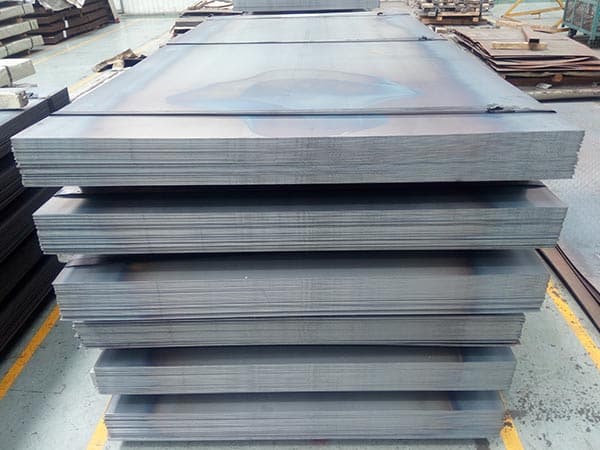
Understanding the Metallurgical Foundation of S960MC
S960MC is a high-yield strength steel produced through a sophisticated Thermomechanical Control Process (TMCP). Unlike traditional quenched and tempered steels, S960MC derives its exceptional mechanical properties from a combination of precise micro-alloying and controlled rolling temperatures. This grade, governed by the EN 10149-2 standard, is specifically designed for cold-forming applications where weight reduction and high load-bearing capacity are paramount. The 'S' denotes structural steel, '960' represents the minimum yield strength of 960 MPa, and 'MC' indicates a thermomechanically rolled material suitable for cold forming.
The chemical composition of S960MC is a masterclass in micro-alloying. It utilizes minute additions of Niobium (Nb), Vanadium (V), and Titanium (Ti) to refine the grain structure. These elements form fine precipitates that pin grain boundaries during the rolling process, preventing grain growth and ensuring a fine-grained ferrite-bainite microstructure. This fine grain size is the primary reason why S960MC maintains high toughness even at low temperatures, making it a preferred choice for equipment operating in harsh environments. Low carbon content, typically below 0.20%, ensures that the steel remains weldable despite its immense strength.
The Critical Role of Beveling in High-Strength Steel Fabrication
Beveling, or edge preparation, is the process of shaping the edge of a steel plate before welding. For ultra-high-strength steels like S960MC, beveling is not merely a geometric requirement; it is a critical factor in ensuring the structural integrity of the welded joint. Because S960MC is often used in thicknesses ranging from 3mm to 15mm for high-stress components like crane booms and chassis, achieving full penetration welds is essential to prevent fatigue failure.
The geometry of the bevel—whether it is a V-groove, X-groove, or J-groove—determines the volume of weld metal required and the heat distribution during the welding process. For S960MC, the goal of beveling is to provide a clean, precise interface that allows the welding arc to reach the root of the joint while minimizing the total heat input. Excessive heat input is the enemy of TMCP steels, as it can cause grain coarsening in the heat-affected zone (HAZ), leading to a localized loss of strength and toughness.
Mechanical vs. Thermal Beveling Techniques
When preparing the edges of S960MC plates, fabricators must choose between mechanical and thermal methods. Each approach has distinct implications for the material's properties. Mechanical beveling, performed using milling machines or specialized edge-shaving tools, is widely considered the gold standard for high-strength alloys. This cold-working process does not introduce heat, thereby preserving the original TMCP microstructure right up to the edge of the plate. It produces a smooth surface finish with high dimensional accuracy, which is vital for automated welding systems.
Thermal beveling methods, such as plasma or laser cutting, are faster and more versatile for complex geometries. Modern high-definition plasma systems can produce high-quality bevels, but they inevitably create a thin recast layer and a small HAZ. Laser cutting is even more precise, with a much narrower HAZ. However, oxy-fuel cutting is generally discouraged for S960MC beveling due to the high heat input and the risk of significant softening at the plate edges. If thermal cutting is used, the cutting parameters must be strictly controlled to minimize the duration of heat exposure.
Technical Specifications and Mechanical Performance
To appreciate the necessity of precise beveling, one must look at the mechanical benchmarks S960MC must meet. The following table outlines the core properties of this grade as per EN 10149-2:
| Property | Value / Specification |
|---|---|
| Minimum Yield Strength (Reh) | 960 MPa |
| Tensile Strength (Rm) | 980 - 1250 MPa |
| Minimum Elongation (A5) | 7% - 10% (depending on thickness) |
| Impact Strength (Charpy-V) | Typically 27J at -20°C or -40°C |
| Carbon Equivalent (CEV) | Approx. 0.45 - 0.52 |
These properties highlight the material's sensitivity. A yield strength of 960 MPa means the steel is nearly three times stronger than standard S355 structural steel. Any defect introduced during beveling—such as a notch, a micro-crack from thermal shock, or a hardened edge—can act as a stress concentrator, potentially leading to catastrophic failure under the high loads these structures are designed to carry.
Optimizing the Bevel Geometry for S960MC
Designing the bevel for S960MC requires a balance between weld accessibility and metal volume. For plates up to 8mm, a single V-bevel with a 60-degree included angle is common. For thicker plates, a double-V (X-bevel) is preferred because it reduces the amount of filler metal needed and helps balance residual stresses by allowing welding from both sides. A root face (or 'land') of 1mm to 2mm is typically maintained to prevent burn-through and ensure a stable root pass.
The cleanliness of the beveled surface is non-negotiable. Any oil, rust, or scale left on the bevel can introduce hydrogen into the weld pool, leading to hydrogen-induced cracking (HIC)—a significant risk for high-strength steels. After beveling, the edges should be cleaned with a wire brush or solvent to ensure a pristine surface for the subsequent welding operation.
Welding Synergy and Heat Input Management
Beveling is the precursor to welding, and for S960MC, the welding process must be tightly controlled. The use of low-hydrogen consumables is mandatory. The cooling time (t8/5), which is the time it takes for the weld and HAZ to cool from 800°C to 500°C, must be kept within a specific range—usually between 5 and 15 seconds. If the cooling is too slow (high heat input), the strength of the HAZ drops. If it is too fast, there is a risk of martensite formation and embrittlement.
Proper beveling facilitates this control by allowing the welder to use stringer beads rather than wide weave beads. Stringer beads maintain a lower heat input per unit length, preserving the fine-grained structure of the S960MC. Furthermore, the precise fit-up enabled by high-quality mechanical beveling reduces the need for excessive gap-filling, further limiting the total energy transferred to the base metal.
Applications and Industry Requirements
The demand for S960MC and high-precision beveling is driven by industries that prioritize weight-to-strength ratios. In the mobile crane industry, the use of S960MC in telescopic booms allows for longer reach and higher lifting capacities without increasing the overall weight of the vehicle. Similarly, in the transport sector, trailers made with S960MC can carry heavier payloads while consuming less fuel due to reduced dead weight.
Offshore engineering and mining equipment also utilize S960MC for structural components subjected to extreme dynamic loads. In these environments, the quality of the bevel and the resulting weld is a matter of safety. Fatigue life is a major concern, and research has shown that smooth, mechanically beveled edges significantly improve the fatigue resistance of welded joints compared to rough, thermally cut edges. The absence of micro-notches in a milled bevel ensures that stress flow remains uniform across the joint.
Practical Recommendations for Fabricators
- Prioritize mechanical milling for beveling S960MC to avoid thermal degradation of the edge.
- If using plasma cutting, ensure the equipment is calibrated for high-strength alloys to minimize the HAZ width.
- Maintain a consistent root face to facilitate automated welding and ensure uniform penetration.
- Inspect beveled edges for micro-cracks using dye penetrant or magnetic particle testing, especially after thermal cutting.
- Store S960MC plates in a dry environment to prevent edge corrosion before the beveling and welding process begins.
The integration of S960MC into modern engineering projects demands a deep understanding of its grain structure and response to thermal cycles. By mastering the art of beveling, manufacturers can fully exploit the potential of this ultra-high-strength steel, creating structures that are lighter, stronger, and more durable than ever before. The precision of the edge preparation is the foundation upon which the entire integrity of the high-strength structure rests.
Leave a message