
What is the alloy S700MC pickled steel coil for auto frame
Discover the technical specifications, chemical composition, and automotive applications of S700MC pickled steel coils, the high-strength solution for lightweight frames.
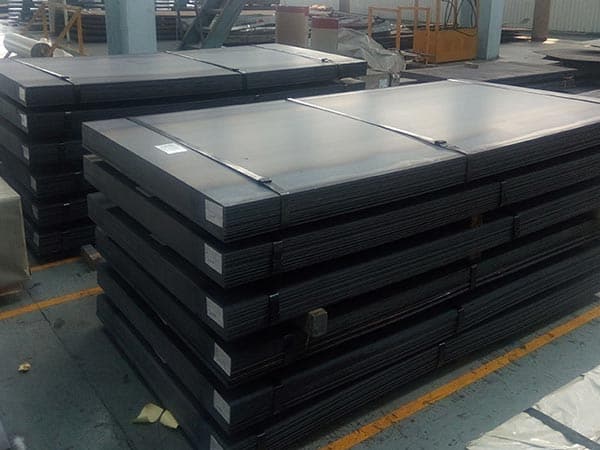
The Fundamentals of S700MC High-Strength Structural Steel
S700MC is a high-strength low-alloy (HSLA) structural steel specifically engineered for cold forming, characterized by its minimum yield strength of 700 MPa. This material falls under the EN 10149-2 standard, which governs hot-rolled flat products made of high yield strength steels for cold forming. The 'MC' designation indicates that the steel is thermomechanically rolled (M) and possesses high cold-forming capacity (C). In the automotive industry, where the balance between structural integrity and weight reduction is paramount, S700MC has emerged as a cornerstone material for chassis and frame components. Unlike traditional carbon steels, S700MC achieves its remarkable strength through a combination of precise chemical micro-alloying and controlled thermomechanical processing, rather than through high carbon content which would compromise weldability and ductility.
The Significance of the Pickling and Oiling Process
When sourcing S700MC, the 'pickled' (often denoted as P&O - Pickled and Oiled) condition is frequently specified for automotive applications. Pickling is a chemical surface treatment where the steel coil is passed through an acid bath, typically hydrochloric acid, to remove the mill scale (iron oxides) that forms on the surface during hot rolling. For automotive frame manufacturers, using pickled S700MC offers several critical advantages. First, the removal of the abrasive scale protects expensive stamping and forming dies from premature wear. Second, a pickled surface provides a clean, uniform substrate for subsequent processes such as robotic welding, laser cutting, and E-coating (electrophoretic painting). The thin layer of oil applied after pickling serves as a temporary corrosion inhibitor, ensuring the material remains rust-free during transport and storage before it enters the production line.
Chemical Composition and Micro-alloying Strategy
The exceptional performance of S700MC is rooted in its sophisticated chemical profile. To maintain excellent weldability, the carbon content is kept extremely low, typically below 0.12%. The strength is instead derived from grain refinement and precipitation hardening through the addition of micro-alloying elements such as Niobium (Nb), Vanadium (V), and Titanium (Ti). These elements, even in small quantities, significantly inhibit grain growth during the rolling process, resulting in an ultra-fine grain structure. This fine grain size is the primary reason S700MC can offer such high yield strength while maintaining high impact toughness, even at sub-zero temperatures. Manganese (Mn) is also utilized to enhance hardenability and solid solution strengthening, while Silicon (Si) levels are controlled to ensure optimal surface quality after pickling.
| Element | Max Content (%) |
|---|---|
| Carbon (C) | 0.12 |
| Manganese (Mn) | 2.10 |
| Silicon (Si) | 0.60 |
| Phosphorus (P) | 0.025 |
| Sulfur (S) | 0.015 |
| Aluminium (Al) | 0.015 (min) |
| Nb + V + Ti | 0.22 |
Mechanical Properties and Performance Metrics
The primary reason for selecting S700MC in automotive frame design is its superior mechanical property profile. The material must meet strict minimum requirements to ensure the safety and longevity of the vehicle. While the yield strength is the headline figure, the tensile strength and elongation are equally vital for ensuring the material can be formed into complex shapes without fracturing. S700MC typically exhibits a tensile strength between 750 and 950 MPa. Despite this high strength, it maintains a minimum elongation of 10% to 12% (depending on thickness), allowing for tight bending radii and complex stamping operations that were previously only possible with much softer steels.
| Property | Value Range |
|---|---|
| Yield Strength (ReH) | Min 700 MPa |
| Tensile Strength (Rm) | 750 - 950 MPa |
| Elongation (A80mm) | Min 10% (t < 3mm) |
| Elongation (A5) | Min 12% (t ≥ 3mm) |
| Bending Radius (180°) | 2.0 x thickness |
Manufacturing Advantages: Bending and Cold Forming
One of the most impressive attributes of S700MC is its cold-forming capacity. In the production of automotive longitudinal beams and cross members, the steel must undergo significant deformation. S700MC is designed to be bent 180 degrees with a very small internal radius, typically twice the thickness of the material. This allows engineers to design more compact and efficient structural sections. However, due to the high strength of the material, manufacturers must account for 'springback'—the tendency of the metal to partially return to its original shape after the forming pressure is released. Advanced CNC press brakes and stamping simulations are used to compensate for this effect, ensuring that the final frame components meet tight dimensional tolerances. The uniformity of the pickled surface also ensures consistent friction during forming, which leads to more predictable results across large production batches.
Welding Integrity in High-Stress Applications
Automotive frames are almost exclusively joined by welding, making the weldability of S700MC a non-negotiable requirement. Because S700MC achieves its strength through thermomechanical processing rather than high carbon equivalents, it is remarkably easy to weld using standard methods such as MIG/MAG, TIG, and laser welding. The low carbon equivalent (CEV) minimizes the risk of cold cracking in the heat-affected zone (HAZ). However, designers must be aware that the high heat input of welding can cause a localized reduction in strength in the HAZ, as the specialized grain structure created during thermomechanical rolling can be altered by extreme heat. To mitigate this, low heat input welding techniques and optimized welding sequences are recommended to maintain the structural integrity of the frame assembly.
Automotive Industry Applications and Lightweighting
The shift toward S700MC in the automotive sector is driven largely by the global push for lightweighting. By replacing traditional S355MC or other lower-grade steels with S700MC, engineers can significantly reduce the thickness of frame components without compromising the load-bearing capacity or crash safety of the vehicle. For instance, a truck chassis member that previously required 8mm thick S355MC might be redesigned using 5mm or 6mm S700MC. This weight reduction directly translates to increased payload capacity for commercial vehicles and improved fuel efficiency or battery range for electric vehicles. Common applications include truck chassis frames, longitudinal and cross members, crane booms, trailer chassis, and structural reinforcements in passenger car bodies. The high fatigue strength of S700MC also makes it ideal for components subjected to dynamic loading and vibrations over long service lives.
Environmental Adaptability and Fatigue Resistance
Automotive frames are exposed to harsh environments, from extreme temperature fluctuations to corrosive road salts. S700MC demonstrates excellent environmental adaptability. Its fine-grained microstructure provides superior resistance to brittle fracture at low temperatures, a critical safety factor for vehicles operating in arctic climates. When combined with modern coating technologies, the pickled and oiled surface of S700MC ensures a high-quality bond with anti-corrosion layers, extending the lifespan of the vehicle. Furthermore, the high yield-to-tensile ratio of S700MC provides a robust safety margin against permanent deformation under peak loads, ensuring that the vehicle frame remains stable and secure throughout its operational lifecycle.
Strategic Implementation in Modern Engineering
Adopting S700MC pickled steel coils requires a holistic approach to engineering and manufacturing. From the initial design phase, where CAD models must account for the material's specific mechanical limits, to the factory floor, where stamping and welding parameters must be finely tuned, S700MC demands precision. The transition to this high-strength grade is often justified by the total cost of ownership; while the material itself may carry a premium over standard structural steels, the savings in weight, fuel, and processing efficiency provide a clear competitive advantage. As the automotive industry continues to evolve toward more sustainable and efficient platforms, S700MC remains a vital tool for engineers seeking to push the boundaries of what is possible in vehicle structural design.
Leave a message