
What type of steel is S500MC steel complete specifications?
Explore S500MC steel specifications, including chemical composition, mechanical properties, and processing advantages for automotive and structural engineering.
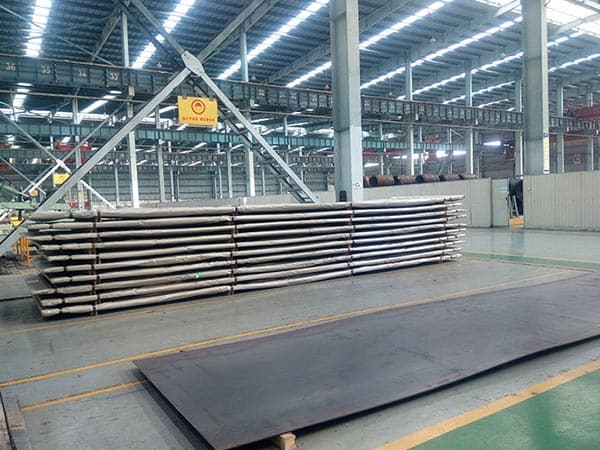
Understanding the Fundamentals of S500MC High-Strength Steel
S500MC is a high-strength, low-alloy (HSLA) hot-rolled steel specifically designed for cold forming. It belongs to the EN 10149-2 standard, which governs hot-rolled flat products made of high yield strength steels for cold forming. The designation itself reveals its primary characteristics: 'S' stands for structural steel, '500' represents the minimum yield strength of 500 MPa, 'M' indicates it is thermomechanically rolled, and 'C' signifies its suitability for cold forming operations. This material has become a cornerstone in modern engineering where weight reduction and structural integrity are paramount.
Unlike traditional structural steels produced through conventional rolling, S500MC undergoes a specialized thermomechanical rolling process (TMCP). This process involves precise control of the temperature and deformation during rolling, which refines the grain structure of the steel. The result is a material that offers a superior combination of high strength, excellent weldability, and remarkable toughness, even at low temperatures. This unique metallurgical profile allows engineers to use thinner sections without compromising the load-bearing capacity of the final component.
Comprehensive Chemical Composition and Metallurgical Design
The exceptional performance of S500MC is rooted in its low-carbon chemistry and the strategic use of micro-alloying elements. By keeping the carbon content low, the steel maintains excellent weldability and ductility. Elements such as Niobium (Nb), Vanadium (V), and Titanium (Ti) are added in minute quantities to facilitate grain refinement and precipitation hardening. These micro-alloys are the secret behind achieving a 500 MPa yield strength without the brittleness often associated with high-carbon steels.
| Element | Maximum Percentage (%) |
|---|---|
| Carbon (C) | 0.12 |
| Manganese (Mn) | 1.60 |
| Silicon (Si) | 0.50 |
| Phosphorus (P) | 0.025 |
| Sulphur (S) | 0.015 |
| Aluminum (Al) | 0.015 |
| Niobium (Nb) | 0.09 |
| Vanadium (V) | 0.20 |
| Titanium (Ti) | 0.15 |
The low carbon equivalent (CEV) value of S500MC ensures that it can be welded using standard industrial methods without the need for extensive preheating. This is a critical advantage in high-volume manufacturing environments, such as automotive assembly lines, where efficiency and cycle times are vital.
Mechanical Properties and Performance Metrics
The primary reason for selecting S500MC is its mechanical profile. It bridges the gap between standard structural steels like S355 and ultra-high-strength grades like S700MC. The balance of yield strength and elongation makes it ideal for components that require both load-bearing capacity and the ability to be bent or folded into complex shapes.
| Property | Value Range |
|---|---|
| Yield Strength (ReH) | Min 500 MPa |
| Tensile Strength (Rm) | 550 - 700 MPa |
| Elongation (A80mm) for t < 3mm | Min 12% |
| Elongation (A5) for t ≥ 3mm | Min 14% |
The high yield-to-tensile ratio of S500MC allows for significant weight savings. In the transportation industry, replacing S355 with S500MC can lead to a weight reduction of up to 30% in structural components. This reduction directly translates to increased payload capacity and improved fuel efficiency for heavy-duty vehicles.
Advanced Processing and Fabrication Capabilities
S500MC is engineered for versatility in the workshop. Its processing characteristics are optimized for modern manufacturing techniques, ensuring that the high strength of the material does not come at the cost of fabricability.
- Cold Bending: S500MC exhibits excellent cold forming properties. It can be bent to tight radii without cracking, provided the minimum mandrel diameter is respected. For thicknesses (t) up to 3mm, the minimum bending radius is typically 0.5t, and for thicknesses above 6mm, it is around 1.5t.
- Welding: The material is suitable for all common welding processes, including MIG/MAG, TIG, and submerged arc welding. Because of its low alloy content, the heat-affected zone (HAZ) retains much of the base metal's toughness.
- Laser and Plasma Cutting: The clean chemical composition and fine grain structure of S500MC result in high-quality cut edges. This reduces the need for secondary grinding operations and speeds up the production workflow.
- Surface Finishing: S500MC typically features a thin, tightly adherent scale from the hot-rolling process, which can be easily removed via pickling or shot blasting to prepare for painting or galvanizing.
Strategic Applications Across Key Industries
The adoption of S500MC has transformed several industrial sectors by enabling the design of lighter, stronger, and more durable equipment. Its application is most prevalent where structural weight is a critical performance metric.
Automotive and Commercial Vehicles: This is the most significant market for S500MC. It is used extensively for truck chassis frames, longitudinal beams, cross members, and cold-pressed parts. The ability to absorb energy during impact while maintaining structural integrity makes it a preferred choice for safety-critical components.
Lifting and Excavation Equipment: In the manufacture of cranes, forklifts, and earthmoving machinery, S500MC allows for longer boom reaches and higher lift capacities. By reducing the dead weight of the equipment, manufacturers can enhance the overall efficiency and stability of the machines.
Agricultural Machinery: Modern farming equipment, such as large-scale plows and harvesters, requires materials that can withstand harsh outdoor environments and repetitive mechanical stress. S500MC provides the necessary fatigue resistance to ensure a long service life under demanding conditions.
Storage and Racking Systems: For high-bay warehouses and heavy-duty industrial racking, S500MC provides the necessary stiffness and strength to support massive loads while minimizing the footprint of the structural members.
Environmental Adaptability and Long-Term Durability
S500MC is not just about strength; it is also designed to perform in varying environmental conditions. The thermomechanical rolling process ensures that the steel maintains its ductility at sub-zero temperatures, which is essential for equipment operating in cold climates or high altitudes. This low-temperature toughness prevents brittle fracture, a common failure mode in lower-quality structural steels.
Furthermore, the high fatigue strength of S500MC is a critical factor in its longevity. Components subjected to cyclic loading, such as vehicle frames and moving machine parts, benefit from the fine-grained microstructure which resists the initiation and propagation of fatigue cracks. This durability reduces maintenance costs and extends the replacement cycles for industrial assets, contributing to a more sustainable lifecycle for heavy machinery.
Comparative Analysis: S500MC vs. Traditional Structural Steels
When comparing S500MC to standard structural grades like s355jr, the advantages become clear. While S355JR is a versatile and cost-effective material for general construction, it lacks the weight-to-strength ratio required for high-performance mobile applications. S500MC offers nearly 40% higher yield strength than S355, allowing for substantial material thickness reduction. This not only saves weight but also reduces the amount of welding filler material and energy required for fabrication, often offsetting the higher initial material cost.
In contrast to higher grades like S700MC, S500MC offers a more balanced approach for projects where extreme strength is not the only requirement. S500MC provides better formability and is generally more forgiving during the welding process, making it a more practical choice for complex geometries that require extensive cold forming.
Leave a message