
What is the S960MC auto steel flat available size
Discover the comprehensive size specifications, mechanical properties, and industrial applications of S960MC high-strength steel. This guide explores thickness, width, and length availability alongside technical processing insights for automotive and heav
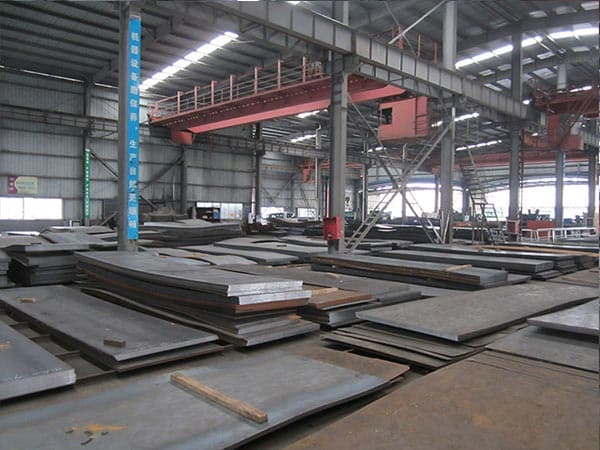
Understanding the Dimensional Landscape of S960MC High-Strength Steel
S960MC represents the pinnacle of thermomechanically rolled, high-strength low-alloy (HSLA) steels, governed by the European standard EN 10149-2. As engineering demands for lightweighting and structural integrity escalate, particularly in the automotive and heavy transport sectors, understanding the precise S960MC auto steel flat available size becomes a critical starting point for design engineers. Unlike standard structural steels, S960MC is engineered to provide a minimum yield strength of 960 MPa, which necessitates specialized rolling processes that influence the final dimensions available in the market.
The availability of S960MC is primarily concentrated in hot-rolled sheet and strip forms. Because this steel relies on a fine-grained microstructure achieved through controlled rolling and cooling, the thickness range is more constrained than lower-grade steels. Typically, S960MC is available in thicknesses ranging from 3.0 mm to 10.0 mm. Some specialized mills can extend this range down to 2.0 mm or up to 12.0 mm, but the core commercial availability remains within the 3-8 mm bracket for most automotive structural components.
| Dimension Category | Standard Range (Metric) | Common Customizations |
|---|---|---|
| Thickness | 3.0 mm - 10.0 mm | Up to 12.0 mm or 15.0 mm upon request |
| Width | 1000 mm - 1500 mm | Slit strips available from 50 mm upwards |
| Length (Flat Sheets) | 2000 mm - 12000 mm | Precision leveling for custom lengths |
| Coil ID | 610 mm / 760 mm | Standardized for automated decoiling |
Widths for S960MC flats usually align with standard mill scales, commonly 1250 mm and 1500 mm. For automotive chassis applications, these wide coils are often slit into narrower strips to fit specific stamping or roll-forming lines. The length of flat sheets can vary significantly, with standard stock usually held at 6000 mm, though custom lengths up to 12000 mm are feasible for long-bed trailer manufacturing.
Mechanical Superiority: Beyond the 960 MPa Threshold
The "960" in S960MC denotes the minimum yield strength in Megapascals. However, the true value of this material lies in its balance of extreme strength and surprising ductility. For automotive manufacturers, this allows for the replacement of thicker, heavier S355 or S700MC components with much thinner S960MC sections, leading to a weight reduction of up to 30-40% without compromising safety.
- Yield Strength (ReH): Minimum 960 MPa.
- Tensile Strength (Rm): 980 - 1250 MPa.
- Elongation (A5): Minimum 7% (Note: Elongation values vary slightly based on thickness).
- Impact Toughness: Typically tested at -20°C or -40°C to ensure performance in arctic environments.
The thermomechanical rolling process (indicated by the 'MC' suffix) ensures a very fine grain size. This microstructural refinement is what allows the steel to remain tough even at high strength levels. In the context of vehicle safety, this means the material can absorb energy during a collision rather than fracturing transitionally, a vital characteristic for bumper beams and side-impact protection members.
Chemical Composition and Micro-Alloying Strategy
To achieve 960 MPa without excessive carbon content—which would ruin weldability—S960MC utilizes a sophisticated micro-alloying approach. By adding trace amounts of Niobium (Nb), Vanadium (V), and Titanium (Ti), the steel achieves precipitation hardening and grain boundary strengthening. This strategy keeps the Carbon Equivalent Value (CEV) low, ensuring that the steel remains highly weldable even in high-speed automated production environments.
A typical chemical profile includes low Carbon (≤0.20%), low Silicon (≤0.60%), and Manganese levels around 1.60% to 2.20%. Phosphorus and Sulfur are kept to absolute minimums (usually ≤0.020% and ≤0.010% respectively) to prevent brittleness and improve the surface quality for subsequent coating processes like galvanizing or KTL (cathodic dip painting).
Processing Performance: Bending, Cutting, and Welding
Utilizing S960MC requires an understanding of its unique processing characteristics. Because of its high yield strength, the material exhibits significant "springback" during cold forming. Engineers must account for this when designing dies for automotive frames or crane booms. The recommended minimum bending radius for S960MC is generally 3.0 to 4.5 times the thickness (t), depending on the bending angle and the orientation relative to the rolling direction.
Welding S960MC: This material is designed for excellent weldability. However, because its strength is derived from the TMCP process, excessive heat input can soften the Heat Affected Zone (HAZ). It is recommended to use low heat input welding techniques (such as MAG welding with optimized parameters) and appropriate filler metals that match the high strength of the base material. Preheating is usually not required for thicknesses under 10 mm, which simplifies the assembly of large automotive structures.
Cutting Techniques: S960MC can be processed using laser, plasma, or waterjet cutting. Laser cutting is particularly effective for this grade, as the narrow HAZ minimizes the impact on the material's mechanical properties near the edge. For automotive flats, precision laser cutting allows for complex geometries that are then integrated into modular chassis designs.
Diversified Applications Across Modern Industries
While the "auto steel" designation highlights its primary use, S960MC's available sizes and properties make it indispensable across various high-stress engineering sectors. The drive for efficiency and payload maximization is universal.
- Heavy Transportation: Chassis frames for trucks, trailers, and semi-trailers where reducing tare weight increases fuel efficiency and payload capacity.
- Lifting and Construction: Telescopic crane booms, aerial work platforms, and concrete pump arms where high reach and low weight are critical.
- Agricultural Machinery: High-capacity trailers and tillage equipment that must withstand high impact and abrasive wear.
- Renewable Energy: Structural components for transport systems of wind turbine blades.
The ability to source S960MC in flat sheets or slit coils allows manufacturers to choose the most cost-effective format for their specific production line. For instance, automated laser blanking lines prefer large coils, whereas smaller fabrication shops may opt for precision-cut flats to reduce scrap rates.
Environmental Adaptability and Sustainability
S960MC is inherently a "green" choice in the steel world. By enabling the use of thinner gauges to achieve the same structural performance as thicker conventional steels, it reduces the total volume of steel required for a project. This leads to a lower carbon footprint during the manufacturing phase and significantly lower CO2 emissions during the vehicle's operational life due to weight reduction.
Furthermore, the high purity of S960MC makes it fully recyclable. At the end of a vehicle's life cycle, the steel can be returned to the electric arc furnace (EAF) to be reborn as new high-performance material, supporting the circular economy. Its resistance to atmospheric corrosion can be further enhanced through modern coating technologies, ensuring that the thin-walled structures have a service life exceeding that of the heavier, traditional alternatives.
Strategic Procurement Considerations
When sourcing S960MC flats, it is vital to verify the mill test certificates (MTC) to ensure compliance with EN 10149-2. Given the technical complexity of producing 960 MPa steel, buyers should focus on the flatness tolerances and surface finish. High-strength steels are more prone to residual stresses; therefore, choosing material that has undergone advanced leveling processes is essential for trouble-free automated processing.
Whether you are designing a new generation of electric vehicle battery enclosures or a lightweight trailer chassis, the available sizes of S960MC offer a versatile palette for modern engineering. By leveraging the 3 mm to 10 mm thickness range, designers can push the boundaries of what is possible, creating structures that are stronger, lighter, and more sustainable than ever before.
Leave a message