
What are the top ten S315MC steel properties brands in Turkey
A comprehensive guide to S315MC steel properties and the leading manufacturers in Turkey. Learn about mechanical performance, chemical composition, and industrial applications.
The Strategic Importance of S315MC Steel in the Turkish Industrial Landscape
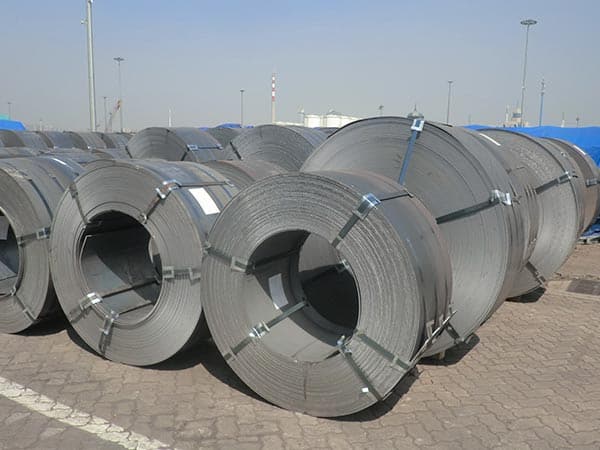
Turkey has established itself as a global powerhouse in the steel industry, consistently ranking among the top ten producers worldwide. Within this robust ecosystem, S315MC steel stands out as a critical material for modern engineering. Defined by the EN 10149-2 standard, S315MC is a thermomechanically rolled, high-yield-strength steel designed specifically for cold-forming applications. Its unique balance of weight reduction and structural integrity makes it indispensable for sectors ranging from automotive manufacturing to heavy machinery production.
The Turkish market for S315MC is driven by a sophisticated network of steel mills that have invested heavily in thermomechanical rolling technology. This process involves precise temperature control during the rolling phase, which refines the grain structure of the steel without the need for additional heat treatment. The result is a material that offers superior weldability and formability compared to traditional structural steels. Understanding the brands and the specific properties they offer is essential for procurement specialists and structural engineers looking to optimize their supply chains within the Eurasian corridor.
Defining the Core Properties of S315MC
To evaluate the top brands in Turkey, one must first understand the benchmark properties that define high-quality S315MC. This grade is characterized by a minimum yield strength of 315 MPa, but its value lies in its versatility. Unlike standard carbon steels, S315MC utilizes micro-alloying elements such as niobium (Nb), vanadium (V), and titanium (Ti). These elements facilitate grain refinement and precipitation hardening, allowing for thinner gauges to carry higher loads.
Mechanical Performance Indicators:
- Yield Strength: Minimum 315 MPa, ensuring high resistance to permanent deformation.
- Tensile Strength: Typically ranges between 390 and 510 MPa.
- Elongation: Excellent ductility, with minimum values often exceeding 20% for thicknesses under 3mm.
- Cold Formability: Designed for tight bending radii without cracking, which is vital for complex automotive components.
| Chemical Element | Maximum Content (%) |
|---|---|
| Carbon (C) | 0.12 |
| Manganese (Mn) | 1.30 |
| Silicon (Si) | 0.50 |
| Phosphorus (P) | 0.025 |
| Sulfur (S) | 0.020 |
| Aluminium (Al) | 0.015 |
Leading Manufacturers and Brands in Turkey
The Turkish steel market is dominated by several key players who produce S315MC or its equivalent grades under proprietary brand names or international standards. These manufacturers have integrated the latest rolling technologies to meet the stringent demands of European and domestic buyers.
1. Erdemir (Ereğli Demir ve Çelik Fabrikaları)
Erdemir is the flagship of Turkish flat steel production. Their S315MC equivalent is produced under high-precision controls, often marketed for its exceptional surface quality. Erdemir’s products are favored by the automotive industry for chassis components where consistency in thickness and mechanical properties is non-negotiable.
2. Isdemir (İskenderun Demir ve Çelik)
As part of the OYAK Mining Metallurgy Group alongside Erdemir, Isdemir focuses on large-scale production of hot-rolled coils. Their S315MC output is known for its reliability in structural applications, particularly in the production of cold-formed sections and profiles used in construction and transport.
3. Tosyalı Holding
Tosyalı has emerged as a leader in sustainable steel production. Their state-of-the-art facilities in Osmaniye produce high-strength low-alloy (HSLA) steels like S315MC with a focus on energy efficiency. Their brand is synonymous with modern metallurgical techniques, offering excellent weldability for automated production lines.
4. Çolakoğlu Metalurji
Çolakoğlu is recognized for its agility and high-tech production capabilities. Their S315MC coils are frequently exported to the EU, meeting all CE marking requirements. The brand is particularly noted for its low impurity levels, which enhances the fatigue life of the final components.
5. Habaş Sınai ve Tıbbi Gazlar İstihsal Endüstrisi
Habaş has expanded its footprint in the flat steel sector significantly. Their S315MC offerings are competitive in the domestic market, providing a cost-effective solution for agricultural machinery manufacturers who require durable yet formable steel for equipment frames.
6. Kardemir (Karabük Demir Çelik)
While traditionally known for long products, Kardemir’s influence on the Turkish steel ecosystem affects the standards and availability of specialized grades. Their focus on high-quality raw materials ensures that the base chemistry for HSLA steels in the region remains world-class.
7. MMK Metalurji
A joint venture with Russian capital, MMK Metalurji operates significant facilities in Turkey. They provide high-quality cold-rolled and galvanized products, but their hot-rolled S315MC substrate is highly regarded for its surface finish, making it ideal for parts that require subsequent coating or painting.
8. Borçelik
Although primarily a cold-rolling mill, Borçelik’s processing of S315MC into narrower strips and specific finishes makes them a vital brand for the precision engineering sector. They act as a bridge between the primary mills and high-end automotive OEMs.
9. Tatmetal
Tatmetal has grown into one of Turkey’s leading flat steel producers. Their "Tat" branded HSLA steels are characterized by tight tolerance controls. For S315MC, they offer customized slitting and shearing services that cater to the specific dimensional needs of the trailer and truck body industry.
10. Yıldız Demir Çelik
A newer player in the market, Yıldız Demir Çelik utilizes advanced technology to produce high-strength grades. Their S315MC is marketed towards high-growth sectors like renewable energy, where the steel is used in solar tracking systems that require both strength and atmospheric corrosion resistance.
Processing Advantages and Environmental Adaptability
The choice of S315MC from Turkish suppliers is often dictated by the material's behavior during fabrication. Weldability is a standout feature; due to the low carbon equivalent (CEV), S315MC can be welded using all standard methods (MIG, TIG, Laser) without the risk of cold cracking in the heat-affected zone. This is a critical factor for the Turkish automotive supply chain, which relies heavily on robotic welding cells.
Furthermore, the environmental adaptability of S315MC is enhanced by its fine-grained structure. It performs exceptionally well in low-temperature environments, maintaining its toughness where standard carbon steels might become brittle. This makes Turkish S315MC a preferred choice for heavy-duty trailers operating across diverse climates, from the heat of the Middle East to the freezing temperatures of Northern Europe.
Industrial Application Expansion
Beyond the traditional automotive scope, S315MC is finding new life in various Turkish industrial sectors. In the energy sector, it is used for the structural supports of wind turbines and solar arrays. The high strength-to-weight ratio allows for lighter structures that are easier to transport and install in remote locations.
In agricultural engineering, the move towards larger and more efficient machinery has necessitated materials that can withstand high stress without adding excessive weight. S315MC provides the necessary yield strength for plow frames, seeder components, and harvester chassis. The Turkish brand ecosystem supports these manufacturers by providing just-in-time delivery and technical support for material selection.
Evaluating Quality and Compliance
When sourcing S315MC from Turkey, it is imperative to verify compliance with EN 10149-2. Leading Turkish brands provide comprehensive Mill Test Certificates (MTC) that detail the chemical analysis and mechanical testing results for every heat. Buyers should look for 3.1 certification according to EN 10204 to ensure traceability.
The competitive advantage of Turkish S315MC brands lies not just in the price, but in the metallurgical integrity of the product. The integration of vacuum degassing and ladle metallurgy stations in Turkish mills ensures that the steel is clean, with minimal non-metallic inclusions. This cleanliness is what allows for the extreme deformation required in modern cold-pressing operations without surface tearing or internal delamination.
Future Trends in Turkish HSLA Steel
The Turkish steel industry is currently pivoting towards "Green Steel" initiatives. This involves reducing the carbon footprint of the production process, primarily through the use of Electric Arc Furnaces (EAF) powered by renewable energy and increasing the scrap-to-ore ratio. For S315MC, this means that future iterations of the brand will likely carry Environmental Product Declarations (EPD), helping end-users meet their sustainability targets.
Digitalization is another trend transforming how these brands interact with the market. Real-time tracking of mechanical properties and automated quality control during the thermomechanical rolling process are becoming standard. This level of transparency ensures that the S315MC properties—yield strength, tensile strength, and elongation—are consistent across every meter of the coil, reducing waste and improving the efficiency of the end-user's manufacturing process.
Leave a message