
What does steel grade S420MC construction-machinery high-strength steel mean
A comprehensive guide to S420MC steel, covering its chemical composition, mechanical properties, thermomechanical rolling process, and its critical applications in the construction machinery industry.
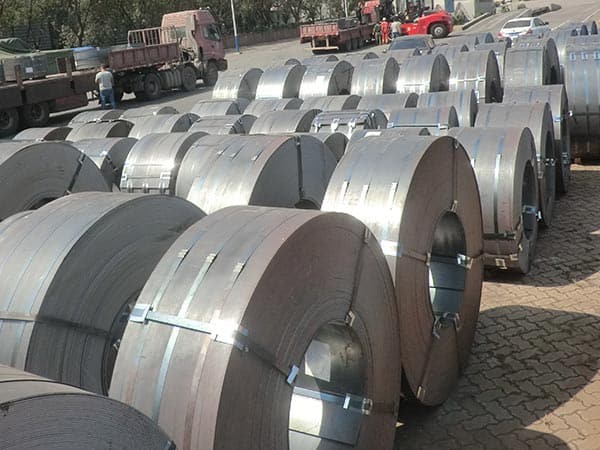
Decoding the Nomenclature of S420MC Steel
Understanding the alphanumeric designation of S420MC is the first step for engineers and procurement specialists in the heavy machinery sector. This grade is governed by the EN 10149-2 standard, which specifies hot-rolled flat products made of high-yield-strength steels for cold forming. The letter 'S' identifies the material as a structural steel. The number '420' represents the minimum yield strength of 420 Megapascals (MPa) for thicknesses less than or equal to 16mm. The 'M' signifies that the steel has undergone thermomechanical rolling, a process that refines the grain structure through controlled temperature and deformation. Finally, the 'C' indicates that the grade is specifically suitable for cold forming, meaning it can be bent, flanged, or folded without cracking.
The Metallurgical Blueprint: Chemical Composition
The exceptional performance of S420MC is not accidental; it is the result of a precise chemical balance. Unlike traditional carbon steels, S420MC utilizes micro-alloying elements to achieve high strength without increasing the carbon content, which preserves weldability and toughness. The carbon content is typically kept below 0.12%, which is significantly lower than standard structural steels. Manganese (up to 1.60%) is added to increase strength and hardenability. However, the true 'magic' lies in the addition of Niobium (Nb), Vanadium (V), and Titanium (Ti). These elements form fine carbides and nitrides during the thermomechanical rolling process, which pin the grain boundaries and prevent grain growth. This grain refinement is the primary mechanism for increasing yield strength while maintaining excellent low-temperature impact toughness.
| Element | Max Content (%) |
|---|---|
| Carbon (C) | 0.12 |
| Manganese (Mn) | 1.60 |
| Silicon (Si) | 0.50 |
| Phosphorus (P) | 0.025 |
| Sulfur (S) | 0.015 |
| Aluminium (Al) | 0.015 |
| Nb+V+Ti | 0.22 |
Mechanical Properties and Structural Integrity
The mechanical profile of S420MC makes it a favorite for weight-sensitive applications. While the minimum yield strength is 420 MPa, the tensile strength typically ranges between 480 and 620 MPa. One of the most critical metrics for construction machinery is the elongation percentage, which for S420MC is generally around 16% to 19% depending on the thickness. This high ductility allows the material to absorb energy during impact or overload without catastrophic failure. Furthermore, because of the thermomechanical rolling (the 'M' in the name), the steel exhibits a very fine-grained ferrite-pearlite or bainitic microstructure, which contributes to its superior fatigue resistance. In heavy-duty cycles—such as those experienced by crane booms or excavator arms—this resistance to cyclic loading is paramount for the longevity of the machine.
The Advantages of Thermomechanical Rolling (MC)
Thermomechanical rolling is a sophisticated manufacturing technique that integrates heat treatment with the rolling process. Unlike traditional normalized rolling, thermomechanical rolling occurs at temperatures where the austenite does not fully recrystallize. This results in a highly deformed austenite structure that transforms into an extremely fine ferrite grain upon cooling. For the end-user, this means S420MC offers a higher strength-to-weight ratio than S355 grade steels. By switching from S355 to S420MC, manufacturers can often reduce the thickness of structural components by 15-20% without sacrificing load-bearing capacity. This weight reduction translates directly into higher payloads for transport vehicles and lower fuel consumption for mobile machinery.
Cold Forming and Fabrication Precision
The 'C' designation highlights the steel's suitability for cold forming. S420MC is designed to be bent with small radii, which is essential for creating complex, aerodynamic, or space-efficient shapes in modern machinery. For thicknesses up to 3mm, the minimum recommended inside bend radius is often as low as 0.25 times the thickness (0.25t) when bending transverse to the rolling direction. This flexibility allows for the design of streamlined chassis frames and telescopic boom sections. However, fabricators must account for springback, which is slightly higher in S420MC than in lower-strength grades due to its higher yield-to-tensile ratio. Precision CNC press brakes and experienced operators are required to achieve the tight tolerances demanded by high-end equipment manufacturers.
Superior Weldability for Heavy Assemblies
Welding is the primary joining method in construction machinery, and S420MC excels in this area. Due to its low carbon equivalent (CEV), the steel is less susceptible to cold cracking in the heat-affected zone (HAZ). It can be welded using all standard processes, including MAG (Metal Active Gas), submerged arc welding, and laser welding. Because the strength of S420MC is derived from grain refinement rather than high carbon or alloy content, the HAZ remains relatively tough. However, it is vital to control the heat input. Excessive heat input can lead to grain coarsening in the HAZ, which might locally reduce the yield strength. Following a qualified Welding Procedure Specification (WPS) ensures that the welded joint maintains the integrity of the base metal.
Critical Applications in Construction and Transport
S420MC is the backbone of several high-performance industries. In the crane and lifting industry, it is used for the manufacturing of telescopic booms where high strength and low weight are non-negotiable. In the automotive and transport sector, it is the material of choice for truck chassis, cross members, and side rails. These components must withstand extreme torsional stresses while carrying heavy loads over uneven terrain. Additionally, the agricultural sector utilizes S420MC for the frames of large-scale harvesters and trailers. The ability of the steel to withstand low temperatures (often tested for impact at -20°C or -40°C) makes it suitable for machinery operating in harsh northern climates or high-altitude mining sites.
- Truck Chassis: Reducing dead weight to increase legal payload capacity.
- Crane Booms: Enabling longer reach and higher lifting capacities through high-strength thin-walled sections.
- Excavator Frames: Providing the rigidity needed for heavy digging operations.
- Cold-Pressed Parts: Ideal for complex brackets and supports in engine compartments.
Environmental Adaptability and Lifecycle Benefits
Beyond its immediate mechanical properties, S420MC offers significant environmental and economic benefits. The reduction in material usage (dematerialization) means less raw iron ore and energy are required during the initial production phase. Furthermore, the lighter weight of the finished machinery reduces the carbon footprint throughout its entire operational life. The steel's excellent surface quality, a result of the controlled rolling process, also provides a superior base for protective coatings and paints, enhancing corrosion resistance in outdoor environments. When the machine eventually reaches the end of its service life, S420MC is 100% recyclable, fitting perfectly into the circular economy model of modern manufacturing.
Technical Comparison: S355MC vs. S420MC
When comparing S420MC to the more common S355MC, the primary difference is the 65 MPa increase in minimum yield strength. While S355MC is sufficient for many general structural applications, S420MC provides the necessary margin of safety for more demanding dynamic loads. The transition to S420MC often requires minimal changes to existing tooling, making it an easy upgrade for manufacturers looking to modernize their product lines. The increased strength allows for the use of thinner plates, which not only saves weight but can also reduce welding time and filler metal consumption, further optimizing the total cost of ownership for the manufacturer.
| Property | S355MC | S420MC |
|---|---|---|
| Min Yield Strength (MPa) | 355 | 420 |
| Tensile Strength (MPa) | 430-550 | 480-620 |
| Min Elongation (%) | 19 | 16 |
| Carbon Equivalent (Typical) | 0.30 | 0.32 |
Selecting S420MC is a strategic decision that balances performance, processability, and cost. Its unique combination of high yield strength, excellent cold formability, and robust weldability ensures that it remains a cornerstone material for the next generation of construction machinery and heavy transport equipment.
Leave a message