
S500MC plate zero cut for general intermediate strength applications
Explore the technical specifications and industrial advantages of S500MC high-strength steel. This guide details mechanical properties, welding, and processing for intermediate strength applications.
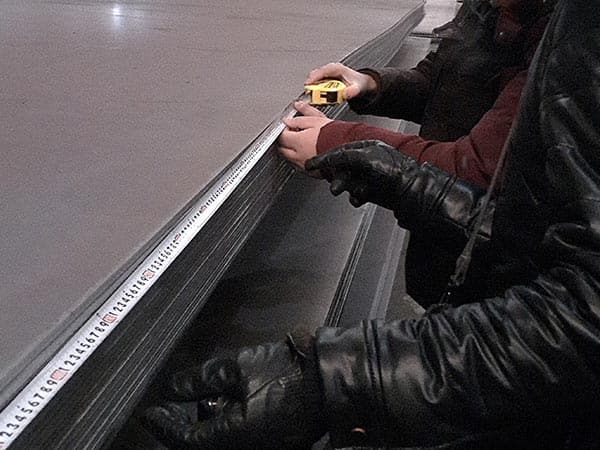
Understanding S500MC: The Backbone of Modern Intermediate Strength Engineering
S500MC steel plate represents a sophisticated category of high-strength low-alloy (HSLA) steels, specifically governed by the EN 10149-2 standard. This material is produced through a thermomechanically rolled process, which distinguishes it from traditional normalized steels. The 'S' prefix denotes structural steel, while '500' indicates a minimum yield strength of 500 MPa. The 'MC' suffix highlights its suitability for cold forming (C) and its thermomechanical rolling (M) history. For engineers and procurement specialists seeking a balance between weight reduction and structural integrity, S500MC offers a compelling solution that bridges the gap between standard carbon steels and ultra-high-strength grades.
The primary appeal of S500MC lies in its ability to provide high load-bearing capacity without the bulk associated with lower-grade steels like S355. When sourcing S500MC plate zero cut, businesses can leverage precise dimensions tailored to specific project requirements, minimizing material waste and streamlining the manufacturing pipeline. This efficiency is crucial in sectors where cost-per-unit and structural efficiency are paramount.
Chemical Composition and Metallurgical Precision
The performance of S500MC is rooted in its meticulously controlled chemical makeup. Unlike standard structural steels that rely heavily on carbon for strength, S500MC utilizes micro-alloying elements to achieve its mechanical properties. This approach ensures that the steel remains highly weldable and ductile despite its increased strength.
| Element | Maximum Percentage (%) |
|---|---|
| Carbon (C) | 0.12 |
| Manganese (Mn) | 1.60 |
| Silicon (Si) | 0.50 |
| Phosphorus (P) | 0.025 |
| Sulfur (S) | 0.015 |
| Niobium (Nb) | 0.09 |
| Vanadium (V) | 0.20 |
| Titanium (Ti) | 0.15 |
The inclusion of Niobium, Vanadium, and Titanium is critical. These elements facilitate grain refinement during the thermomechanical rolling process. By creating a fine-grained microstructure, the steel achieves superior toughness and yield strength. The low carbon content (max 0.12%) is a deliberate choice to enhance weldability and prevent the formation of brittle phases in the heat-affected zone (HAZ) during fabrication.
Mechanical Performance and Structural Reliability
S500MC is engineered for applications where intermediate strength is the baseline. Its mechanical properties are optimized to ensure that components can withstand significant stress while maintaining enough elasticity to prevent catastrophic failure. The yield strength of 500 MPa allows for thinner wall thicknesses in structural members, which directly translates to reduced vehicle weight or lower material costs in static structures.
- Yield Strength (ReH): Minimum 500 MPa (for thicknesses ≤ 16mm).
- Tensile Strength (Rm): 550 to 700 MPa.
- Elongation (A80mm): Minimum 12% to 14% depending on thickness.
- Impact Toughness: Often tested at -20°C or -40°C to ensure performance in cold climates.
The high yield-to-tensile ratio of S500MC is a hallmark of HSLA steels. This characteristic ensures that the material remains stable under high loads but provides a predictable deformation path if the yield point is exceeded. For designers, this means more predictable safety margins and the ability to push the limits of traditional structural design.
Superior Processing: Cold Forming and Bending
One of the most significant advantages of S500MC is its exceptional cold-forming capability. Unlike many high-strength steels that become brittle or prone to cracking when bent, S500MC is designed to be shaped at room temperature. This is particularly beneficial for complex geometries in automotive chassis or crane boom sections.
When performing cold bending, it is essential to consider the minimum bending radius. For S500MC, the recommended internal bending radius is typically 1.0 to 1.5 times the plate thickness, depending on the orientation of the bend relative to the rolling direction. Bending transverse to the rolling direction generally allows for tighter radii compared to longitudinal bending. This versatility allows manufacturers to create intricate profiles without the need for expensive heat treatments or specialized forming equipment.
Welding Characteristics and Fabrication Best Practices
Fabricating with S500MC is straightforward due to its low carbon equivalent (CEV). It can be welded using all standard methods, including MAG (Metal Active Gas), MIG (Metal Inert Gas), and submerged arc welding. Because the material is low in alloying elements that promote hardening, preheating is generally unnecessary for standard thicknesses, which significantly reduces production time and energy costs.
However, care must be taken regarding the heat input. Excessive heat can lead to grain growth in the heat-affected zone, potentially reducing the yield strength in that localized area. Using low-hydrogen consumables and maintaining a controlled interpass temperature ensures that the weld joint matches the integrity of the base metal. For zero-cut plates, the clean edges provided by precision cutting services (such as laser or plasma) further enhance weld quality by reducing the need for extensive edge preparation.
The Strategic Value of Zero Cut S500MC Plates
The term "zero cut" refers to the procurement of steel plates cut to the exact dimensions required for a specific job, leaving zero scrap for the end-user to manage. In the context of S500MC, this service offers several operational advantages. Since S500MC is often used in high-volume production or precision engineering, the ability to receive plates that are ready for immediate assembly or further processing is a major logistical win.
Precision cutting technologies like fiber laser or high-definition plasma ensure that the dimensional tolerances of S500MC plates are held to within fractions of a millimeter. This level of accuracy is vital for automated welding systems and robotic assembly lines where consistency is key. Furthermore, by outsourcing the cutting process, manufacturers eliminate the capital expenditure required for heavy-duty cutting machinery and the labor costs associated with scrap handling and recycling.
Diversified Applications Across Modern Industries
The versatility of S500MC makes it a staple in numerous sectors. Its intermediate strength profile is ideal for components that require more durability than mild steel but do not justify the cost or processing difficulty of S700MC or higher grades.
Automotive and Transportation: S500MC is extensively used in the manufacturing of truck chassis, cross members, and longitudinal beams. Its high strength-to-weight ratio allows for higher payloads and improved fuel efficiency. The material's fatigue resistance is also a critical factor in the long-term durability of commercial vehicles subjected to constant vibration and cyclic loading.
Heavy Machinery and Lifting Equipment: In the production of crane arms, telescopic booms, and excavator components, S500MC provides the necessary stiffness and strength. The ability to cold-form these plates into U-profiles or hexagonal sections allows for the creation of lightweight yet incredibly strong lifting structures.
Agricultural Engineering: Modern farming equipment, such as plows, trailers, and harvester frames, benefits from the impact resistance and structural integrity of S500MC. These machines often operate in harsh environments where the steel must resist both mechanical stress and environmental corrosion.
Environmental Adaptability and Longevity
S500MC exhibits excellent adaptability to various environmental conditions. While it is not a "weathering steel" like Corten, its fine-grained structure and clean chemistry provide a consistent surface for protective coatings. Whether galvanized, painted, or powder-coated, S500MC plates maintain their bond with the coating, ensuring long-term protection against corrosion.
Furthermore, the material's performance at low temperatures is a significant advantage for equipment used in arctic or high-altitude environments. The thermomechanical rolling process ensures that the ductile-to-brittle transition temperature remains low, preventing sudden fractures in sub-zero conditions. This reliability makes S500MC a preferred choice for global manufacturers who export machinery to diverse climates.
Economic Impact of Material Optimization
Choosing S500MC over lower-grade structural steels like S235 or S355 can lead to significant economic benefits. By utilizing the higher yield strength, designers can reduce the thickness of steel plates by 20% to 30% while maintaining the same structural capacity. This reduction in material volume leads to lower shipping costs, reduced welding filler metal consumption, and faster assembly times.
When combined with a zero-cut procurement strategy, the total cost of ownership (TCO) for S500MC components is often lower than that of cheaper materials that require more processing and generate more waste. The precision of zero-cut plates also reduces the risk of errors during assembly, further protecting the manufacturer's bottom line.
Technical Comparison: S500MC vs. Conventional Grades
To fully appreciate the position of S500MC, it is helpful to compare it with other common grades used in similar applications. While S355 is the workhorse of the construction industry, S500MC offers a 40% increase in yield strength with similar fabrication characteristics. Compared to S700MC, S500MC is more forgiving during welding and bending, making it more suitable for general intermediate applications where the extreme strength of S700MC is not required.
| Feature | s355jr | S500MC | S700MC |
|---|---|---|---|
| Min Yield Strength | 355 MPa | 500 MPa | 700 MPa | Formability | Good | Excellent | Moderate | Weldability | Excellent | Excellent | Good (Requires Care) | Weight Saving Potential | Baseline | High | Very High |
This comparison illustrates why S500MC has become the "sweet spot" for many engineering projects. It provides a significant performance leap over standard carbon steel without the stringent processing requirements of ultra-high-strength alloys.
Future Trends in HSLA Steel Utilization
The demand for S500MC is expected to grow as industries continue to prioritize sustainability and efficiency. The push for "lightweighting" in the transport sector is a major driver, as reducing vehicle weight is one of the most effective ways to lower carbon emissions. Additionally, the rise of modular construction and precision manufacturing favors materials like S500MC that can be delivered as zero-cut components ready for rapid integration.
Advancements in steelmaking technology are also leading to even cleaner versions of S500MC with improved isotropic properties, meaning the difference in strength and ductility between the longitudinal and transverse directions is minimized. This further simplifies the design process and allows for even more creative uses of the material in complex structural systems.
The strategic selection of S500MC plate zero cut is more than just a material choice; it is a commitment to engineering excellence and operational efficiency. By understanding the metallurgical, mechanical, and practical aspects of this high-strength steel, businesses can build products that are stronger, lighter, and more cost-effective. Whether it is for a heavy-duty chassis or a precision-engineered bracket, S500MC stands as a testament to the power of modern steel technology in meeting the challenges of today's industrial landscape.
Leave a message