
What is the difference between open flat and original S355MC steel complete specifications
Explore the critical differences between original mill S355MC steel and open flat sheets. This guide covers mechanical properties, internal stress, and application suitability.
Understanding the Core Characteristics of S355MC Steel
S355MC is a high-yield strength, hot-rolled steel specifically designed for cold forming. Governed by the EN 10149-2 standard, this material is a staple in modern engineering due to its excellent weldability, toughness, and bendability. However, when sourcing this material, procurement teams often encounter two distinct forms: Original Mill Plates and Open Flat (Decoiled) Sheets. While they share the same chemical DNA, their physical behavior and performance in high-precision manufacturing differ significantly.
Defining Original Mill Plates vs. Open Flat Sheets
The term "Original S355MC" typically refers to steel plates that are rolled to a specific thickness and length directly at the steel mill. These are often referred to as "Quarto Plates" if they are thick, or simply mill-cut sheets. They undergo a controlled cooling process and are handled as individual units from the moment they leave the rolling stand.
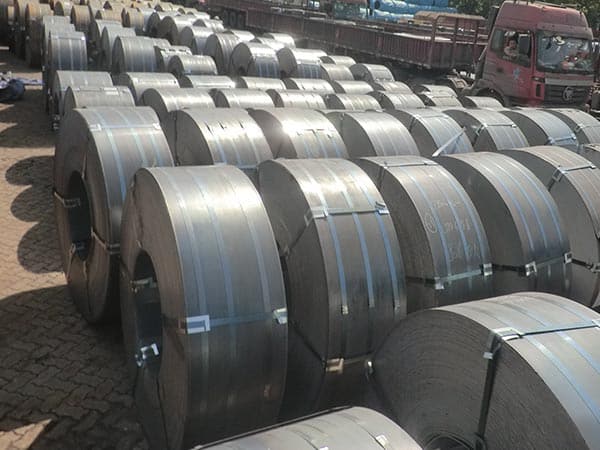
Conversely, "Open Flat" S355MC refers to steel that was originally produced as a continuous hot-rolled coil (HRC). This coil is later processed through a decoiling line, where it is unrolled, leveled (straightened), and cut to specific lengths. The "opening" of the coil and the subsequent "flattening" introduce mechanical variables that distinguish it from its original mill counterpart.
Mechanical Properties and Chemical Composition
The chemical composition of S355MC is optimized for low carbon equivalent values (CEV), ensuring that the material remains ductile despite its high yield strength. The use of micro-alloying elements like Niobium (Nb), Vanadium (V), and Titanium (Ti) facilitates grain refinement during the thermomechanical rolling process.
| Element | C (max) | Mn (max) | Si (max) | P (max) | S (max) | Al (min) |
|---|---|---|---|---|---|---|
| Percentage (%) | 0.12 | 1.50 | 0.50 | 0.025 | 0.020 | 0.015 |
In terms of mechanical performance, S355MC must meet strict minimum requirements. The "MC" suffix denotes it is suitable for cold forming (C) and has a minimum yield strength of 355 MPa.
- Yield Strength (ReH): Minimum 355 MPa.
- Tensile Strength (Rm): 430 - 550 MPa.
- Elongation (A80mm): Minimum 19% (for thicknesses < 3mm).
- Impact Strength: Usually tested at -20°C or -40°C depending on specific sub-grades.
The Impact of Internal Stress: The Silent Differentiator
The most profound difference between original mill plates and open flat sheets lies in residual internal stress. When S355MC is wound into a coil, the outer layers are under tension while the inner layers are under compression. Even after passing through a professional leveling machine, these stresses are not entirely eliminated; they are merely redistributed.
Original Mill Plates have a more uniform stress distribution because they were never subjected to the tight radius of coiling. This makes them the preferred choice for laser cutting. When a laser cuts complex shapes into an open flat sheet, the heat of the laser can trigger the release of residual stresses, causing the part to "bow" or "pop up," potentially damaging the laser head or resulting in dimensional inaccuracies.
Flatness and Surface Quality Comparison
Flatness is a critical metric for automated welding and CNC machining. Original plates generally adhere to EN 10029 Class N or Class S tolerances. Because they are handled as flat pieces throughout production, their flatness is inherently stable.
Open flat sheets rely heavily on the quality of the leveling equipment. High-precision "stretch levelers" or "roller levelers" can produce sheets that appear perfectly flat. However, because S355MC is a high-strength material, it has significant "spring-back." Over time, or when subjected to temperature changes, an open flat sheet may lose its flatness more readily than an original plate.
Surface-wise, both products feature a dark grey iron oxide scale (mill scale). However, original plates might have slightly more robust scaling due to slower cooling rates, whereas coil-derived open flats might show "coil breaks" (fine transverse lines) if the decoiling process was not managed at the correct temperature or tension.
Dimensional Specifications and Availability
Original mill plates are typically available in much larger thicknesses, often ranging from 6mm up to 150mm or more. S355MC, being a cold-forming grade, is most commonly found in the 3mm to 20mm range.
- Original Plates: Usually available in standard widths like 2000mm, 2500mm, and lengths up to 12000mm.
- Open Flat Sheets: Highly flexible in length. Since they are cut from a coil, a customer can request a custom length (e.g., 5850mm) to minimize scrap, which is a major advantage for high-volume production.
Processing Performance: Bending and Welding
Both forms of S355MC excel in cold bending. The fine-grain structure allows for tight bend radii without cracking. For a 90-degree bend, the recommended minimum mandrel radius is usually 0.5 to 1.5 times the thickness, depending on the orientation of the bend relative to the rolling direction.
Welding is equally efficient for both. Due to the low carbon content, S355MC does not require preheating in standard thicknesses. However, when welding open flat sheets, the heat-affected zone (HAZ) might react with the residual stresses mentioned earlier, leading to slightly more distortion in the final weldment compared to original mill plates.
Application Extension: Where to Use Which?
Choosing between these two formats depends heavily on the end-use industry and the manufacturing process employed.
Automotive and Truck Chassis: Often use open flat sheets. The ability to get custom lengths from coils reduces waste when manufacturing long frame rails. The high yield strength allows for weight reduction (down-gauging) without sacrificing structural integrity.
Heavy Machinery and Crane Arms: Prefer original mill plates. These components require extreme precision and zero tolerance for warping during the heavy welding and machining phases. The structural stability of the original plate ensures the long-reach boom of a crane remains perfectly straight.
Agricultural Equipment: Often utilizes a mix. For simple brackets and plates, open flat is cost-effective. For main load-bearing structures, original S355MC is favored for its predictable fatigue resistance.
Cost-Benefit Analysis for Procurement
Generally, open flat S355MC is more cost-effective than original mill plates. The efficiency of continuous coil rolling and the high speed of decoiling lines lower the production cost per ton. For projects where slight internal stress is manageable, or where the parts are small enough that stress release isn't an issue, open flat is the economical choice.
Original mill plates carry a premium. This price covers the specialized handling, the individual plate testing, and the superior internal structural stability. For high-end engineering projects where the cost of a rejected part (due to warping) exceeds the material savings, the original plate is the safer investment.
Technical Comparison Summary
| Feature | Original S355MC Plate | Open Flat S355MC Sheet |
|---|---|---|
| Internal Stress | Low / Uniform | Moderate / Higher | Laser Cutting Suitability | Excellent (Minimal Warping) | Good (May require stress relief) | Length Flexibility | Fixed Mill Sizes | Highly Customizable | Thickness Range | Wide (Up to 20mm+ in MC) | Limited by Coil Weight (Usually < 16mm) | Price Point | Premium | Economical |
Environmental Adaptability and Longevity
S355MC is not a corrosion-resistant steel like stainless or weathering steel. Whether original or open flat, the material requires surface protection. In outdoor environments, it is typically galvanized or painted. The "MC" grade's low silicon content is particularly beneficial for hot-dip galvanizing, as it helps control the Sandelin effect, resulting in a more uniform and aesthetic zinc coating. This environmental adaptability ensures that structures built with S355MC can achieve a service life of several decades if properly maintained.
Final Selection Criteria
When specifying S355MC, the decision should be driven by the complexity of the fabrication process. If the workflow involves high-speed fiber laser cutting of intricate patterns, the original mill plate's stability is indispensable. If the goal is mass production of structural components with straight-line bends and standard welding, the open flat sheet offers a competitive edge in both cost and material utilization. Understanding these nuances allows engineers to optimize both the performance and the budget of their steel structures.
Leave a message