
What type of steel is S900MC cold forming?
Explore the comprehensive guide to S900MC cold forming steel. Learn about its mechanical properties, chemical composition, welding techniques, and industrial applications in high-load structures.
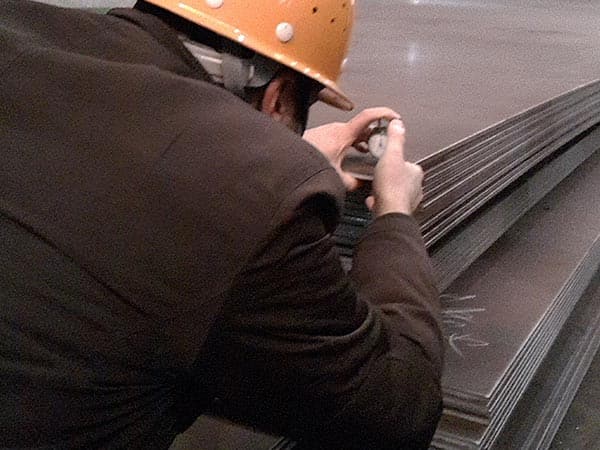
Defining S900MC: The Pinnacle of Thermomechanical Rolling
When engineers and procurement specialists ask What type of steel is S900MC cold forming?, they are looking into one of the most advanced categories of high-yield strength steels available today. S900MC is a thermomechanically rolled (TM) steel specifically designed for cold forming operations. This material is governed by the EN 10149-2 standard, which covers hot-rolled flat products made of high yield strength steels for cold forming. The designation itself provides a wealth of information: 'S' stands for structural steel, '900' indicates a minimum yield strength of 900 megapascals (MPa), 'M' signifies the thermomechanical rolling process, and 'C' confirms its suitability for cold forming.
The primary appeal of S900MC lies in its extraordinary strength-to-weight ratio. Unlike traditional structural steels, S900MC allows for the design of thinner, lighter components without sacrificing structural integrity. This makes it a cornerstone material in industries where weight reduction directly translates to fuel efficiency, increased payload capacity, and reduced environmental impact. By utilizing S900MC, manufacturers can replace heavier, thicker plates of lower-grade steel, such as S355 or even S700MC, leading to significant material savings and optimized performance.
The Chemistry Behind the Strength: Micro-alloying Secrets
The exceptional performance of S900MC is not accidental; it is the result of precise chemical engineering and controlled cooling processes. The steel utilizes a low-carbon design, which is essential for maintaining weldability and ductility despite its extreme hardness. To achieve a yield strength of 900 MPa, the steel is micro-alloyed with elements such as Niobium (Nb), Vanadium (V), and Titanium (Ti). These elements work together to refine the grain structure during the thermomechanical rolling process.
Thermomechanical rolling involves a specific temperature-deformation cycle that prevents grain growth, resulting in a fine-grained microstructure. This fine grain is the secret to the material's toughness and its ability to withstand bending without cracking. Below is a typical chemical composition table for S900MC (based on ladle analysis):
| Element | Max Content (%) |
|---|---|
| Carbon (C) | 0.20 |
| Manganese (Mn) | 2.20 |
| Silicon (Si) | 0.60 |
| Phosphorus (P) | 0.025 |
| Sulfur (S) | 0.015 |
| Aluminium (Al) | 0.015 |
| Nb + V + Ti | 0.22 |
This lean alloying strategy ensures that the carbon equivalent (CEV) remains low, which is a critical factor for successful welding operations in heavy-duty manufacturing environments.
Mechanical Excellence: More Than Just High Yield
While the "900" in its name highlights the yield strength, the mechanical profile of S900MC is multifaceted. It offers a unique balance of high tensile strength and sufficient elongation to permit complex cold-forming shapes. The minimum yield strength is 900 MPa, but the tensile strength typically ranges between 930 and 1200 MPa. Elongation values are also impressive for such a hard material, usually reaching a minimum of 7% to 10% depending on the thickness and testing direction.
Another vital characteristic is its impact toughness. Many high-strength steels become brittle at low temperatures, but S900MC is designed to maintain its energy absorption capabilities even in harsh climates. This makes it suitable for equipment used in Arctic environments or high-altitude mining operations. The consistency of these properties across the entire length and width of the coil or plate is a testament to the advanced rolling technology used by modern steel mills.
The Art of Cold Forming: Precision and Flexibility
Despite its extreme strength, S900MC is specifically engineered for cold forming. This includes processes like bending, flanging, and cold-rolling into profiles. However, working with 900 MPa steel requires different parameters than working with mild steel. The springback effect is significantly more pronounced in S900MC. Fabricators must account for this by over-bending the material to achieve the desired final angle.
The minimum bending radius is a critical specification for S900MC. Generally, for a 90-degree bend, the internal radius should be at least 3 to 4 times the material thickness (t), depending on the bending direction (transverse or longitudinal). Using a larger radius helps prevent surface cracking and internal delamination. It is also recommended to ensure the edges are smooth and free of burrs before bending, as edge defects can act as stress concentrators and lead to premature failure during the forming process.
- High Springback: Requires precise tool calibration and CNC-controlled press brakes.
- Edge Quality: Laser-cut or machined edges are preferred over sheared edges for high-stress forming.
- Lubrication: High-pressure lubricants help reduce friction and heat during the forming cycle.
Welding S900MC: Maintaining Structural Integrity
Welding S900MC is entirely feasible, provided that the heat input is strictly controlled. Because the steel derives its strength from the thermomechanical rolling process, excessive heat can cause "softening" in the Heat Affected Zone (HAZ). If the HAZ is overheated for too long, the fine-grained structure reverts to a coarser state, significantly reducing the local yield strength.
Standard welding methods such as MAG (Metal Active Gas), MIG (Metal Inert Gas), and Laser welding are commonly used. Low hydrogen consumables are mandatory to prevent cold cracking. Preheating is generally not required for thinner sections, which is a major advantage over quenched and tempered (Q&T) steels of similar strength. However, the cooling rate (t8/5 time) must be monitored to ensure it falls within the recommended range to maintain the balance between hardness and toughness in the weld joint.
Economic Advantages: Reducing Weight, Increasing Payload
The shift toward S900MC is driven largely by economics. In the transportation sector, every kilogram saved in the chassis or body of a trailer translates to an extra kilogram of payload. Over the lifespan of a heavy-duty vehicle, this leads to massive gains in operational efficiency. For mobile cranes, the use of S900MC in the boom sections allows for longer reach and higher lifting capacities without increasing the overall weight of the machine.
Furthermore, using thinner plates of S900MC reduces the volume of welding consumables needed and shortens the time required for welding. While the price per ton of S900MC is higher than that of S355, the total project cost is often lower due to the reduction in total steel weight and the associated processing efficiencies. This makes it a highly sustainable choice for modern green engineering initiatives.
S900MC vs. Quenched and Tempered Steels
It is important to distinguish S900MC from Quenched and Tempered (Q&T) steels like S890QL or S960QL. While they may share similar yield strengths, their production methods and processing characteristics differ. Q&T steels achieve their strength through a separate heat treatment process after rolling, whereas S900MC achieves it during the rolling process itself. S900MC generally offers better cold forming properties and is available in thinner gauges (typically up to 10mm or 12mm), whereas Q&T steels are more common for heavy plates used in thick-walled pressure vessels or heavy structural members.
| Feature | S900MC (Thermomechanical) | S890QL (Quenched & Tempered) |
|---|---|---|
| Production | Inline rolling/cooling | Offline heat treatment | Thickness Range | Typically 3mm - 12mm | Typically 6mm - 150mm+ | Weldability | Excellent (Low CEV) | Good (Requires more control) | Formability | Superior for cold bending | Moderate |
Future-Proofing Engineering with S900MC
As global regulations on emissions and energy efficiency tighten, the demand for ultra-high-strength steels like S900MC is set to grow. It provides a bridge between traditional steel fabrication and the lightweight requirements of the future. Whether it is used in the telescopic booms of aerial platforms, the chassis of long-haul trailers, or the structural frames of agricultural machinery, S900MC continues to push the boundaries of what is possible in steel construction. Its ability to combine extreme strength with workable ductility makes it a premier choice for designers looking to innovate and lead in their respective industries.
Leave a message