
What is S315MC pickled steel coil steel
A comprehensive guide to S315MC pickled steel coil, covering its thermomechanical rolling process, chemical composition, mechanical properties, and diverse industrial applications.
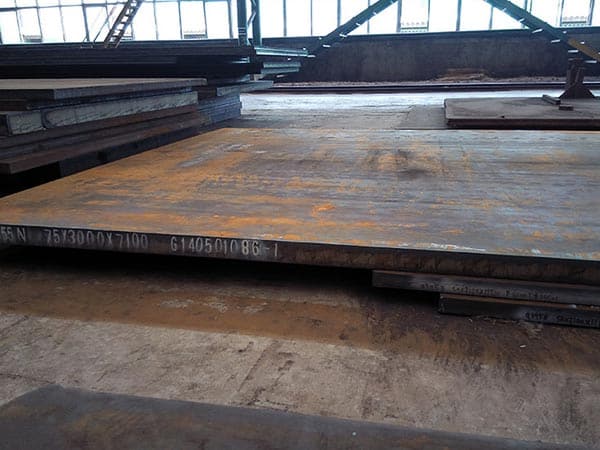
Understanding S315MC: The High-Strength Cold-Forming Standard
S315MC is a high-yield-strength steel grade specifically engineered for cold-forming applications, governed by the European standard EN 10149-2. The designation itself reveals its core characteristics: 'S' stands for structural steel, '315' represents the minimum yield strength of 315 MPa, 'M' indicates it is thermomechanically rolled, and 'C' signifies its suitability for cold forming. This material belongs to the family of High Strength Low Alloy (HSLA) steels, which offer a superior strength-to-weight ratio compared to traditional carbon steels.
The 'pickled' aspect of S315MC pickled steel coil refers to a critical surface treatment process. Hot-rolled steel naturally develops a layer of iron oxide, or scale, during the cooling process. Pickling involves passing the steel through a series of hydrochloric acid baths to chemically remove this scale, resulting in a clean, smooth, and uniform surface. Following pickling, the steel is typically oiled to prevent flash rusting, making it an ideal substrate for subsequent processing such as laser cutting, painting, or welding.
The Pickling Process and Surface Integrity
The removal of oxide scale through pickling is not merely an aesthetic choice; it is a functional necessity for precision manufacturing. Scale is extremely hard and abrasive, which can lead to premature wear on stamping dies and forming tools. By utilizing pickled S315MC, manufacturers significantly extend the lifespan of their equipment. Furthermore, the clean surface ensures better electrical conductivity for spot welding and provides a consistent base for high-quality powder coating or liquid painting.
During the pickling line operation, the steel coil undergoes tension leveling, which improves the flatness of the material. This is particularly beneficial for automated laser cutting systems, where material flatness directly impacts the precision of the cut and the stability of the production process. The absence of scale also prevents the contamination of weld pools, ensuring structural integrity in complex assemblies.
Chemical Composition and Micro-Alloying Strategy
The exceptional performance of S315MC is achieved through a precise chemical balance and micro-alloying techniques. Unlike traditional steels that rely on high carbon content for strength, S315MC maintains a low carbon level to ensure excellent weldability and ductility. The strength is primarily derived from grain refinement and precipitation hardening using elements like Niobium (Nb), Vanadium (V), and Titanium (Ti).
| Element | Max Content (%) | Role in Steel Metallurgy |
|---|---|---|
| Carbon (C) | 0.12 | Ensures basic strength while maintaining superior weldability. |
| Manganese (Mn) | 1.30 | Increases hardenability and strength through solid solution strengthening. |
| Silicon (Si) | 0.50 | Acts as a deoxidizer and contributes to strength. |
| Phosphorus (P) | 0.025 | Kept low to prevent brittleness and improve toughness. |
| Sulfur (S) | 0.020 | Minimized to enhance internal cleanliness and ductility. |
| Nb + V + Ti | 0.22 | Micro-alloying elements for grain refinement and precipitation hardening. |
The addition of Niobium and Titanium is particularly crucial. These elements form stable carbides and nitrides that pin grain boundaries during the thermomechanical rolling process, preventing grain growth and resulting in an ultra-fine grain structure. This fine grain size is the primary reason S315MC can achieve high strength without sacrificing toughness or formability.
Mechanical Properties and Fabrication Performance
S315MC is characterized by its high yield strength and remarkable elongation properties. This combination allows for the design of lightweight components that can withstand significant loads. The thermomechanical rolling process (TMCP) ensures that these properties are consistent throughout the entire length and width of the coil.
- Yield Strength (ReH): Minimum 315 MPa.
- Tensile Strength (Rm): 390 to 510 MPa.
- Elongation (A80mm): Minimum 20% to 24% depending on thickness.
- Bending Radius: Can typically be bent 180 degrees with a radius as small as 0.5 times the material thickness.
In practical fabrication, the low yield-to-tensile ratio of S315MC provides a safety margin against sudden failure. Its high ductility makes it suitable for complex cold-stamping and deep-drawing operations. When bending S315MC, the springback effect is more predictable than in higher-strength grades like S700MC, allowing for tighter tolerances in structural frames and chassis components.
Welding and Joining Characteristics
One of the most significant advantages of S315MC is its excellent weldability. Due to the low carbon equivalent (Ceq), the steel is not prone to cold cracking in the heat-affected zone (HAZ). It can be welded using all standard methods, including Metal Active Gas (MAG), Tungsten Inert Gas (TIG), and laser welding.
The fine-grained structure remains relatively stable during the welding process, although excessive heat input should be avoided to prevent localized grain coarsening. For structural applications, using matching filler metals ensures that the weld joint maintains the same mechanical integrity as the base material. The pickled surface further enhances weld quality by removing the risk of scale inclusions, which are a common cause of porosity in hot-rolled steel welds.
Industrial Applications and Engineering Value
The versatility of S315MC pickled steel coil makes it a preferred choice across various demanding industries. Its primary value proposition lies in the ability to reduce component weight without compromising structural safety, a concept known as lightweighting.
Automotive and Transportation: S315MC is extensively used for truck chassis, cross members, and longitudinal beams. In passenger vehicles, it is found in seat frames, bumper brackets, and other structural reinforcements where high energy absorption and formability are required.
Agricultural Machinery: The durability and fatigue resistance of S315MC make it ideal for plow frames, harvester components, and trailer structures. These parts must withstand cyclic loading and harsh environmental conditions, where the toughness of HSLA steel is a distinct advantage.
Construction and Engineering: Cold-pressed profiles, crane arms, and shelving systems benefit from the high strength of S315MC. The pickled surface is particularly valued in these sectors for its readiness for immediate painting or galvanizing, reducing lead times in production.
Energy and Infrastructure: Support structures for solar panels and cable tray systems often utilize S315MC for its balance of cost-effectiveness and structural performance. The material's ability to be formed into complex shapes allows for optimized designs that minimize material usage.
Environmental Adaptability and Longevity
While S315MC is not a corrosion-resistant steel like stainless steel, its clean, pickled surface provides an excellent foundation for protective coatings. When properly painted, powder-coated, or galvanized, S315MC components exhibit long-term durability in outdoor environments. The inherent toughness of the steel also ensures that it performs reliably at low temperatures, making it suitable for equipment used in cold climates.
From a sustainability perspective, the high strength of S315MC allows engineers to use thinner sections to achieve the same load-bearing capacity as thicker, lower-grade steels. This reduction in material volume leads to lower energy consumption during transport and reduced CO2 emissions throughout the product's lifecycle. Additionally, S315MC is 100% recyclable, fitting perfectly into the circular economy model of modern manufacturing.
Selecting S315MC pickled steel coil involves balancing mechanical requirements with processing efficiency. By understanding its metallurgical profile and surface characteristics, manufacturers can optimize their production lines, reduce tool wear, and create high-performance products that meet the rigorous demands of today's industrial landscape.
Leave a message