
What is the difference between S460MC sheet chemistry and medium thick plate
A professional analysis of S460MC steel, comparing chemical composition, mechanical properties, and processing differences between thin sheets and medium thick plates.
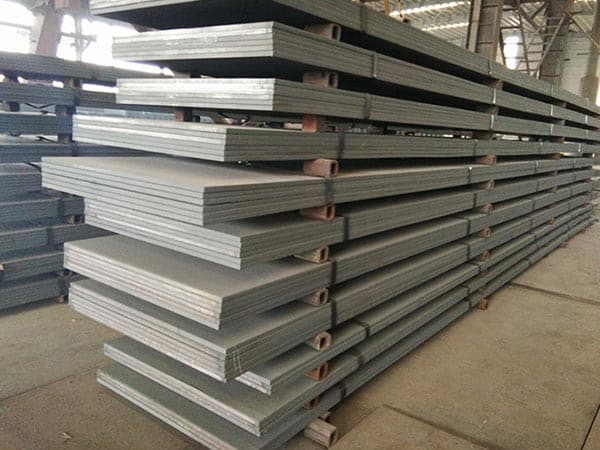
The Metallurgical Essence of S460MC High-Strength Steel
S460MC is a thermomechanically rolled, high-yield-strength steel designed specifically for cold forming. Governed by the EN 10149-2 standard, this grade represents a pinnacle of micro-alloying technology. While the standard provides a unified framework for the material, the practical reality of producing a 3mm sheet versus a 12mm or 20mm medium thick plate involves significant metallurgical adjustments. The primary goal remains consistent: achieving a minimum yield strength of 460 MPa while maintaining exceptional ductility and weldability.
The distinction between 'sheet' and 'medium thick plate' is not merely dimensional. In the steel industry, sheets (often under 6mm) are frequently produced via continuous hot strip mills, whereas medium thick plates (above 6mm, often reaching 25mm for S460MC) might be produced on plate mills or heavy-duty strip mills. This difference in production route necessitates subtle but critical shifts in chemical composition to compensate for varying cooling rates and rolling reduction ratios.
Chemical Composition Nuances: Sheet vs. Medium Thick Plate
The chemical blueprint of S460MC relies on low carbon content and the strategic use of micro-alloying elements like Niobium (Nb), Vanadium (V), and Titanium (Ti). However, as thickness increases, the cooling rate at the core of the material slows down. To maintain the 460 MPa yield strength in a thicker section, manufacturers must manage the Carbon Equivalent (CEV) more aggressively.
| Element (Max %) | S460MC Standard (EN 10149-2) | Typical Sheet Profile (3mm) | Typical Plate Profile (12mm+) |
|---|---|---|---|
| Carbon (C) | 0.12 | 0.07 - 0.09 | 0.09 - 0.11 |
| Manganese (Mn) | 1.60 | 1.10 - 1.30 | 1.35 - 1.55 |
| Silicon (Si) | 0.50 | 0.02 - 0.15 | 0.20 - 0.40 |
| Phosphorus (P) | 0.025 | < 0.015 | < 0.020 |
| Sulfur (S) | 0.015 | < 0.005 | < 0.008 |
| Aluminium (Al) | 0.015 (min) | 0.030 - 0.050 | 0.025 - 0.045 |
In S460MC sheets, the rapid cooling on the run-out table of a strip mill allows for a finer grain structure with lower Manganese levels. Conversely, medium thick plates require slightly higher Manganese and Silicon to enhance solid solution strengthening and ensure that the pearlite-ferrite transformation results in the required strength levels across the entire cross-section. Silicon also plays a role in deoxidation, which is more critical in the slower-solidifying environments of thicker slabs.
The Role of Micro-Alloying Elements (Nb, V, Ti)
The 'MC' in S460MC stands for 'Thermomechanically Rolled'. This process uses micro-alloying elements to control grain growth. Niobium (Nb) is the workhorse here, raising the recrystallization temperature. In thin sheets, Niobium effectively prevents grain growth during the rapid passes of the finishing mill. In medium thick plates, the total content of Nb + V + Ti (which must not exceed 0.22% per standard) is often pushed higher to ensure that even with the lower reduction ratios inherent in thicker products, the grain size remains sufficiently refined.
Titanium (Ti) is particularly vital in thicker plates for nitrogen binding. By forming TiN particles at high temperatures, it prevents the coarsening of austenite grains during the reheating of the slab, a factor that is more influential in the longer heating cycles required for thicker sections compared to thin strip production.
Mechanical Performance and the Thickness Effect
While the nominal yield strength is 460 MPa for both, the elongation and bending properties exhibit a 'thickness effect'. Thin sheets of S460MC typically show higher elongation (A80mm) compared to the proportional elongation (A5) of thicker plates. This is due to the more uniform deformation possible in a thin section.
- Yield Strength: Remains stable at 460 MPa, though sheets often exhibit a higher actual yield (closer to 500 MPa) to ensure safety margins.
- Tensile Strength: Generally ranges from 520 to 670 MPa. Medium thick plates tend to sit at the higher end of this range to compensate for the lower cooling-induced hardness.
- Impact Toughness: S460MC is often tested at -20°C or -40°C. Thicker plates are more susceptible to brittle fracture due to triaxial stress states, making sulfur control (inclusion shape control) and calcium treatment more critical than in thin sheets.
Processing Characteristics: Bending and Welding
The processing of S460MC varies significantly between a 2mm sheet and a 15mm plate. Cold forming is a hallmark of this grade. For thin sheets, the minimum bending radius is extremely tight (often 0.5x to 1.0x thickness). As we move to medium thick plates, the internal stresses during bending increase exponentially. Engineers must account for the rolling direction; bending transverse to the rolling direction is always safer, though S460MC's high purity allows for excellent longitudinal bending as well.
Welding S460MC is generally straightforward due to the low carbon content. However, for medium thick plates, the heat-affected zone (HAZ) stays at elevated temperatures longer. This can lead to localized grain coarsening and a slight drop in hardness. Using low heat input welding techniques (like pulsed MAG) is recommended for thicker sections to preserve the benefits of the thermomechanical rolling process. Preheating is rarely required for S460MC unless working in extremely cold environments or with thicknesses exceeding 20mm where moisture removal is necessary.
Environmental Adaptability and Surface Quality
Surface quality is a major differentiator. S460MC sheets are often used in automotive frames or visible structural components where a smooth, scale-free surface (often achieved through pickling and oiling, S460MC+P) is required. Medium thick plates are more likely to be used in heavy machinery (cranes, chassis) where the surface is shot-blasted and primed. The thicker oxide scale on plates requires more aggressive cleaning but offers a robust substrate for heavy-duty industrial coatings.
In terms of corrosion resistance, neither form is 'weathering steel'. However, the dense microstructure of S460MC provides a slight advantage over traditional s355jr carbon steels by reducing the rate of moisture penetration into the grain boundaries. For applications in humid or coastal environments, both sheet and plate require protective systems, but the plate's higher mass allows for more aggressive surface preparation (SA 2.5) without risking deformation.
Industry Applications: Where Each Excels
The choice between sheet and plate is driven by the structural load and weight-saving requirements of the specific industry.
- Automotive Industry: Primarily utilizes S460MC in sheet form (2mm - 5mm) for longitudinal beams, cross members, and chassis components. The high strength-to-weight ratio allows for thinner gauges, reducing vehicle weight and CO2 emissions.
- Heavy Lifting & Construction: Employs medium thick plates (8mm - 20mm) for telescopic crane booms and trailer frames. Here, the ability of S460MC to withstand high static loads while remaining weldable is the primary advantage.
- Waste Management: Garbage truck bodies use S460MC plates for their balance of impact resistance and weight reduction, allowing for higher payloads.
Technical Comparison Summary
To summarize the divergence, the following table highlights the operational differences engineers must consider when specifying S460MC based on thickness:
| Feature | Thin Sheet (< 6mm) | Medium Thick Plate (> 6mm) |
|---|---|---|
| Primary Strengthening | Grain refinement + Rapid cooling | Micro-alloying + Precipitation hardening | Bending Radius (min) | ~1.0 x t | ~1.5 x t to 2.0 x t | Welding Strategy | High speed, low distortion | Controlled heat input, multi-pass | Surface Finish | Often Pickled & Oiled (P&O) | As-rolled or Shot-blasted | Typical CEV | 0.30 - 0.34 | 0.35 - 0.39 |
Understanding these subtle chemical and physical shifts ensures that when S460MC is specified, the fabrication process is optimized for the specific thickness. Whether it is the rapid stamping of an automotive bracket or the precision welding of a 15mm crane jib, S460MC remains a versatile high-performance material when its thickness-dependent characteristics are respected.
Leave a message