
How to improve the pass rate of Z-directed S700MC high strength alloy steel for auto frame
Comprehensive technical guide on optimizing the Z-direction pass rate of S700MC high-strength steel for automotive frames through metallurgical control and rolling processes.
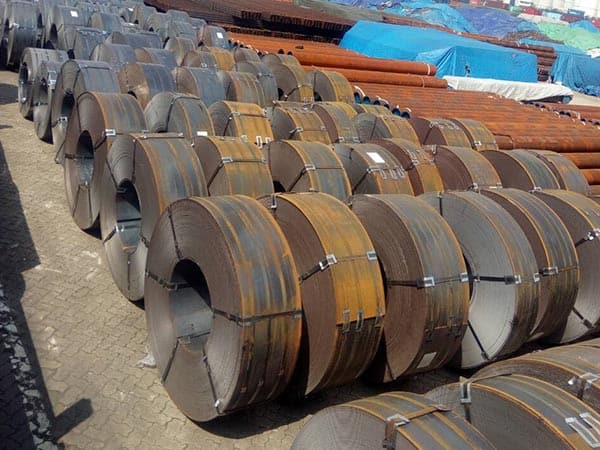
The Critical Role of S700MC in Modern Automotive Engineering
S700MC is a high-strength low-alloy (HSLA) steel produced through thermomechanical controlled rolling (TMCP). In the pursuit of vehicle lightweighting and enhanced load-bearing capacity, automotive manufacturers increasingly rely on S700MC for truck frames, chassis components, and structural cross-members. However, as the thickness of these components increases or the complexity of the welded joints grows, the Z-direction property (thickness direction ductility) becomes a decisive factor in structural integrity. Improving the pass rate of Z-directed S700MC is not merely a quality control issue; it is a fundamental requirement to prevent lamellar tearing during heavy-duty applications.
Understanding Z-Direction Performance and Lamellar Tearing
The Z-direction property refers to the steel's ability to resist deformation and fracture in its thickness direction. For automotive frames subjected to multi-axial stresses and complex welding thermal cycles, poor Z-direction ductility often leads to lamellar tearing. This phenomenon typically occurs in the heat-affected zone (HAZ) of welded joints, where inclusions such as manganese sulfides (MnS) are flattened during the rolling process, creating planes of weakness. To ensure a high pass rate, the steel must meet specific reduction-of-area targets (e.g., Z15, Z25, or Z35) during tensile testing perpendicular to the plate surface.
Metallurgical Foundation: Stringent Chemical Composition Control
The journey to a high Z-direction pass rate begins in the melting shop. The presence of non-metallic inclusions is the primary culprit for Z-direction failure. To mitigate this, the chemical composition must be strictly regulated beyond the standard S700MC requirements.
- Sulfur (S) Control: Sulfur is the most detrimental element for Z-direction properties. It forms elongated MnS inclusions during rolling. For Z-direction S700MC, sulfur levels should ideally be kept below 0.003% through deep desulfurization.
- Phosphorus (P) Control: Phosphorus promotes segregation and embrittlement. Maintaining P levels below 0.015% enhances the overall toughness of the matrix.
- Micro-alloying Strategy: The balance of Niobium (Nb), Vanadium (V), and Titanium (Ti) must be optimized to ensure grain refinement without forming large, brittle carbonitride clusters.
| Element | Standard S700MC (%) | Z-Direction Optimized (%) |
|---|---|---|
| Carbon (C) | ≤ 0.12 | 0.06 - 0.09 |
| Manganese (Mn) | ≤ 2.10 | 1.50 - 1.80 |
| Sulfur (S) | ≤ 0.015 | ≤ 0.002 |
| Phosphorus (P) | ≤ 0.025 | ≤ 0.012 |
| Nb + V + Ti | ≤ 0.22 | 0.12 - 0.18 |
Advanced Inclusion Engineering: Calcium Treatment
Even with ultra-low sulfur levels, the morphology of the remaining sulfides is critical. Calcium treatment (Ca-Si wire injection) is employed to modify the shape of inclusions. By converting elongated MnS into hard, spherical calcium-aluminates or calcium-modified sulfides, the steel maintains its ductility in the thickness direction. The Ca/S ratio must be carefully calculated (typically between 1.5 and 3.0) to ensure complete modification while avoiding the formation of large, clustered inclusions that could act as crack initiators.
Optimizing Continuous Casting for Internal Soundness
The internal quality of the slab directly dictates the Z-direction performance of the finished plate. Centerline segregation and porosity are major threats. Implementing Electromagnetic Stirring (EMS) during casting helps break up columnar crystals and promotes a wider equiaxed grain zone. Furthermore, Heavy Reduction Technology or soft reduction at the end of solidification can effectively close shrinkage cavities and reduce the concentration of solute elements at the slab's center, ensuring a more homogeneous microstructure across the thickness.
TMCP Rolling Parameters and Microstructural Homogeneity
The Thermomechanical Controlled Process (TMCP) is the core of S700MC production. To improve the Z-direction pass rate, the rolling process must focus on achieving a fine, uniform acicular ferrite or bainitic microstructure.
- Slab Reheating: Ensure a uniform temperature distribution (typically 1150°C - 1220°C) to fully dissolve micro-alloying elements while preventing excessive austenite grain growth.
- Two-Stage Rolling: The first stage (recrystallization zone) ensures grain refinement through repeated deformation and recrystallization. The second stage (non-recrystallization zone) introduces high dislocation density, providing numerous nucleation sites for ferrite.
- Cooling Control: High-speed laminar cooling is essential to bypass the pearlite transformation zone. A cooling rate of 20-40°C/s helps achieve the high yield strength of 700MPa while maintaining excellent low-temperature toughness and Z-direction ductility.
Mechanical Properties and Testing Standards
S700MC must exhibit a delicate balance between ultra-high strength and superior formability. For automotive frames, the Z-direction test (ASTM A770 or EN 10164) measures the reduction of area in a tensile specimen taken perpendicular to the plate surface. A pass rate improvement requires consistently exceeding the 25% reduction threshold (Z25) to provide a safety margin for welding stresses.
| Property | Target Value (S700MC) | Z-Direction Requirement |
|---|---|---|
| Yield Strength (MPa) | ≥ 700 | Consistent across thickness |
| Tensile Strength (MPa) | 750 - 950 | ≥ 90% of longitudinal |
| Elongation (%) | ≥ 12 | High local ductility |
| Z-Direction Reduction of Area (%) | N/A | ≥ 25% (Z25) |
| Charpy V-Notch (-40°C) | ≥ 27 J | High toughness required |
Addressing Hydrogen-Induced Cracking
Hydrogen is a silent killer of Z-direction properties. During the steelmaking and casting process, hydrogen can be trapped within the lattice, leading to internal micro-cracks or "flakes." Utilizing Vacuum Degassing (RH or VD) to reduce hydrogen content to below 1.5 ppm is vital. Additionally, slow cooling of the finished plates in a stack or pit can allow residual hydrogen to diffuse out, significantly reducing the risk of brittle failure during Z-direction testing.
Application in High-Stress Automotive Frames
Automotive frames for heavy trucks and specialized vehicles undergo intense torsional and longitudinal stresses. When S700MC is used in thick-walled sections (8mm to 16mm), the risk of lamellar tearing at the weld toe increases. By ensuring a high Z-direction pass rate, manufacturers can use smaller weld fillets and more efficient joint designs without compromising safety. This translates to lower vehicle weight, higher fuel efficiency, and increased payload capacity. The superior clean-steel technology used for Z-direction S700MC also improves the steel's fatigue life, which is paramount for components subjected to millions of cyclic loads over a vehicle's lifespan.
Practical Implementation for Quality Assurance
To consistently achieve high pass rates, a holistic quality management system must be implemented. This includes real-time monitoring of casting speeds, precise control of the water-cooling headers during TMCP, and rigorous ultrasonic testing (UT) to detect any internal laminations before the steel reaches the customer. Regular cross-sectional metallographic analysis should be performed to verify inclusion modification and grain size uniformity. By integrating these technical strategies, steel mills can provide the automotive industry with S700MC that not only meets the 700MPa strength grade but also offers the robust Z-direction performance necessary for the most demanding structural applications.
Leave a message