
What is the S420MC pickled steel sheet price export to Malaysia
A comprehensive analysis of S420MC pickled steel sheet pricing for the Malaysian market, covering technical specifications, mechanical properties, and export logistics.
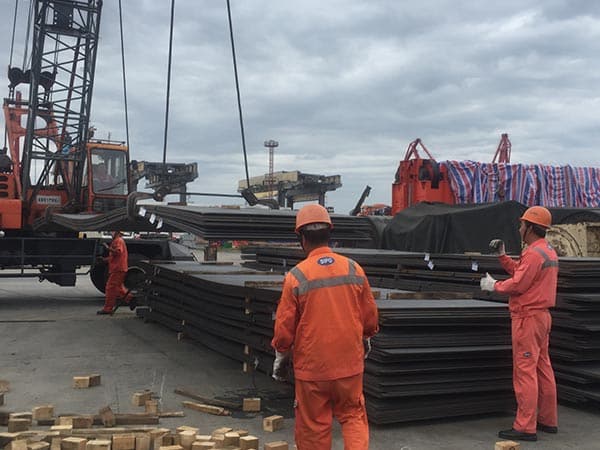
Current Market Dynamics of S420MC Pickled Steel Export to Malaysia
Determining the S420MC pickled steel sheet price for export to Malaysia involves a complex interplay of global commodity trends and regional industrial demand. S420MC is a high-yield strength, thermomechanically rolled steel designed for cold forming, governed by the EN 10149-2 standard. For Malaysian manufacturers in the automotive and heavy equipment sectors, this grade represents a critical balance between weight reduction and structural integrity. The price typically fluctuates based on the cost of hot-rolled coils (HRC), the value-added pickling process, and the prevailing ocean freight rates from major Asian ports to Port Klang or Penang.
The Malaysian market has seen a steady increase in demand for pickled and oiled (P&O) products. Unlike standard hot-rolled steel, S420MC pickled sheets undergo an acid bath to remove surface scale and are subsequently oiled to prevent oxidation. This process ensures a clean, smooth surface that is essential for precision laser cutting and high-quality welding. Buyers in Malaysia must account for not only the base material price but also the protective packaging required for maritime transport, as the high humidity of the Malacca Strait poses a significant risk of surface corrosion during transit.
Technical Specifications and Chemical Composition of S420MC
The performance of S420MC is rooted in its precise chemical makeup. To achieve a minimum yield strength of 420 MPa while maintaining excellent weldability, the carbon content is kept remarkably low. This is supplemented by micro-alloying elements such as Niobium (Nb), Vanadium (V), and Titanium (Ti). These elements facilitate grain refinement during the thermomechanical rolling process, which is the cornerstone of the "MC" designation.
| Element | Max % (Mass Fraction) |
|---|---|
| Carbon (C) | 0.12 |
| Manganese (Mn) | 1.60 |
| Silicon (Si) | 0.50 |
| Phosphorus (P) | 0.025 |
| Sulfur (S) | 0.015 |
| Aluminium (Al) | 0.015 |
| Nb + V + Ti | 0.22 |
This low carbon equivalent (CEV) ensures that S420MC is highly compatible with modern automated welding systems used in Malaysian automotive assembly plants. The addition of Niobium and Titanium creates a fine-grained microstructure that prevents the softening of the heat-affected zone (HAZ) during welding, a common issue with older structural steel grades.
Mechanical Properties and Structural Advantages
The primary reason for selecting S420MC over standard S355 or S235 grades is the opportunity for weight optimization. By utilizing a material with a higher yield strength, engineers can reduce the thickness of components without compromising safety or load-bearing capacity. This is particularly relevant for the Malaysian transport industry, where reducing vehicle weight directly translates to better fuel efficiency and higher payload capacities.
| Property | Value |
|---|---|
| Yield Strength (ReH) | Min 420 MPa |
| Tensile Strength (Rm) | 480 - 620 MPa |
| Elongation (A80mm, t < 3mm) | Min 16% |
| Elongation (A5, t ≥ 3mm) | Min 19% |
| Bending Radius (90°) | 0.5t to 1.5t (depending on thickness) |
The ductility of S420MC is one of its most impressive features. Despite its high strength, it retains a high elongation percentage, allowing for complex cold-forming operations. Malaysian fabricators often use this grade for chassis parts, brackets, and cross-members that require tight bending radii. The consistency of these mechanical properties across different batches is vital for maintaining the accuracy of robotic forming lines.
The Importance of the Pickling and Oiling (P&O) Process
Exporting steel to Malaysia requires a deep understanding of the local climate and manufacturing requirements. S420MC is often delivered in a pickled and oiled state. The pickling process involves passing the hot-rolled steel through a series of hydrochloric acid tanks to dissolve the iron oxides (scale) formed during rolling. This results in a metallic-clean surface that is ideal for subsequent processing.
- Improved Tool Life: Removing the hard abrasive scale significantly extends the lifespan of stamping dies and cutting tools in Malaysian factories.
- Superior Surface Quality: The clean surface is a prerequisite for high-quality powder coating or painting, which is common in the production of agricultural machinery and automotive components.
- Enhanced Weldability: Welding on a pickled surface eliminates the risk of scale inclusions in the weld pool, leading to stronger and more consistent joints.
- Corrosion Protection: The application of a thin layer of electrostatic oil protects the steel during the long sea voyage from North Asia to Southeast Asia.
Logistics and Factors Influencing the Malaysia Export Price
When calculating the landed cost of S420MC in Malaysia, several logistical factors come into play. The price quoted by exporters is usually on a FOB (Free on Board) or CIF (Cost, Insurance, and Freight) basis. Malaysian importers must consider the following variables:
1. Ocean Freight and Containerization: Steel sheets are typically shipped in 20ft containers due to their weight. Freight rates from major Chinese or Korean ports to Port Klang can fluctuate based on global shipping demand and fuel surcharges. Proper stowage and moisture-absorbing silica gel packs are essential to maintain the quality of the pickled surface.
2. Import Duties and Trade Policies: Malaysia has specific trade agreements and anti-dumping duties that may apply to certain steel products depending on the country of origin. It is crucial for buyers to verify the Harmonized System (HS) code for S420MC (often under 7208 or 7225) to determine the applicable duty rates under the ATIGA (ASEAN Trade in Goods Agreement) or other free trade agreements.
3. SIRIM Certification: For many structural and automotive applications, steel products must comply with the standards set by the Standards and Industrial Research Institute of Malaysia (SIRIM). Ensuring that the S420MC material comes with a Mill Test Certificate (MTC) that aligns with EN 10149-2 is non-negotiable for high-end projects.
4. Currency Exchange: Since international steel trade is conducted in USD, the MYR/USD exchange rate plays a significant role in the final price. Large-scale Malaysian buyers often use hedging strategies to mitigate the risk of currency volatility.
Applications of S420MC in the Malaysian Industry
The versatility of S420MC has led to its widespread adoption across various sectors in Malaysia. In the automotive industry, it is used for structural reinforcements where high energy absorption is required during collisions. The ability of the material to deform without fracturing makes it ideal for safety-critical components.
In the heavy machinery and construction equipment sector, S420MC is used to manufacture crane arms, excavator buckets, and trailer frames. The high yield strength allows for thinner plates to be used, reducing the overall weight of the machinery and increasing its operational efficiency. This is particularly beneficial for the palm oil and timber industries in East Malaysia, where equipment is often subjected to harsh terrain and heavy loads.
Furthermore, the solar mounting system industry in Malaysia has begun adopting S420MC for large-scale solar farm structures. The high strength-to-weight ratio allows for the construction of durable mounting racks that can withstand tropical wind loads while minimizing the amount of steel required, thereby reducing the total project cost.
Processing Performance: Bending, Welding, and Cutting
For a fabricator in Malaysia, the ease of processing S420MC is as important as its price. The material is specifically engineered for cold forming. When bending S420MC, it is important to follow the recommended minimum bending radius to avoid surface cracking. Because of its fine-grained structure, it exhibits very little springback compared to traditional high-strength steels, which simplifies the design of forming tools.
Laser cutting S420MC pickled sheet is highly efficient. The absence of scale allows the laser beam to penetrate the material consistently, resulting in a clean cut edge with minimal dross. This is a significant advantage for Malaysian service centers that provide precision-cut parts to the electronics and machinery sectors.
Regarding welding, S420MC can be joined using all standard methods, including MIG/MAG, TIG, and submerged arc welding. Due to the low carbon content, there is no need for pre-heating in most thickness ranges. However, it is recommended to use matching filler metals to ensure the weld joint maintains the same strength level as the base material. The excellent weldability reduces the risk of cold cracking, ensuring the longevity of the fabricated structures in Malaysia's demanding environment.
Environmental Adaptation and Sustainability
Malaysia's tropical climate, characterized by high temperatures and high humidity, requires materials that can withstand corrosive environments. While S420MC is not a stainless steel, the pickled and oiled surface provides a superior substrate for modern anti-corrosion coatings. When combined with high-quality galvanizing or specialized paint systems, S420MC components can offer a long service life even in coastal Malaysian regions.
From a sustainability perspective, the use of S420MC contributes to green manufacturing. By enabling the production of lighter vehicles and structures, it reduces the total carbon footprint associated with transportation and material usage. As Malaysia moves towards more stringent environmental regulations and carbon neutrality goals, the demand for high-efficiency materials like S420MC is expected to grow.
The price of S420MC pickled steel sheet for export to Malaysia is a reflection of its high technical value and the logistical rigor required to deliver it. By understanding the mechanical advantages, the chemical precision, and the processing benefits of this grade, Malaysian businesses can make informed decisions that balance cost with long-term performance and reliability.
Leave a message