
Is S355MC engineering car steel coil mild steel?
A professional comparison between S355MC and mild steel, detailing chemical composition, mechanical properties, and automotive engineering applications.
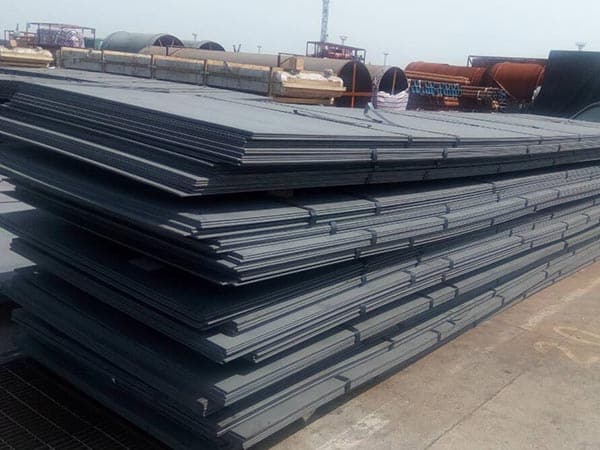
The Technical Distinction: Is S355MC Mild Steel?
When discussing the classification of S355MC, a common question arises among engineers and procurement specialists: is it a mild steel? To provide a precise answer, we must look at the metallurgical definitions. Mild steel, traditionally categorized as low-carbon steel, typically features a carbon content between 0.05% and 0.25% and a yield strength around 235 MPa (such as S235JR). S355MC, governed by the EN 10149-2 standard, certainly qualifies as a low-carbon steel due to its extremely low carbon content (often below 0.12%). However, it is more accurately classified as a High Strength Low Alloy (HSLA) steel. The "MC" suffix denotes that it is a thermomechanically rolled (M) steel designed for cold forming (C). While it shares the weldability and ductility of mild steel, its mechanical performance significantly exceeds standard carbon steels, making it a specialized evolution for engineering car steel coils.
The Role of Thermomechanical Rolling (TMCP)
The primary reason S355MC stands apart from traditional mild steel is the Thermomechanical Control Process (TMCP). Unlike standard hot-rolled mild steel, which is rolled at high temperatures and allowed to cool naturally, S355MC undergoes a strictly controlled rolling and cooling regime. This process refines the grain size of the steel to a microscopic level. A finer grain structure is the only strengthening mechanism that simultaneously improves both strength and toughness. By controlling the deformation at specific temperature ranges, manufacturers can achieve a yield strength of 355 MPa without increasing the carbon content. This is why S355MC remains as easy to weld as mild steel but offers nearly 50% higher load-bearing capacity than S235.
Chemical Composition: Micro-Alloying for Performance
The chemical profile of S355MC is engineered to maintain a low carbon equivalent (CEV), which is critical for automotive manufacturing. While mild steel relies on carbon and manganese for strength, S355MC utilizes micro-alloying elements such as Niobium (Nb), Vanadium (V), and Titanium (Ti). These elements form stable carbides and nitrides that pin grain boundaries during the rolling process, preventing grain growth. The result is a steel that is exceptionally clean with low levels of impurities like sulfur and phosphorus, which enhances its lamellar tearing resistance and fatigue life.
| Element | S355MC (Max %) | Standard Mild Steel S235JR (Max %) |
|---|---|---|
| Carbon (C) | 0.12 | 0.17 |
| Manganese (Mn) | 1.30 | 1.40 |
| Silicon (Si) | 0.50 | - |
| Phosphorus (P) | 0.025 | 0.035 |
| Sulfur (S) | 0.020 | 0.035 |
| Aluminium (Al) | 0.015 (Min) | - |
Mechanical Properties and Engineering Advantages
The "355" in S355MC represents its minimum yield strength of 355 MPa. In contrast, standard mild steel (S235) offers only 235 MPa. This disparity allows engineers to reduce the thickness of components—a process known as down-gauging—without sacrificing structural integrity. For the automotive industry, this is a game-changer. Thinner steel means lighter vehicles, which directly translates to improved fuel efficiency and lower emissions. Despite its higher strength, S355MC retains an elongation of 19% to 23% (depending on thickness), ensuring it can withstand significant deformation during a collision, absorbing energy and protecting passengers.
- Yield Strength: Minimum 355 MPa for high load capacity.
- Tensile Strength: 430 to 550 MPa, providing a robust safety margin.
- Ductility: High elongation allows for complex stamping and bending.
- Impact Toughness: Excellent performance even at low temperatures, crucial for vehicles operating in diverse climates.
Cold Forming and Fabricating S355MC
One of the defining characteristics of S355MC is its suitability for cold forming. While some high-strength steels become brittle when bent, S355MC is specifically designed to be folded and pressed into complex shapes. This is vital for automotive chassis, cross members, and longitudinal beams. The steel's fine grain structure prevents "orange peel" surface defects and cracking during tight-radius bending. When working with S355MC, it is recommended to follow minimum bending radii based on thickness to maintain the integrity of the material. For example, a 3mm sheet can typically be bent with a radius as small as 0.5 to 1.0 times its thickness, depending on the orientation relative to the rolling direction.
Welding Integrity and Heat Affected Zones
Fabricators often worry that high-strength steels will lose their properties during welding. However, because S355MC achieves its strength through grain refinement rather than high carbon or alloy content, it exhibits excellent weldability. The low carbon equivalent ensures that the Heat Affected Zone (HAZ) does not become excessively brittle. Standard welding processes such as MIG/MAG, TIG, and submerged arc welding are all highly effective. It is important to manage heat input to avoid excessive grain growth in the HAZ, which could locally reduce the yield strength. Unlike some quenched and tempered steels, S355MC does not require preheating in most standard thicknesses, which streamlines production cycles in automotive assembly lines.
Environmental Adaptation and Corrosion Resistance
S355MC is often used in the "black" (hot-rolled) state or pickled and oiled (P&O). Its environmental adaptability is superior to standard mild steel because its surface is more uniform and less prone to deep pitting. When used in engineering car steel coils, it is frequently coated with zinc (galvanized) or painted. The clean chemical composition of S355MC provides an excellent substrate for these coatings, ensuring long-term corrosion resistance in harsh road environments where salt and moisture are prevalent. Furthermore, the weight reduction enabled by S355MC contributes to the global push for "Green Steel" initiatives by reducing the overall carbon footprint of the vehicle's lifecycle.
Comparing S355MC with Other Structural Steels
It is important to distinguish S355MC from S355J2. While both have a yield strength of 355 MPa, S355J2 is a structural steel (EN 10025) often used in heavy plates for buildings and bridges, whereas S355MC is a thermomechanically rolled steel (EN 10149) optimized for weight-saving and cold forming. S355MC generally offers better formability and a more consistent surface finish than S355J2, making it the preferred choice for the automotive and machinery industries where precision and weight are critical factors.
| Feature | S355MC (Automotive/Engineering) | S235JR (General Purpose Mild Steel) |
|---|---|---|
| Yield Strength | 355 MPa | 235 MPa |
| Formability | Excellent (Cold Forming) | Good |
| Weight Saving Potential | High (approx. 30%) | Low |
| Grain Structure | Ultra-Fine (TMCP) | Standard Coarse |
| Primary Application | Chassis, Crane Arms, Trailers | General Construction, Simple Brackets |
Strategic Applications in Modern Industry
Beyond passenger cars, S355MC is a staple in the production of heavy-duty transport equipment. In the manufacturing of truck chassis and trailers, the ability to carry heavier loads while reducing the dead weight of the vehicle is a major competitive advantage. Similarly, in the production of telescopic cranes and agricultural machinery, S355MC provides the necessary strength to handle dynamic loads without the bulk of traditional structural steels. Its reliability in cold-weather environments also makes it a top choice for components used in northern climates where standard mild steel might suffer from brittle fracture.
The transition from standard mild steel to S355MC represents a significant leap in engineering efficiency. By leveraging the benefits of thermomechanical rolling and micro-alloying, S355MC offers a unique combination of high strength, excellent formability, and superior weldability. For manufacturers looking to optimize their products for the modern market, S355MC is not just an alternative to mild steel; it is a high-performance upgrade that enables lighter, stronger, and more sustainable designs.
Leave a message