
How to improve the quality of B750L steel for automobile components
Discover professional insights on improving B750L steel quality for automotive components. This guide covers chemical optimization, smelting, rolling, and processing techniques to enhance mechanical performance and durability.
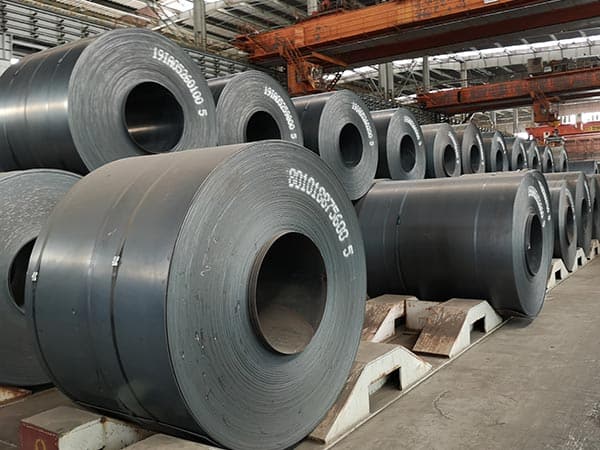
The Fundamentals of B750L Steel in Modern Vehicle Engineering
B750L steel represents a critical category of high-strength low-alloy (HSLA) structural steel specifically engineered for the automotive industry. As vehicle manufacturers strive for lightweighting without compromising safety, the demand for materials that offer high yield strength and excellent formability has surged. B750L, with its nominal yield strength of 750 MPa, is primarily utilized in chassis components, longitudinal beams, and cross members where structural integrity is paramount.
Improving the quality of B750L steel involves a multi-dimensional approach that spans from the molecular level of chemical composition to the macro-level of surface finishing. Quality in this context is defined not just by meeting the minimum standards, but by achieving consistency, superior fatigue resistance, and exceptional weldability. To truly enhance this material, engineers must focus on the synergy between micro-alloying and advanced thermo-mechanical processing.
Optimizing Chemical Composition for Enhanced Performance
The foundation of high-quality B750L lies in its chemical recipe. Unlike standard carbon steels, B750L relies on precise micro-alloying to achieve its strength-to-weight ratio. The strategic use of elements like Niobium (Nb), Vanadium (V), and Titanium (Ti) is essential for grain refinement and precipitation strengthening.
- Niobium (Nb) Addition: Nb is highly effective in increasing the recrystallization temperature of austenite. This allows for controlled rolling at higher temperatures, resulting in a significantly refined ferrite grain size after transformation, which improves both strength and low-temperature toughness.
- Titanium (Ti) Stabilization: Ti is used to fix nitrogen and form stable TiN particles. These particles prevent grain growth during the reheating phase of the slabs, ensuring a uniform microstructure throughout the production batch.
- Carbon and Manganese Balance: While carbon provides strength, excessive amounts can impair weldability. Keeping carbon levels low (typically below 0.10%) while optimizing Manganese (Mn) content ensures that the steel maintains a low carbon equivalent (Ceq), facilitating easier assembly in automotive production lines.
Advanced Smelting and Refining Techniques
The purity of B750L steel directly dictates its fatigue life and ductility. Improving quality requires rigorous control over non-metallic inclusions. Modern steelmaking must utilize a combination of Ladle Furnace (LF) refining and Vacuum Degassing (RH or VD) to achieve ultra-low sulfur and phosphorus levels.
Sulfur content should be restricted to less than 0.005% to prevent the formation of elongated Manganese Sulfide (MnS) inclusions, which act as stress concentrators and crack initiators during forming. Calcium treatment is a vital step here; it modifies the morphology of remaining sulfides into hard, spherical shapes that do not deform during rolling, thereby enhancing the hole expansion ratio and cold-bending properties of the final sheet.
| Element/Impurity | Target Range (%) | Impact on Quality |
|---|---|---|
| Sulfur (S) | ≤ 0.005 | Reduces lamellar tearing and improves ductility. |
| Phosphorus (P) | ≤ 0.015 | Enhances low-temperature impact toughness. |
| Oxygen (O) | ≤ 20 ppm | Minimizes oxide inclusions for better fatigue life. |
| Nitrogen (N) | ≤ 50 ppm | Prevents strain aging and improves formability. |
Precision in Hot Rolling and TMCP Processes
The Thermo-Mechanical Controlled Process (TMCP) is the most effective method to improve the mechanical properties of B750L without increasing the alloy cost. The quality of the steel is heavily influenced by the temperature at which rolling starts and ends, as well as the subsequent cooling rate.
Controlled Rolling: By rolling in the non-recrystallization zone of austenite, the grains are flattened, creating a high density of nucleation sites for ferrite. This results in an ultra-fine grain structure upon cooling. For B750L, the finish rolling temperature must be strictly controlled near the Ar3 transformation point to ensure a homogeneous microstructure.
Accelerated Cooling: After rolling, rapid cooling (laminar cooling) helps in achieving a fine-grained ferrite and pearlite (or bainite) distribution. The cooling rate must be optimized to prevent the formation of hard martensitic phases, which could lead to internal stresses and reduced elongation. Consistency in cooling across the width of the strip is crucial to avoid "edge waves" or thickness variations that plague downstream manufacturing.
Enhancing Formability and Welding Characteristics
Automotive components often involve complex geometries achieved through stamping and bending. Therefore, the quality of B750L is also judged by its Hole Expansion Ratio (HER) and its behavior during welding. Improving these aspects requires a focus on the isotropy of the material.
To improve formability, the crystallographic texture must be managed. High-quality B750L should exhibit minimal anisotropy, meaning its properties are similar in both the longitudinal and transverse directions. This is achieved through careful control of the reduction ratios during the final passes of the hot strip mill.
Regarding weldability, B750L must be compatible with high-speed robotic welding. By maintaining a low Carbon Equivalent (Ceq), the Heat Affected Zone (HAZ) remains tough and resistant to softening. Manufacturers should provide detailed welding parameters, including recommended heat inputs, to ensure that the structural integrity of the component is maintained after assembly.
Environmental Adaptability and Corrosion Resistance
Automobile components are exposed to harsh environments, including road salts and moisture. Improving the quality of B750L involves enhancing its atmospheric corrosion resistance. While B750L is not a stainless steel, the addition of trace amounts of Copper (Cu) and Chromium (Cr) can form a dense, protective oxide layer on the surface, slowing down the rate of rust penetration.
Furthermore, the surface quality of the hot-rolled strip must be impeccable. Scale removal through high-pressure descaling during rolling and subsequent pickling processes ensures a clean surface for painting or galvanizing. Any residual scale can lead to localized corrosion cells, significantly shortening the lifespan of the vehicle chassis.
Application Expansion and Future Quality Standards
The application of B750L is moving beyond simple beams into more complex structural modules. To support this, quality improvement must include digital traceability. Every coil of B750L should be accompanied by a comprehensive data set including its stress-strain curve, chemical heat analysis, and ultrasonic testing results.
By implementing Industry 4.0 technologies, such as real-time monitoring of rolling parameters and AI-driven defect detection, manufacturers can ensure that every meter of B750L steel meets the rigorous safety standards of the global automotive market. This commitment to precision manufacturing not only improves the material's performance but also reduces scrap rates for the end-user, providing a significant economic advantage.
High-quality B750L steel is the result of a harmonious balance between metallurgical science and advanced manufacturing technology. By focusing on ultra-clean smelting, precise micro-alloying, and controlled thermo-mechanical processing, the industry can produce a material that meets the dual demands of high strength and excellent processability, driving the next generation of safe and efficient vehicles.
Leave a message