
What is the role of welding preheating for ZQS700L automotive steel
Discover the critical role of welding preheating for ZQS700L automotive steel. This guide explores how preheating manages cooling rates, prevents hydrogen-induced cracking, and optimizes the microstructure of high-strength truck frames and structural comp
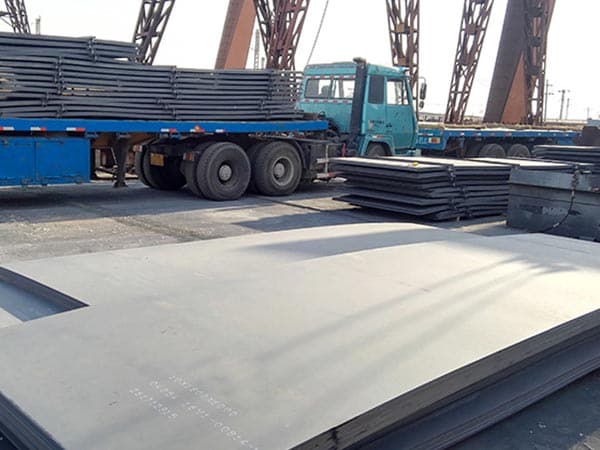
Understanding ZQS700L Automotive Steel and Its Welding Challenges
ZQS700L is a high-strength low-alloy (HSLA) steel specifically engineered for the automotive industry, particularly for heavy-duty truck frames, crossbeams, and structural components where weight reduction and high load-bearing capacity are paramount. With a minimum yield strength of 700 MPa, this material achieves its properties through a precise balance of micro-alloying elements like niobium (Nb), vanadium (V), and titanium (Ti), combined with controlled rolling and cooling processes. However, the very characteristics that make ZQS700L desirable—its high strength and refined microstructure—also introduce complexities during the welding process. One of the most critical interventions to ensure the integrity of a ZQS700L weldment is the application of preheating.
Welding preheating involves heating the base metal around the weld joint to a specific temperature before the welding arc is struck. For ZQS700L, this is not merely a precautionary step but a fundamental metallurgical requirement. The primary objective is to manage the thermal cycle of the weld, which directly influences the final mechanical properties and the longevity of the automotive component under dynamic loading conditions.
The Critical Role of Preheating in Preventing Cold Cracking
One of the most significant risks when welding high-strength steels like ZQS700L is hydrogen-induced cracking (HIC), also known as cold cracking. This phenomenon typically occurs after the weld has cooled down to near-ambient temperatures, sometimes hours or even days later. For HIC to occur, three factors must coexist: a susceptible microstructure (usually martensite), a sufficient level of diffusible hydrogen, and high residual tensile stress.
Preheating effectively disrupts this triad. By raising the initial temperature of the steel, preheating slows down the cooling rate of the weld metal and the heat-affected zone (HAZ). A slower cooling rate allows more time for diffusible hydrogen to escape from the weld pool and the surrounding base metal into the atmosphere. In ZQS700L, which often features a fine-grained ferritic-bainitic structure, preventing the entrapment of hydrogen is essential to maintain the fatigue resistance required for automotive chassis applications.
Optimizing the Microstructure of the Heat-Affected Zone (HAZ)
The Heat-Affected Zone is the area of the base metal that does not melt but undergoes significant microstructural changes due to the heat of welding. In ZQS700L, rapid cooling can lead to the formation of hard, brittle phases such as untempered martensite. This hardening increases the risk of brittle fracture and reduces the toughness of the joint.
Slowing the Cooling Rate: Preheating reduces the temperature gradient between the weld bead and the base material. This ensures that the cooling curve (often represented on a CCT diagram) stays within the regions that favor the formation of tougher phases like acicular ferrite or fine bainite rather than brittle martensite. By controlling the t8/5 cooling time (the time it takes to cool from 800°C to 500°C), engineers can tailor the hardness of the HAZ to stay within acceptable limits, typically below 350 HV for ZQS700L, ensuring the joint can withstand the vibrations and impacts typical of heavy-vehicle operation.
Reduction of Residual Stress and Distortion
Welding inherently introduces thermal stresses due to the localized heating and subsequent contraction of the metal. In high-strength steels like ZQS700L, these stresses can be substantial, leading to either immediate distortion of the frame or latent stresses that contribute to premature fatigue failure. Preheating creates a more uniform temperature distribution across the joint area. By reducing the thermal shock and the magnitude of the temperature differential, the volume of metal undergoing rapid expansion and contraction is minimized. This leads to a significant reduction in residual tensile stresses within the weldment, which is vital for maintaining the dimensional accuracy of complex automotive assemblies.
Technical Parameters for Preheating ZQS700L
The required preheating temperature for ZQS700L depends on several factors, including the thickness of the plates, the heat input of the welding process, and the carbon equivalent (Ceq) of the specific heat of steel. While ZQS700L is designed with a low carbon equivalent to enhance weldability, thicker sections (typically over 12mm) almost always require preheating.
| Plate Thickness (mm) | Recommended Preheating Temp (°C) | Interpass Temperature (°C) | Primary Benefit |
|---|---|---|---|
| < 8mm | Optional (20-50°C) | < 200°C | Moisture removal |
| 8mm - 16mm | 80°C - 120°C | 100°C - 200°C | Hydrogen diffusion |
| 16mm - 25mm | 120°C - 150°C | 150°C - 250°C | Hardness control |
| > 25mm | 150°C - 180°C | 180°C - 250°C | Stress reduction |
It is important to note that while preheating is beneficial, excessive heat (over-preheating) can be detrimental. If the interpass temperature exceeds 250-300°C for extended periods, the grain-refining precipitates (Nb/Ti carbides) in ZQS700L may coarsen, leading to a loss of yield strength and a decrease in low-temperature impact toughness.
Practical Implementation in Automotive Manufacturing
In a high-volume production environment, preheating must be implemented efficiently. Common methods include:
- Induction Heating: Offers rapid, uniform heating and is easily automated for robotic welding cells.
- Flame Heating: Uses oxy-fuel torches; requires skilled operators to ensure even temperature distribution and avoid localized overheating.
- Electrical Resistance Heating: Ideal for long joints where a constant temperature must be maintained over time.
Temperature monitoring is equally critical. Using tempilstiks (temperature-indicating crayons), infrared thermometers, or thermocouples ensures that the steel has reached the target temperature throughout its thickness before welding commences. For ZQS700L, ensuring the "soak time" is sufficient is just as important as the surface temperature reading.
Environmental and Operational Adaptability
The necessity of preheating is also influenced by the working environment. In colder climates or high-humidity workshops, the risk of moisture condensation on the steel surface is high. Moisture is a primary source of hydrogen. In these conditions, even thin sections of ZQS700L should be preheated to at least 50°C to drive off moisture, even if the metallurgical carbon equivalent suggests preheating is not strictly necessary for cracking prevention. This adaptability ensures that the quality of automotive structural welds remains consistent regardless of seasonal variations.
Enhancing Fatigue Life in Heavy-Duty Applications
Automotive frames made of ZQS700L are subjected to millions of cycles of stress during their service life. A weld joint that has been properly preheated exhibits a smoother transition in hardness and microstructure from the weld metal to the base metal. This homogeneity reduces the presence of "stress risers" at the microscopic level. By ensuring a tough, ductile HAZ through controlled preheating, the fatigue life of the entire vehicle chassis is significantly extended, reducing the likelihood of catastrophic failure in the field and lowering warranty costs for manufacturers.
Synergy Between Preheating and Consumable Selection
While preheating is a powerful tool, it works best when paired with the correct welding consumables. For ZQS700L, low-hydrogen electrodes (such as E8018-G) or high-quality solid wires (like ER110S-G) are typically used. Preheating complements these consumables by ensuring that the small amount of hydrogen they do introduce is given every opportunity to diffuse out of the system. This holistic approach to welding metallurgy is what allows ZQS700L to perform at its peak in the most demanding automotive environments.
Leave a message