
Where can purchase S700MC sheet with heavy thickness
Comprehensive guide on sourcing S700MC heavy thickness sheets, exploring mechanical properties, welding techniques, and top global suppliers for high-yield steel.
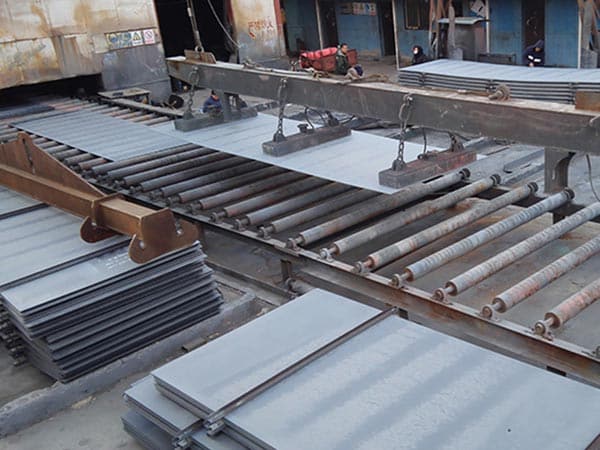
The Evolving Demand for S700MC Heavy Thickness Plates
In the modern engineering landscape, the push for weight reduction without sacrificing structural integrity has led to the widespread adoption of high-yield strength steels. S700MC, a thermomechanically rolled steel governed by the EN 10149-2 standard, stands at the forefront of this movement. While thin-gauge S700MC is common in the automotive sector, sourcing heavy thickness S700MC sheets (typically defined as thicknesses exceeding 12mm, reaching up to 20mm or 25mm) presents unique challenges and requires specialized metallurgical knowledge.
Finding a reliable supplier for heavy-gauge S700MC involves more than just checking stock lists. It requires an understanding of the Thermomechanically Controlled Processing (TMCP) limits. Unlike quenched and tempered steels (such as S690QL), S700MC achieves its strength through precise temperature control during the rolling process and micro-alloying with elements like Niobium (Nb), Vanadium (V), and Titanium (Ti). This ensures a fine-grained microstructure that offers superior toughness and weldability, even at increased thicknesses.
Technical Specifications and Material Composition
To understand why heavy thickness S700MC is a premium product, one must look at its chemical architecture. The low carbon content is critical for its excellent weldability, while the micro-alloying elements provide the necessary grain refinement. Below is a detailed look at the typical chemical requirements for S700MC according to EN 10149-2:
| Element | Maximum Content (%) |
|---|---|
| Carbon (C) | 0.12 |
| Manganese (Mn) | 2.10 |
| Silicon (Si) | 0.60 |
| Phosphorus (P) | 0.025 |
| Sulfur (S) | 0.015 |
| Aluminium (Al) | 0.015 |
| Nb + V + Ti | 0.22 |
For heavy thickness plates, maintaining these levels while ensuring uniform mechanical properties across the entire cross-section of the plate is a feat of modern metallurgy. The TMCP process must be strictly monitored to prevent the formation of coarse grains in the center of the plate, which could lead to reduced impact toughness.
Mechanical Performance at Increased Thickness
The primary reason engineers specify S700MC is its high yield strength. When dealing with heavy thicknesses, the consistency of this yield strength is paramount. S700MC offers a minimum yield strength of 700 MPa. However, as thickness increases, the cooling rate during production changes, which can affect the final properties. High-quality mills ensure that even at 20mm, the material retains its core characteristics.
| Property | Value |
|---|---|
| Minimum Yield Strength (MPa) | 700 |
| Tensile Strength (MPa) | 750 - 950 |
| Minimum Elongation (%) | 10 - 12 (depending on thickness) |
| Bending Radius (90°) | 2.0t to 2.5t (t = thickness) |
Impact Toughness: It is essential to note that S700MC is often tested for impact energy at low temperatures (e.g., -20°C or -40°C). For heavy-duty applications like crane booms or chassis components operating in cold climates, ensuring the material meets the S700MC-L (low temperature) designation is a critical sourcing requirement.
Processing Advantages: Bending and Welding
One of the standout features of S700MC, even in heavy gauges, is its excellent cold formability. Compared to traditional high-strength steels, S700MC allows for tighter bending radii. This is particularly beneficial for manufacturers of telescopic cranes and heavy-duty trailers who need to form complex shapes without the risk of cracking.
- Cold Bending: For heavy plates, it is recommended to use a larger die opening and ensure the edges are ground smooth to remove any micro-cracks from thermal cutting.
- Welding: Due to its low carbon equivalent (CEV), S700MC does not typically require preheating, which significantly reduces production time and costs. However, for heavy thicknesses, managing the heat input is vital to avoid softening the Heat Affected Zone (HAZ).
- Cutting: Laser and plasma cutting are the preferred methods. The clean edges produced by high-precision laser cutting are ideal for subsequent welding and forming operations.
Where to Purchase Heavy Thickness S700MC
Finding a supplier for heavy-gauge S700MC requires looking at top-tier steel mills and specialized stockholders. Because the production of heavy TMCP plates requires massive rolling force and sophisticated cooling systems, only a few global players dominate this niche.
1. European Mills: SSAB is perhaps the most well-known, marketing their S700MC under the brand Strenx 700 MC. They are capable of producing thicknesses that many other mills cannot reach while maintaining tight tolerances. ThyssenKrupp (Perform 700) and ArcelorMittal (Amstrong) also offer high-quality options in the European market.
2. Asian Manufacturers: In China, Baosteel and Wuyang Steel have developed advanced capabilities for high-strength TMCP plates. Wuyang, in particular, is known for its ability to produce extremely thick plates that meet international standards. These mills are excellent options for large-scale infrastructure projects or heavy machinery manufacturing.
3. Specialized Stockholders: If you require smaller quantities or immediate delivery, look for stockholders who specialize in high-yield steels. Companies that stock S690QL often carry S700MC as well. When purchasing from stock, always demand the EN 10204 3.1 or 3.2 Mill Test Certificate (MTC) to verify the chemical composition and mechanical properties of the specific heat number.
Strategic Considerations for Procurement
When sourcing S700MC heavy thickness sheets, price should not be the only factor. The total cost of ownership includes the ease of processing and the longevity of the final product. Surface quality is another major consideration; TMCP steels usually have a thin, tightly adherent scale that is easier to remove by shot blasting than the heavy scale found on normalized plates.
Furthermore, consider the flatness tolerances. For heavy plates used in automated welding cells, high flatness is non-negotiable. Leading mills often provide plates with flatness tolerances that are much stricter than the standard EN 10051 requirements, which can save hours of rework during the assembly phase.
Industry-Specific Applications for Heavy S700MC
The transition to heavy thickness S700MC is most visible in industries where the strength-to-weight ratio is a competitive advantage. In the Lifting and Transport sector, crane manufacturers use these plates for the base frames and outriggers, where the stresses are highest. By using S700MC instead of S355, they can reduce the weight of these components by up to 30%, allowing for higher lifting capacities.
In the Mining and Construction industry, heavy S700MC is used in the manufacturing of dump truck bodies and chassis. The material's ability to withstand dynamic loads and its resistance to fatigue make it ideal for the harsh environments found in open-pit mines. Similarly, in the Offshore and Marine sector, the weldability of S700MC simplifies the construction of complex support structures that must endure constant wave action and corrosive environments.
Quality Control and Verification
To ensure you are receiving genuine S700MC with the required heavy thickness properties, implement a rigorous quality check process. This includes:
- Verification of the TMCP process: Ensure the MTC explicitly states the delivery condition as 'M' (Thermomechanically rolled).
- Ultrasonic Testing (UT): For heavy plates, UT testing (e.g., according to EN 10160) is recommended to ensure there are no internal laminations or inclusions.
- Dimensional Inspection: Check thickness at multiple points to ensure it falls within the specified tolerances (e.g., EN 10051 Class A or B).
Sourcing S700MC in heavy gauges is a strategic decision that empowers engineers to push the boundaries of design. By partnering with reputable mills and focusing on the metallurgical integrity of the material, manufacturers can achieve significant gains in efficiency and performance.
Leave a message