
Is S960MC steel for construction machinery hot or cold rolled?
A comprehensive guide to S960MC steel, detailing its hot-rolled thermomechanical production process, mechanical properties, and critical role in construction machinery.
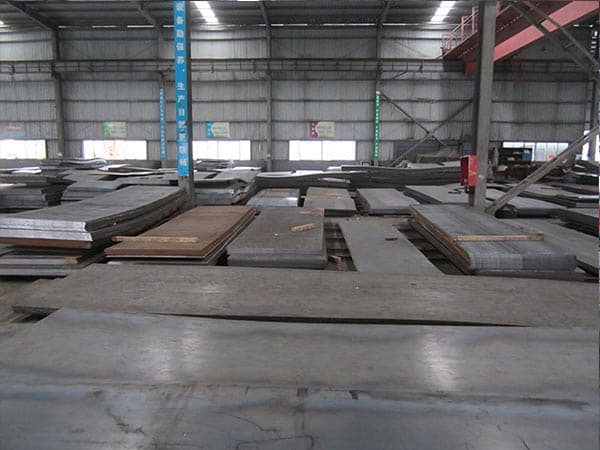
The Fundamental Production Process of S960MC Steel
Understanding whether S960MC steel is hot or cold rolled requires a deep dive into the EN 10149-2 standard. S960MC is a high-yield-strength steel specifically designed for cold forming, but its primary manufacturing state is hot-rolled. The 'M' in its designation stands for thermomechanically rolled, and 'C' indicates it is suitable for cold forming. Unlike traditional hot rolling, the thermomechanical control process (TMCP) involves precise temperature control and deformation rates during the rolling phase, followed by accelerated cooling.
This TMCP method is distinct from cold rolling. Cold rolling typically occurs at room temperature to achieve thinner gauges and superior surface finishes, whereas S960MC utilizes the heat of the rolling process to refine the grain structure. By manipulating the recrystallization of austenite, manufacturers produce a fine-grained microstructure that combines extreme strength with remarkable ductility. This process allows S960MC to reach a minimum yield strength of 960 MPa without the need for additional quenching and tempering cycles, which are common in S960QL grades.
Chemical Composition and Metallurgical Excellence
The performance of S960MC in heavy-duty machinery is rooted in its sophisticated chemical makeup. To maintain weldability and toughness, the carbon content is kept exceptionally low, usually below 0.12%. The strength is derived from micro-alloying elements such as Niobium (Nb), Vanadium (V), and Titanium (Ti).
| Element | Maximum Content (%) | Role in S960MC |
|---|---|---|
| Carbon (C) | 0.12 | Ensures weldability and prevents brittleness. |
| Manganese (Mn) | 2.10 | Increases hardenability and tensile strength. |
| Silicon (Si) | 0.60 | Deoxidizer and solid solution strengthener. |
| Aluminium (Al) | 0.015 | Grain refinement and nitrogen binding. |
| Nb + V + Ti | 0.22 | Micro-alloying for precipitation hardening. |
These elements work in synergy during the thermomechanical rolling process. Titanium and Niobium form stable carbides and nitrides that pin grain boundaries, preventing grain growth during the high-temperature phases of production. This results in a steel that is not only strong but also possesses high impact energy absorption capabilities, even at sub-zero temperatures.
Mechanical Properties and Structural Integrity
The primary reason construction machinery manufacturers opt for S960MC is its power-to-weight ratio. With a yield strength of 960 MPa, engineers can design thinner sections that carry the same loads as thicker, lower-grade steels. This weight reduction directly translates to higher fuel efficiency and increased payload capacity for mobile equipment.
- Yield Strength (ReH): Minimum 960 MPa, ensuring the structure resists permanent deformation under extreme loads.
- Tensile Strength (Rm): Ranges between 980 and 1250 MPa, providing a safety buffer against catastrophic failure.
- Elongation (A5): Typically around 7-10%, allowing for necessary plastic deformation during the forming process.
- Impact Toughness: Often tested at -20°C or -40°C to ensure the material remains ductile in arctic or high-altitude environments.
The hot-rolled TMCP state ensures that these properties are consistent throughout the entire coil or plate. Unlike cold-rolled steels, which might exhibit significant internal stresses, S960MC is relatively stable, though its high strength requires specialized equipment for further processing.
Advanced Processing: Bending and Cold Forming
Despite being a hot-rolled product, S960MC is engineered for cold forming. This means it can be bent into complex shapes like U-beams or hexagonal crane booms without cracking. However, due to its 960 MPa yield strength, the springback effect is much more pronounced than with standard S355 grades. Fabricators must use larger bending radii and high-tonnage press brakes.
When bending S960MC, it is crucial to consider the rolling direction. Bending transverse to the rolling direction generally allows for tighter radii compared to bending parallel to it. Proper lubrication and polished tooling are recommended to prevent surface scoring, which could act as a stress concentrator in high-fatigue applications.
Welding Characteristics of S960MC
Welding S960MC requires a different approach than traditional structural steels. Because the strength is achieved through TMCP and micro-alloying, excessive heat input can soften the heat-affected zone (HAZ), leading to a localized loss of strength. Low heat input welding techniques, such as pulsed MAG welding or laser-hybrid welding, are preferred.
Preheating is generally not required for S960MC due to its low carbon equivalent (CEV), which reduces the risk of cold cracking. However, interpass temperatures must be strictly monitored to ensure they do not exceed 150°C to 200°C. Using high-strength consumables that match the base metal's yield strength is essential for maintaining the integrity of the joint.
Applications in Construction Machinery
The demand for S960MC is driven by the evolution of lifting and transport equipment. In the production of telescopic cranes, S960MC allows for longer boom reaches and higher lift capacities. The reduction in boom weight lowers the center of gravity of the entire vehicle, improving stability during operation.
In the concrete pump industry, S960MC is used for the distribution booms. These components are subject to high-frequency vibrations and varying loads. The fatigue resistance of S960MC, combined with its high strength, ensures a long service life even under the rigorous conditions of modern construction sites. Other applications include heavy-duty trailer chassis, forestry harvesters, and mining equipment where every kilogram of weight saved is a kilogram of extra payload gained.
Environmental Adaptability and Longevity
Construction machinery often operates in harsh environments, from salt-laden coastal regions to dusty deserts. S960MC's fine-grained structure provides a degree of inherent resistance to atmospheric corrosion compared to coarse-grained steels. Furthermore, its high toughness ensures that the material can withstand sudden impacts at low temperatures, which is vital for machinery operating in northern latitudes during winter.
To further enhance longevity, S960MC is highly compatible with modern coating systems. Whether it is powder coating, wet painting, or galvanizing (with careful consideration of hydrogen embrittlement), the surface of hot-rolled S960MC provides excellent adhesion for protective layers. This ensures that the structural integrity provided by the 960 MPa yield strength is protected from the elements for decades.
S960MC vs. S960QL: Choosing the Right Grade
A common point of confusion is the difference between S960MC and S960QL. While both offer a 960 MPa yield strength, S960QL is a quenched and tempered (Q+T) steel plate, usually available in thicker dimensions. S960MC is a thermomechanically rolled (TMCP) product, typically available in thinner sheets and coils (up to 12mm or 15mm). S960MC offers better cold-forming properties and is generally more cost-effective for high-volume manufacturing of lighter components, whereas S960QL is reserved for heavy structural plates where thickness is the primary requirement.
Leave a message