
What is the S900MC construction machinery steel continuous casting
A comprehensive guide to S900MC high-strength steel, detailing its continuous casting process, chemical composition, mechanical properties, and industrial applications.
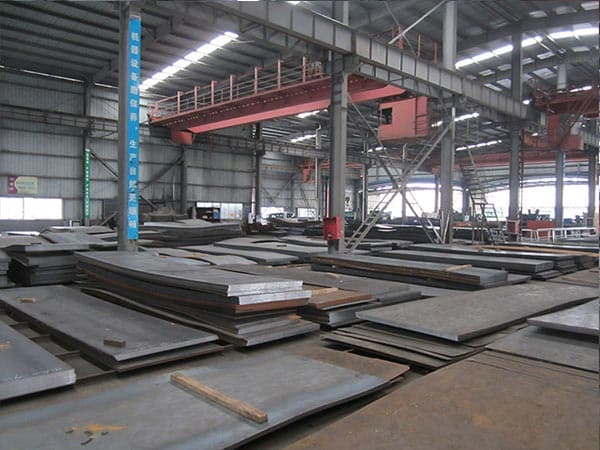
The Evolution of S900MC in High-Strength Engineering
In the modern industrial landscape, the demand for materials that combine extreme strength with reduced weight has never been higher. S900MC represents the pinnacle of high-yield strength structural steel, specifically designed for the demanding environment of construction machinery. This grade, governed by the EN 10149-2 standard, is a thermomechanically rolled steel that offers a minimum yield strength of 900 MPa. The 'MC' suffix denotes its thermomechanical rolling condition, which is crucial for achieving its fine-grained microstructure. Unlike traditional quenched and tempered steels, S900MC achieves its properties through a combination of precise chemical alloying and controlled cooling during the rolling process, starting from the critical phase of continuous casting.
The Critical Role of Continuous Casting in S900MC Production
The journey of S900MC begins in the continuous casting machine (CCM), where molten steel is transformed into solid slabs. For a high-strength grade like S900MC, the continuous casting process is not merely a solidification step; it is the foundation of the steel's ultimate performance. Because S900MC relies heavily on micro-alloying elements like Niobium (Nb), Vanadium (V), and Titanium (Ti), the uniformity of these elements during solidification is paramount.
During casting, precise control over the superheat temperature in the tundish is required to minimize segregation. If the cooling rate is inconsistent, micro-alloying elements can precipitate prematurely or unevenly, leading to 'soft spots' or brittle zones in the final plate. Advanced techniques such as Electromagnetic Stirring (EMS) are often employed in the mold to ensure a more uniform distribution of solutes and to refine the primary grain structure. Furthermore, Soft Reduction technology is applied at the end of the solidification track to compress the center of the slab, effectively eliminating central porosity and reducing carbon segregation, which is vital for the steel's weldability and toughness.
Chemical Composition: The Science of Micro-alloying
The exceptional strength-to-weight ratio of S900MC is a result of its sophisticated chemical design. By keeping the carbon content low, manufacturers ensure excellent weldability and cold-forming properties, while the strength is derived from grain refinement and precipitation hardening.
| Element | Max Content (%) | Role in S900MC |
|---|---|---|
| Carbon (C) | 0.20 | Ensures basic strength while maintaining weldability. |
| Manganese (Mn) | 2.20 | Increases hardenability and solid solution strengthening. |
| Silicon (Si) | 0.60 | Deoxidizer and contributes to strength. |
| Niobium (Nb) | 0.09 | Grain refinement during thermomechanical rolling. |
| Titanium (Ti) | 0.25 | Fixes nitrogen and prevents grain growth at high temperatures. |
| Phosphorus (P) | 0.025 | Kept low to prevent cold shortness and improve toughness. |
Mechanical Properties and Performance Metrics
S900MC is engineered to withstand extreme mechanical loads. Its primary characteristic is the 900 MPa minimum yield strength, which allows engineers to design thinner, lighter components without sacrificing structural integrity. This is particularly beneficial for mobile equipment where every kilogram saved translates into higher payload capacity or lower fuel consumption.
- Yield Strength (ReH): Minimum 900 MPa.
- Tensile Strength (Rm): 930 - 1200 MPa, providing a robust safety margin.
- Elongation (A5): Typically around 7-10%, allowing for necessary deformation before fracture.
- Impact Toughness: Often tested at -20°C or -40°C to ensure performance in arctic or high-altitude environments.
The fine-grained microstructure achieved through the combination of continuous casting precision and thermomechanical rolling ensures that the steel remains ductile even at these high strength levels. This prevents brittle failure, a common risk in lower-quality high-strength materials.
Processing and Fabrication: Welding and Forming
One of the significant advantages of S900MC, despite its extreme strength, is its relative ease of fabrication. Because it is a low-alloy steel, it does not require the intensive preheating often associated with high-carbon quenched and tempered steels. However, specific guidelines must be followed to maintain the integrity of the Heat Affected Zone (HAZ).
When welding S900MC, it is critical to control the heat input. Excessive heat can lead to grain coarsening in the HAZ, which significantly reduces the local yield strength and toughness. Using high-quality filler materials with matching or slightly lower strength levels is recommended. For cold forming, S900MC exhibits remarkable flexibility. It can be bent to tight radii, provided the bending axis is perpendicular to the rolling direction, making it ideal for complex geometric shapes in crane booms and chassis frames.
Diverse Applications in Construction Machinery
The application of S900MC has revolutionized the design of heavy-duty machinery. By replacing standard S355 or S700MC grades with S900MC, manufacturers can achieve weight reductions of up to 30-40% in structural components.
Mobile Cranes and Telescopic Booms: The high strength of S900MC allows for longer reach and higher lifting capacities while keeping the crane's overall weight within road-legal limits.
Concrete Pump Arms: These components undergo high-frequency fatigue cycles. The superior fatigue resistance of S900MC, derived from its clean continuous casting origin, extends the service life of these machines.
Heavy-Duty Truck Chassis: In the transport industry, S900MC is used to create lightweight frames that can carry heavier loads, directly impacting the economic efficiency of logistics operations.
Environmental Adaptation and Sustainability
S900MC is not only a performance-driven material but also a sustainable choice. The ability to build lighter machines means lower CO2 emissions during the machine's operational life. Furthermore, the thermomechanical rolling process used after continuous casting is more energy-efficient than the traditional quenching and tempering route, as it utilizes the heat from the rolling process to achieve the desired microstructure, reducing the overall carbon footprint of the steel production itself.
The environmental adaptability of S900MC is also seen in its atmospheric corrosion resistance. While not a weathering steel, its dense surface and uniform chemistry provide a better substrate for modern coating systems, ensuring long-term durability in harsh construction environments involving salt, mud, and extreme temperature fluctuations.
Technical Challenges and Quality Control
Producing S900MC requires a high level of metallurgical expertise. During the continuous casting phase, any inclusions or non-metallic particles can become stress concentrators in the final 900 MPa product. Therefore, vacuum degassing and advanced filtration are mandatory during the steelmaking process. Every slab is inspected for surface cracks and internal soundness before it proceeds to the rolling mill. This rigorous quality control ensures that every plate of S900MC delivered to the customer meets the stringent safety requirements of the construction machinery industry.
Understanding the synergy between the initial solidification in continuous casting and the subsequent thermomechanical treatments is key to mastering S900MC. As engineering demands continue to push the boundaries of what is possible, S900MC stands as a testament to the progress in metallurgical science, providing a reliable, high-performance solution for the toughest challenges on earth.
Leave a message