
Is en 10149-2 pdf free download stainless steel?
Technical guide clarifying EN 10149-2 standards. Learn why it is not stainless steel, explore mechanical properties of S355MC to S700MC, and understand its applications in heavy industry.
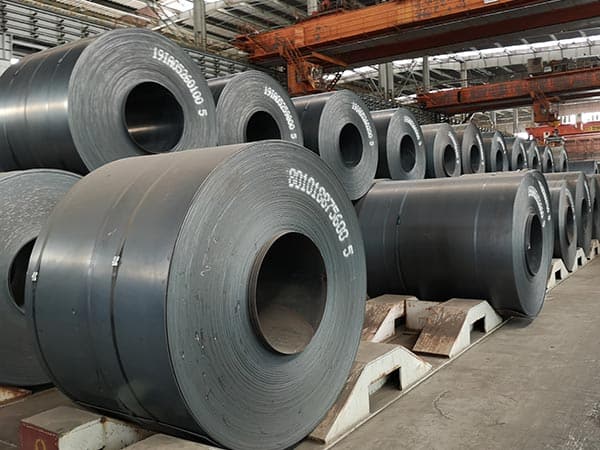
Clarifying the Misconception: Is EN 10149-2 Stainless Steel?
When searching for EN 10149-2 PDF free download, many procurement professionals and engineers encounter a fundamental question: Is this material a type of stainless steel? To provide an immediate technical answer: No, EN 10149-2 is not stainless steel. It is a European standard for hot-rolled flat products made of high yield strength steels specifically designed for cold forming.
While stainless steels are governed by standards like EN 10088 and are characterized by high chromium content (minimum 10.5%) for corrosion resistance, EN 10149-2 focuses on thermomechanically rolled steels. These are low-alloy steels engineered for structural integrity, weight reduction, and exceptional weldability. Understanding the distinction is critical for material selection in automotive, construction, and heavy machinery sectors.
Technical Specifications of EN 10149-2
The EN 10149-2 standard covers grades ranging from S315MC to S700MC. The 'S' denotes structural steel, the number represents the minimum yield strength in megapascals (MPa), and 'MC' indicates the delivery condition: thermomechanically rolled (M) and suitable for cold forming (C).
These steels achieve their high strength through a specialized Thermomechanical Controlled Processing (TMCP). Unlike traditional normalized steels, TMCP involves precise temperature control during the rolling process and accelerated cooling. This results in an extremely fine-grained microstructure, which provides a unique combination of high strength and superior toughness at low temperatures.
| Steel Grade | Yield Strength (min MPa) | Tensile Strength (MPa) | Elongation (min %) |
|---|---|---|---|
| S355MC | 355 | 430 - 550 | 19 |
| S420MC | 420 | 480 - 620 | 16 |
| S500MC | 500 | 550 - 700 | 12 |
| S700MC | 700 | 750 - 950 | 10 |
Chemical Composition and Weldability
One of the primary reasons EN 10149-2 is favored over traditional carbon steels is its low carbon equivalent (CEV). By utilizing micro-alloying elements such as Niobium (Nb), Vanadium (V), and Titanium (Ti), manufacturers can achieve high strength without increasing carbon content. This makes the steel exceptionally easy to weld using standard industrial methods like MIG, TIG, and submerged arc welding.
- Carbon (C): Kept below 0.12% to ensure ductility and prevent brittle fractures in the heat-affected zone (HAZ).
- Manganese (Mn): Enhances strength and toughness, typically ranging from 1.3% to 2.1% depending on the grade.
- Silicon (Si): Used for deoxidation, restricted to maintain surface quality during galvanizing.
- Micro-alloys: The combination of Nb, V, and Ti promotes grain refinement, which is the secret behind the S700MC's high performance.
Mechanical Performance and Cold Forming Capabilities
The "C" in the MC designation highlights the material's suitability for cold forming. Unlike standard structural steels that may crack when bent into tight radii, EN 10149-2 grades exhibit remarkable bendability. This allows manufacturers to create complex geometries for truck chassis, crane booms, and agricultural equipment without the need for pre-heating.
Fatigue Resistance: Because of the fine-grained structure produced by TMCP, these steels offer superior resistance to fatigue loading. In dynamic environments like the transport industry, where components are subjected to constant vibration and stress cycles, using S500MC or S700MC significantly extends the service life of the equipment.
Environmental Adaptability and Weight Reduction
In the modern engineering landscape, "Lightweighting" is a primary objective. By replacing traditional S235 or s355jr steels with high-strength EN 10149-2 grades, engineers can reduce the thickness of structural components by up to 30-50% while maintaining the same load-bearing capacity. This leads to:
- Reduced Fuel Consumption: Lighter vehicles and trailers consume less fuel and have lower CO2 emissions.
- Increased Payload: Lower tare weight allows for higher cargo capacity in logistics and transport.
- Resource Efficiency: Using less steel per project reduces the overall environmental footprint of the manufacturing process.
Comparison: EN 10149-2 vs. Stainless Steel
To further clarify the difference for those seeking EN 10149-2 PDF downloads, it is helpful to compare the core attributes of these two distinct steel families. While both are essential in engineering, they serve vastly different purposes.
| Feature | EN 10149-2 (HSLA) | Stainless Steel (EN 10088) |
|---|---|---|
| Primary Benefit | High Strength / Weight Ratio | Corrosion Resistance |
| Microstructure | Fine-grained Ferrite/Pearlite | Austenitic, Ferritic, or Martensitic |
| Chromium Content | Trace amounts (< 0.3%) | Minimum 10.5% |
| Cost | Economical for structural use | Premium due to Nickel/Chrome alloys |
| Typical Grade | S700MC | 304 / 316L |
Industry-Specific Applications
The versatility of EN 10149-2 makes it a staple in industries where durability and weight are critical factors. Its application goes far beyond simple structural beams.
Automotive and Transportation: This is the most dominant sector for S420MC and S500MC. It is used for truck frames, cross members, and cold-pressed parts. The ability to absorb energy during impact makes it an ideal choice for safety-critical components.
Lifting and Excavation: For mobile cranes and telescopic handlers, the high yield strength of S700MC is indispensable. It allows for longer reach and higher lifting capacities without making the machinery too heavy to transport on public roads.
Agricultural Machinery: Plows, trailers, and harvesters benefit from the abrasion resistance and toughness of these steels, especially when operating in harsh, rocky soil conditions.
Sourcing and Quality Assurance
When looking for technical data or an EN 10149-2 PDF, it is vital to ensure that the material complies with the latest European standards. Manufacturers must provide a Mill Test Certificate (MTC) according to EN 10204 Type 3.1. This document verifies the chemical analysis and mechanical testing (yield, tensile, elongation, and impact energy) of the specific batch of steel.
Surface quality is another critical aspect. EN 10149-2 products are usually delivered with a surface finish according to EN 10163-2 Class A, Subclass 1. This ensures that the steel is free from defects like cracks, shells, or scales that could compromise the integrity of the cold-forming process.
Future Trends in High Yield Steel
The evolution of EN 10149-2 continues with the development of even higher strength grades, such as S900MC and S960MC, which are increasingly utilized in specialized lifting equipment. As global industries pivot toward green energy, the demand for high-strength steels in wind turbine towers and solar tracking systems is expected to rise. These materials provide the necessary stiffness and strength to withstand extreme wind loads while minimizing the amount of raw material required.
Engineers are also focusing on the low-temperature toughness of these steels. Grades marked with 'L' (e.g., S700MCK2) are tested for impact energy at -40°C or -60°C, making them suitable for use in arctic environments or high-altitude applications where standard carbon steels would become brittle and fail.
Leave a message