
What is the difference between open flat and original S315MC automotive steel factory direct sales
A professional comparison between open flat and original S315MC automotive steel, covering mechanical properties, processing differences, and factory direct procurement advantages.
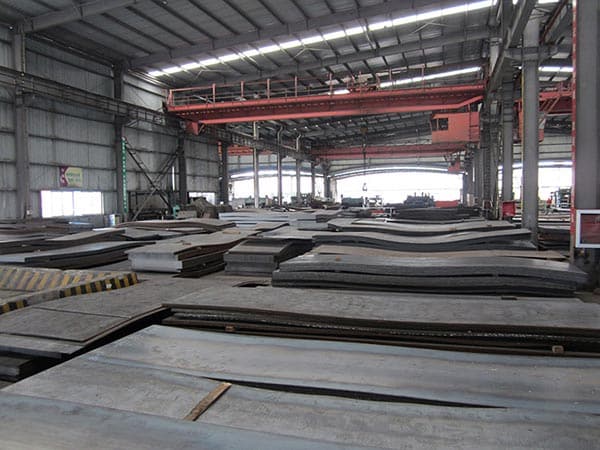
The Technical Essence of S315MC Automotive Steel
S315MC is a high-yield-strength, cold-forming steel specifically designed under the EN 10149-2 standard. As the automotive industry shifts toward lightweighting and enhanced safety, this material has become a cornerstone for structural components. When sourcing from factory direct sales, procurement officers often face the choice between original coils and open flat sheets. Understanding the metallurgical and physical distinctions between these two states is critical for maintaining production efficiency and part integrity.
The 'MC' suffix denotes that the steel is thermomechanically rolled, ensuring a fine-grained microstructure that balances strength with exceptional ductility. Unlike traditional hot-rolled plates, S315MC provides a higher strength-to-weight ratio, allowing manufacturers to reduce thickness without compromising the structural load-bearing capacity of vehicle frames and cross-members.
Defining Original Coil vs. Open Flat Material
Original S315MC refers to the steel as it comes directly from the hot strip mill. It is wound into coils and retains the physical state of the rolling process. This material is typically used by large-scale manufacturers with their own decoiling and leveling lines or those performing continuous stamping operations.
Open Flat S315MC (also known as decoiled or leveled sheet) is produced by taking the original coil and passing it through a leveling machine to flatten it, followed by transverse shearing to specific lengths. While it offers convenience for small-to-medium enterprises, the process of leveling introduces physical changes to the steel that must be accounted for in high-precision engineering.
Chemical Composition and Material Stability
The chemical composition of S315MC is strictly controlled to ensure weldability and formability. The use of micro-alloying elements like Niobium (Nb), Vanadium (V), and Titanium (Ti) allows for grain refinement. This composition remains identical between original and open flat versions, but the physical handling can affect the surface chemistry slightly due to exposure.
| Element | C (max) | Mn (max) | Si (max) | P (max) | S (max) | Al (min) |
|---|---|---|---|---|---|---|
| S315MC Content (%) | 0.12 | 1.30 | 0.50 | 0.025 | 0.020 | 0.015 |
The low carbon content ensures that the heat-affected zone (HAZ) during welding does not become brittle, a vital factor for automotive safety components. Factory direct sales ensure that the ladle analysis matches the final product, providing traceability from the ore to the finished sheet.
Mechanical Properties: Does Leveling Change Performance?
One of the most frequent questions regarding S315MC is whether the process of 'opening' or flattening a coil alters its mechanical properties. The answer lies in the Bauschinger effect and residual stress. Original coils have a consistent internal stress profile from the cooling process. When a coil is flattened, the outer layers are compressed and the inner layers are stretched, which can lead to slight variations in yield strength across the sheet thickness.
| Property | Yield Strength (MPa) | Tensile Strength (MPa) | Elongation A80mm (%) | Bending (180°) |
|---|---|---|---|---|
| S315MC Standard | ≥ 315 | 390 - 510 | ≥ 20 (t < 3mm) | 0.5t (Mandrel Dia) |
Original material often exhibits better uniformity in elongation. Open flat sheets, if not leveled by high-precision multi-roll levelers, may retain 'coil set' or 'cross bow' tendencies, which can cause issues during automated laser cutting or high-speed CNC punching. High-quality factory direct processing centers use tension leveling to minimize these residual stresses.
Processing Performance and Environmental Adaptability
S315MC is prized for its cold-forming capabilities. It can be bent, flanged, and cold-drawn into complex shapes. The choice between original and open flat significantly impacts the manufacturing workflow:
- Surface Quality: Original coils are less likely to have surface scratches or 'roller marks' that can sometimes occur during the decoiling process. For parts requiring high-quality coating or painting, original material is often preferred.
- Dimensional Accuracy: Open flat sheets allow for customized lengths, reducing scrap rates for specific part dimensions. However, original coils allow for continuous nesting in CAD/CAM software, which can optimize material usage by up to 15%.
- Stress Relief: During laser cutting, original material might warp slightly as internal stresses are released. Properly leveled open flat sheets are designed to remain flat during and after the cutting process, making them ideal for large, flat structural plates.
In terms of environmental adaptability, S315MC performs well in varied climates. Its fine-grained structure provides better resistance to atmospheric corrosion compared to standard carbon steels, although it still requires oiling or pickling (S315MC+P) if stored in high-humidity environments. Factory direct sales usually offer options for dry, oiled, or pickled and oiled (P&O) surfaces to suit specific storage conditions.
Application Industry Expansion
While primarily an automotive steel, the versatility of S315MC has seen it expand into several other demanding sectors. Its high strength and excellent weldability make it a preferred choice for:
- Heavy Machinery: Crane arms, excavator chassis, and agricultural equipment where weight reduction is necessary for fuel efficiency.
- Logistics Equipment: High-strength shelving, automated warehouse racking, and container corner fittings.
- Renewable Energy: Solar tracking brackets and wind turbine internal structural components.
- Commercial Vehicles: Truck longitudinal beams, cross-members, and trailer frames where the S315MC's fatigue resistance is paramount.
The transition from S235 or S355 standard structural steels to S315MC allows for thinner gauges, which directly translates to lower transportation costs and higher payload capacities for end-users.
Why Choose Factory Direct Sales for S315MC?
Purchasing S315MC through factory direct channels offers several strategic advantages beyond mere pricing. Firstly, quality assurance is absolute. You receive mill test certificates (MTC) that guarantee the chemical and mechanical properties align with EN 10149-2. Secondly, customization is more accessible. Factories can adjust the rolling parameters or the leveling intensity based on the specific needs of the client's stamping dies.
Furthermore, factory direct sales eliminate the risks associated with 'mixed batches' often found in secondary markets. In automotive manufacturing, where a single weak bracket can lead to a recall, the homogeneity of the material provided by the mill is a non-negotiable safety requirement. The technical support provided by factory engineers can also assist in optimizing the bending radius and welding parameters for S315MC, ensuring that the final product maximizes the steel's inherent strengths.
Whether opting for the raw efficiency of original coils or the ready-to-use convenience of open flat sheets, S315MC remains a premier choice for modern engineering. By understanding the subtle differences in stress profiles and surface integrity, manufacturers can better align their material selection with their specific production technology and quality standards.
Leave a message