
What is en 10025 S355MC cold rolled plate zero cut
A comprehensive guide to S355MC steel plates, covering technical specifications, mechanical properties, cold forming advantages, and the benefits of zero-cut customization services.
Understanding the Technical Identity of S355MC
In the steel industry, nomenclature often leads to confusion between standards. While many users search for EN 10025 S355MC, it is technically accurate to note that S355MC is governed by the EN 10149-2 standard. This grade is a high-yield strength steel produced through thermomechanical rolling, specifically optimized for cold forming. The designation 'S' refers to structural steel, '355' indicates a minimum yield strength of 355 MPa, and 'MC' signifies its thermomechanically rolled state (M) and its suitability for cold forming (C).
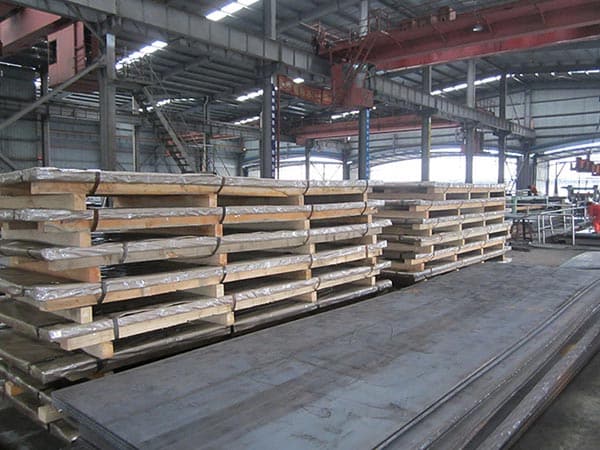
The 'Zero Cut' aspect refers to a value-added service where plates are precision-cut to specific dimensions required by the customer, eliminating the need for the end-user to purchase full-sized mill sheets. This practice reduces scrap rates, optimizes logistics, and streamlines the manufacturing workflow for complex engineering projects.
Chemical Composition and Micro-Alloying Excellence
The superior performance of S355MC is not accidental; it is the result of precise chemical engineering. Unlike standard carbon steels, S355MC utilizes micro-alloying elements such as Niobium (Nb), Vanadium (V), and Titanium (Ti). These elements facilitate grain refinement during the thermomechanical rolling process.
By maintaining a very low carbon content (typically below 0.12%), the steel achieves exceptional weldability and toughness. The controlled addition of Manganese ensures adequate strength without compromising the material's ability to be bent or folded. Below is a typical chemical breakdown for this grade:
| Element | Maximum Content (%) |
|---|---|
| Carbon (C) | 0.12 |
| Manganese (Mn) | 1.50 |
| Silicon (Si) | 0.50 |
| Phosphorus (P) | 0.025 |
| Sulfur (S) | 0.020 |
| Aluminium (Al) | 0.015 |
This lean chemistry ensures that the heat-affected zone (HAZ) during welding remains stable, preventing brittleness and ensuring the structural integrity of the final assembly.
Mechanical Properties and Structural Reliability
The defining characteristic of S355MC is its high yield-to-tensile ratio. This allows engineers to design lighter structures without sacrificing safety. The thermomechanical rolling process creates a fine-grained microstructure that provides a unique combination of strength and ductility.
- Yield Strength: Minimum 355 MPa, providing a robust foundation for load-bearing components.
- Tensile Strength: Ranges between 430 and 550 MPa, ensuring the material can withstand significant stress before failure.
- Elongation: Typically exceeds 19% (for thicknesses under 3mm), allowing for complex shapes to be formed without cracking.
- Impact Toughness: Excellent performance even at low temperatures, making it suitable for outdoor and high-stress environments.
These properties make S355MC a preferred choice over standard s355jr plates when weight reduction is a priority. By using a thinner S355MC plate to achieve the same strength as a thicker mild steel plate, manufacturers can reduce the overall weight of vehicles and machinery, leading to better fuel efficiency and lower material costs.
Cold Forming and Processing Advantages
One of the primary reasons for choosing S355MC is its exceptional cold-forming capability. The 'C' in its name is a testament to its ability to be bent, flanged, and cold-rolled into intricate profiles. This is particularly valuable in the production of longitudinal beams, cross-members, and chassis components.
When processing S355MC through 'Zero Cut' services, the material's internal stress levels are a critical consideration. Because it is thermomechanically rolled, it exhibits very low residual stress compared to traditional hot-rolled plates. This means that when the plate is laser-cut or plasma-cut to specific 'zero cut' dimensions, it remains flat and does not warp, ensuring high precision for subsequent robotic welding or automated assembly.
The surface quality of S355MC is also superior. It typically features a thin, tightly adherent scale that is easily removed by pickling or shot blasting, providing an ideal substrate for powder coating, galvanizing, or painting.
Strategic Benefits of Zero Cut Services
The 'Zero Cut' (or custom-cut) model is transforming how manufacturers source S355MC. Instead of managing large inventories of standard 1500x6000mm or 2000x6000mm plates, companies can order the exact geometries required for their production line. This approach offers several industrial advantages:
- Waste Reduction: Precision nesting software ensures that material utilization is maximized, often reaching over 90% efficiency.
- Cost Efficiency: Customers only pay for the net weight of the parts, avoiding the costs associated with transporting and recycling offcuts.
- Production Speed: Pre-cut plates arrive ready for the press brake or welding station, significantly reducing lead times.
- Inventory Management: It frees up warehouse space and reduces the capital tied up in raw material stock.
For high-strength grades like S355MC, where material costs are higher than standard structural steels, the 'Zero Cut' strategy is particularly effective in maintaining a competitive edge in tight-margin industries like automotive and heavy equipment manufacturing.
Diverse Applications Across Modern Industries
The versatility of S355MC allows it to bridge the gap between standard structural steel and high-performance engineering alloys. Its adoption is widespread across sectors that demand durability and weight optimization.
Automotive and Transportation: S355MC is the backbone of the commercial vehicle industry. It is used extensively for truck frames, chassis components, and cold-pressed parts. Its high strength allows for thinner sections, which increases the payload capacity of trailers and heavy-duty trucks.
Construction and Lifting Equipment: Crane booms, telescopic arms, and agricultural machinery rely on S355MC for its fatigue resistance. The material can withstand repetitive loading cycles without developing micro-cracks, which is essential for the safety of lifting operations.
Energy and Infrastructure: In the renewable energy sector, S355MC is utilized for mounting structures in solar farms and components for wind turbine nacelles. Its ability to withstand environmental stressors while remaining easy to fabricate makes it an ideal candidate for large-scale infrastructure projects.
Environmental Adaptability and Sustainability
Modern engineering emphasizes the lifecycle impact of materials. S355MC contributes to sustainability through its high strength-to-weight ratio. By reducing the amount of steel required for a structure, the carbon footprint associated with steel production, transportation, and end-of-life recycling is significantly lowered.
Furthermore, the 'Zero Cut' process aligns with circular economy principles by ensuring that all scrap generated at the cutting facility is immediately collected and returned for recycling, rather than being lost in a fragmented supply chain. The fine-grained structure of S355MC also provides a degree of atmospheric corrosion resistance that exceeds that of basic carbon steels, extending the service life of unpainted components in mild environments.
When selecting S355MC for a project, it is essential to verify the mill certificates to ensure compliance with EN 10149-2. The integration of high-quality material with precision 'Zero Cut' services provides a powerful solution for engineers looking to push the boundaries of modern design and manufacturing efficiency.
Leave a message