
What is the BS700MC cold forming steel coil available size
Discover the available sizes, mechanical properties, and industrial applications of BS700MC cold forming steel coil. Learn how this high-strength steel optimizes weight and performance.
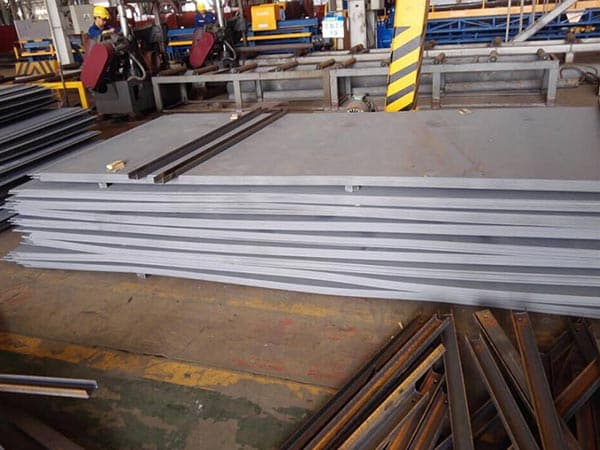
Technical Specifications and Dimensional Availability of BS700MC
BS700MC stands as a benchmark in the category of high-yield strength steels, specifically designed for cold forming processes. This thermomechanically rolled steel provides a unique combination of extreme strength and excellent ductility. When sourcing BS700MC cold forming steel coil, the available size range is a critical factor for engineering design. Typically, modern steel mills produce these coils in a thickness range from 2.0mm to 12.0mm. For specialized heavy-duty applications, some advanced production lines can extend this thickness up to 16.0mm. The standard width for these coils generally fluctuates between 1000mm and 1500mm, though slit-to-width options are frequently provided to meet specific manufacturing footprints.
The availability of specific dimensions often depends on the rolling mill's capacity to maintain the precise thermomechanical control process (TMCP) required for the 700MPa yield strength. Thinner gauges (2.0mm - 4.0mm) are highly sought after in the automotive sector for structural reinforcements, while thicker gauges (8.0mm - 12.0mm) find their home in the heavy machinery and crane industries. Understanding the relationship between thickness and coil weight is also vital; most industrial BS700MC coils weigh between 15 to 28 metric tons, with internal diameters typically set at 610mm or 760mm to fit standard decoiling equipment.
Chemical Composition and the Role of Micro-alloying
The performance of BS700MC is not merely a result of heat treatment but a consequence of a sophisticated chemical balance. By utilizing micro-alloying elements such as Niobium (Nb), Vanadium (V), and Titanium (Ti), manufacturers achieve a fine-grained microstructure that is essential for both strength and toughness. The carbon content is kept deliberately low to ensure superior weldability and to prevent the formation of brittle phases during the cooling process.
| Element | Carbon (C) | Silicon (Si) | Manganese (Mn) | Phosphorus (P) | Sulfur (S) | Aluminium (Al) |
|---|---|---|---|---|---|---|
| Max % | 0.12 | 0.50 | 2.10 | 0.025 | 0.015 | 0.015 |
The integration of these elements allows the steel to maintain a high yield point without the need for expensive alloying additions. Titanium, for instance, helps in stabilizing nitrogen and forming fine carbides that pin grain boundaries during the rolling process. This grain refinement is the primary mechanism that allows BS700MC to remain ductile even at yield strengths exceeding 700 MPa.
Mechanical Properties and Structural Integrity
The defining characteristic of BS700MC is its mechanical profile. Unlike traditional structural steels, BS700MC offers a high strength-to-weight ratio, which is the cornerstone of modern lightweighting strategies. Engineers can reduce the thickness of structural members by up to 30% compared to S355 grade steel without compromising the load-bearing capacity of the assembly.
| Property | Yield Strength (MPa) | Tensile Strength (MPa) | Elongation A5 (%) | Min. Bend Radius (180°) |
|---|---|---|---|---|
| Value | ≥ 700 | 750 - 950 | ≥ 12 | 1.5t (t=thickness) |
High yield strength ensures that the material can withstand significant stress before permanent deformation occurs. The tensile strength range of 750 to 950 MPa provides a safety buffer for extreme loading conditions. Furthermore, the elongation value of at least 12% indicates that despite its hardness, the material retains enough plasticity to undergo complex cold forming operations without cracking.
Cold Forming Performance and Fabrication Advantages
The "MC" designation signifies that the steel is thermomechanically rolled and intended for cold forming. This means the material is optimized for processes such as bending, flanging, and cold pressing. One of the most significant advantages of BS700MC is its predictable springback behavior. When designing dies for high-strength steel, engineers must account for the tendency of the material to return toward its original shape after the forming pressure is released. BS700MC, due to its consistent grain structure, offers more predictable springback compared to lower-grade hot-rolled steels.
Bending BS700MC requires attention to the minimum bend radius. For thicknesses under 6mm, a bend radius of 1.5 times the thickness (1.5t) is generally recommended when bending transverse to the rolling direction. This ensures that the outer fibers of the bend do not exceed the material's ultimate tensile strain, preventing micro-cracks that could lead to structural failure under fatigue. Using high-quality lubrication and polished tooling can further enhance the surface finish of the formed parts.
Welding Characteristics in High-Strength Applications
Welding BS700MC requires a nuanced approach to maintain the properties achieved during the TMCP rolling process. Because the strength is derived from grain refinement rather than high carbon content, the steel has a very low carbon equivalent (CEV). This makes it less susceptible to cold cracking in the heat-affected zone (HAZ). However, excessive heat input must be avoided to prevent grain growth in the HAZ, which could locally reduce the yield strength.
Recommended welding methods include GMAW (Gas Metal Arc Welding) and SAW (Submerged Arc Welding). Using low-hydrogen consumables is essential to prevent hydrogen-induced cracking. Designers should also consider the placement of welds; placing welds in high-stress areas should be avoided where possible, or the weld reinforcement should be carefully managed to minimize stress concentrations. When executed correctly, the welded joints of BS700MC can achieve nearly 100% of the base metal's strength.
Industry-Specific Applications and Environmental Impact
The transport industry is the largest consumer of BS700MC cold forming steel coil. In the manufacturing of truck chassis, trailers, and semi-trailers, the use of 700MPa steel allows for significantly lighter frames. This weight reduction translates directly into higher payloads and improved fuel efficiency, reducing the overall carbon footprint of the logistics chain. Mobile cranes and lifting equipment also utilize BS700MC for boom sections, where high strength and low weight are critical for extending reach and lifting capacity.
Beyond transport, the construction machinery sector employs BS700MC for components in excavators, concrete pumps, and agricultural machinery. These machines operate in harsh environments where they are subject to constant vibration and cyclic loading. The fatigue resistance of BS700MC ensures a long service life even under these demanding conditions. From an environmental perspective, the ability to use less steel to achieve the same structural performance reduces the energy consumption associated with raw material extraction and steel production, aligning with global sustainability goals.
Optimizing Material Selection and Sourcing
When selecting the appropriate size of BS700MC, it is important to consider the final application's stress distribution. For components subjected to primarily tensile loads, thinner sections of BS700MC can be utilized. However, for members subjected to buckling or bending, the geometric moment of inertia must be calculated to ensure that the reduction in thickness does not lead to premature elastic instability. Sourcing from reputable mills that provide full MTC (Mill Test Certificate) documentation is crucial, as this ensures the traceability of the chemical and mechanical properties. Verification of the flatness and surface quality of the coil is also necessary, especially for automated laser cutting and robotic welding lines where consistency is paramount for throughput efficiency.
Leave a message